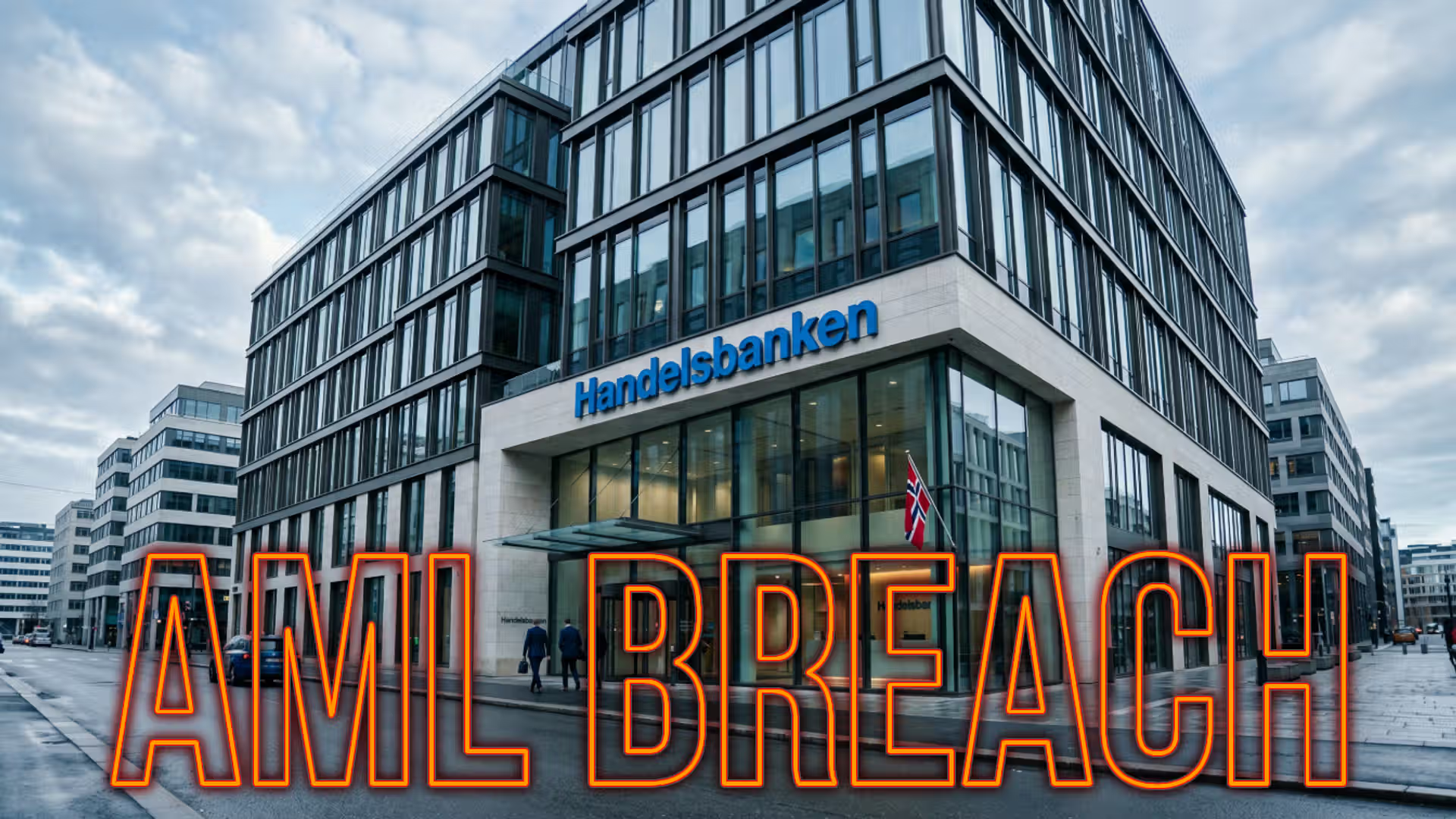
AMLA recently initiated two major public consultations concerning draft instruments designed to establish how various entities identify and manage risks associated with financial crime. These consultations focus on business-wide risk assessments and group-wide requirements, which serve as the foundation for the new regulatory regime. Stakeholders are invited to provide feedback on these draft instruments throughout the spring of 2026 to ensure the final standards are practical and effective across all sectors. AMLA expects these new rules to significantly harmonize the supervision of financial activities and increase the overall resilience of the internal market. The authority is particularly interested in hearing from non-financial sectors to capture a diverse range of operational perspectives before the formal adoption of these standards.
Table of Contents


Strategic Implementation of Regulatory Risk Standards
The launch of these consultations by AMLA represents a decisive step in the transformation of financial supervision across the continent. By introducing standardized guidelines for business-wide risk assessments, AMLA aims to provide a clear methodology for entities to evaluate their specific exposure to illicit activities. These draft guidelines are developed under the specific authority of Article 10 of the primary regulation, which mandates that all obliged entities perform comprehensive internal evaluations. The objective is to ensure that every organization, regardless of its size or sector, has a robust understanding of where its vulnerabilities lie. This process is not merely a box-ticking exercise but a strategic necessity for maintaining the integrity of the financial system.
AMLA has emphasized that the new guidelines will respect the principle of proportionality, allowing smaller firms to implement controls that are appropriate for their specific risk profile. Larger and more complex organizations will be held to higher standards reflecting the greater potential impact of any systemic failures within their operations. This nuanced approach ensures that the regulatory burden does not stifle innovation while still providing a high level of security. The guidelines cover various aspects of the assessment process, including the identification of high-risk jurisdictions and the evaluation of new technologies used in financial transactions. By creating a common language for risk, AMLA is making it easier for supervisors to compare the performance of different entities and identify emerging trends in criminal behavior.
The authority is also addressing the need for better data collection and analysis as part of the risk management process. Entities will be expected to utilize both internal and external data sources to build a comprehensive picture of their risk landscape. This includes monitoring changes in customer behavior and staying updated on the latest typologies published by international bodies. AMLA provides a framework for how this data should be integrated into the overall decision-making process of the firm. The ultimate goal is to move toward a more dynamic and proactive form of risk management that can adapt quickly to the shifting tactics used by money launderers and those financing terrorism.



Unified Governance Through Group-Wide Requirements
Beyond the individual entity level, AMLA is focusing on the complexities of managing risk within large corporate groups. The draft regulatory technical standards for group-wide requirements are designed to eliminate the silos that often exist between different branches and subsidiaries. Under the new standards, groups must maintain a consolidated view of their risk exposure, which is essential for identifying patterns of suspicious activity that span multiple jurisdictions. This requires a high degree of coordination and information sharing between the parent company and its various units. AMLA specifies the minimum standards for these internal frameworks, ensuring that policies and procedures are applied consistently across the entire organization.
One of the most significant challenges addressed by these standards is the operation of European groups in third countries. When local laws in a foreign jurisdiction conflict with the requirements of the home regulator, groups often find themselves in a difficult legal position. AMLA provides guidance on how to manage these conflicts, including the implementation of additional mitigating measures where necessary. If the laws of a third country do not permit the application of the group-wide policies, the group may be required to limit its operations or even exit that market entirely. This tough stance reflects the determination of AMLA to prevent the creation of weak points in the global financial network that could be exploited by criminals.
The standards also cover the appointment of group-wide compliance officers and the establishment of centralized reporting lines. These structural requirements are intended to ensure that the senior management of the group has the necessary information to oversee the effectiveness of the anti-money laundering controls. By centralizing the oversight function, groups can more effectively allocate resources to the areas where they are most needed. AMLA also highlights the importance of regular audits and independent reviews to verify that the group-wide policies are being followed in practice. This level of scrutiny is necessary to maintain public trust in the financial institutions that form the backbone of the modern economy.

Stakeholder Engagement and the Consultation Process
The success of these new regulatory instruments depends heavily on the active participation of the industry during the consultation period. AMLA has made it clear that it values the input of a wide range of stakeholders, from traditional banks to digital asset service providers. The authority has organized two online public hearings in May 2026 to facilitate a direct dialogue with the public. These hearings provide an opportunity for compliance professionals to ask technical questions and share their practical experiences with the draft texts. This feedback is vital for identifying any potential unintended consequences of the proposed rules before they become legally binding.
Submissions to the consultation can be made in any of the official languages of the union, reflecting the inclusive nature of the European regulatory process. AMLA is particularly keen to receive feedback from the non-financial sector, which has traditionally been subject to less stringent oversight. Real estate agents, high-value dealers, and legal professionals are all encouraged to examine how the new guidelines will impact their daily operations. The authority recognizes that a one-size-fits-all approach is not suitable for such a diverse range of businesses, and it is prepared to adjust the draft instruments based on the evidence provided by these sectors. This collaborative approach helps to ensure that the final standards are both robust and workable in a real-world environment.
The consultation period also serves as an early warning for firms that they need to begin preparing for the transition to the new regime. While the final versions of the guidelines and technical standards will not be adopted until later in the year, the draft texts provide a clear indication of the direction of travel. Forward-thinking organizations are already beginning to review their existing risk assessment frameworks and group policies to identify where adjustments will be needed. By engaging early with the process, firms can influence the development of the rules and ensure that their internal systems are ready for compliance from day one. AMLA remains committed to a transparent and open process that balances the needs of the industry with the overarching goal of protecting the financial system.
Future Perspectives on European Supervisory Harmony
The work being done by AMLA today will define the landscape of financial supervision for decades to come. By centralizing the development of technical standards, the authority is reducing the fragmentation that has long hindered effective cross-border enforcement. The harmonization of risk assessment methodologies and group requirements will make it much harder for illicit funds to move undetected through the internal market. It also simplifies the compliance environment for businesses operating in multiple member states by replacing a patchwork of national rules with a single set of European standards. This reduction in regulatory complexity is a major benefit for the economy and helps to promote fair competition.
Looking ahead, the authority will continue to monitor the implementation of these standards and provide additional guidance as needed. The regulatory environment is not static, and AMLA must remain vigilant to new threats such as those posed by decentralized finance and the increasing use of artificial intelligence in financial crime. The framework established by these consultations is designed to be flexible enough to incorporate new requirements as the technological landscape evolves. Continuous improvement is a core principle of the AMLA mandate, and the authority will use the data collected from its supervisory activities to refine its standards over time.
The integration of the various national supervisors into a cohesive network under the leadership of AMLA is another key priority. These new guidelines and technical standards provide the common playbook that will guide the actions of supervisors across the continent. By speaking with one voice and applying the same high standards, the European regulatory community is sending a powerful message to those who would seek to misuse the financial system. The road to full implementation is long and complex, but the progress made during this consultation phase is a significant milestone. The commitment of AMLA to a rigorous and inclusive process ensures that the resulting standards will be a cornerstone of the effort to eliminate financial crime in the digital age.
Key Points
- AMLA has initiated consultations on business-wide risk assessments and group requirements.
- These draft instruments are essential for the implementation of the new regulatory framework.
- Groups are required to maintain a consolidated view of risk across all subsidiaries.
- Public hearings in May 2026 will allow for direct engagement with the regulatory body.
- The standards include specific guidance for entities operating in third countries.
Related Links
- AMLA Public Consultation on Business-Wide Risk Assessment Guidelines
- Draft Regulatory Technical Standards on Group-Wide AML Policies
- AMLA Calendar of Public Hearings and Stakeholder Events
- Official Text of the EU Anti Money Laundering Regulation
- FATF Guidance on the Risk-Based Approach for Financial Institutions
Other FinCrime Central Articles About the Latest AMLA Announcements
- AMLA Launches New Private Sector Mandates
- AMLA Launches EU Data Exercise to Test Financial Crime Risk Models
- AMLA Establishes New Standards for Customer Due Diligence and Monitoring
Source: AMLA
Some of FinCrime Central’s articles may have been enriched or edited with the help of AI tools. It may contain unintentional errors.
Want to promote your brand, or need some help selecting the right solution or the right advisory firm? Email us at info@fincrimecentral.com; we probably have the right contact for you.