
The Latest FinCrime Central Opinions
-
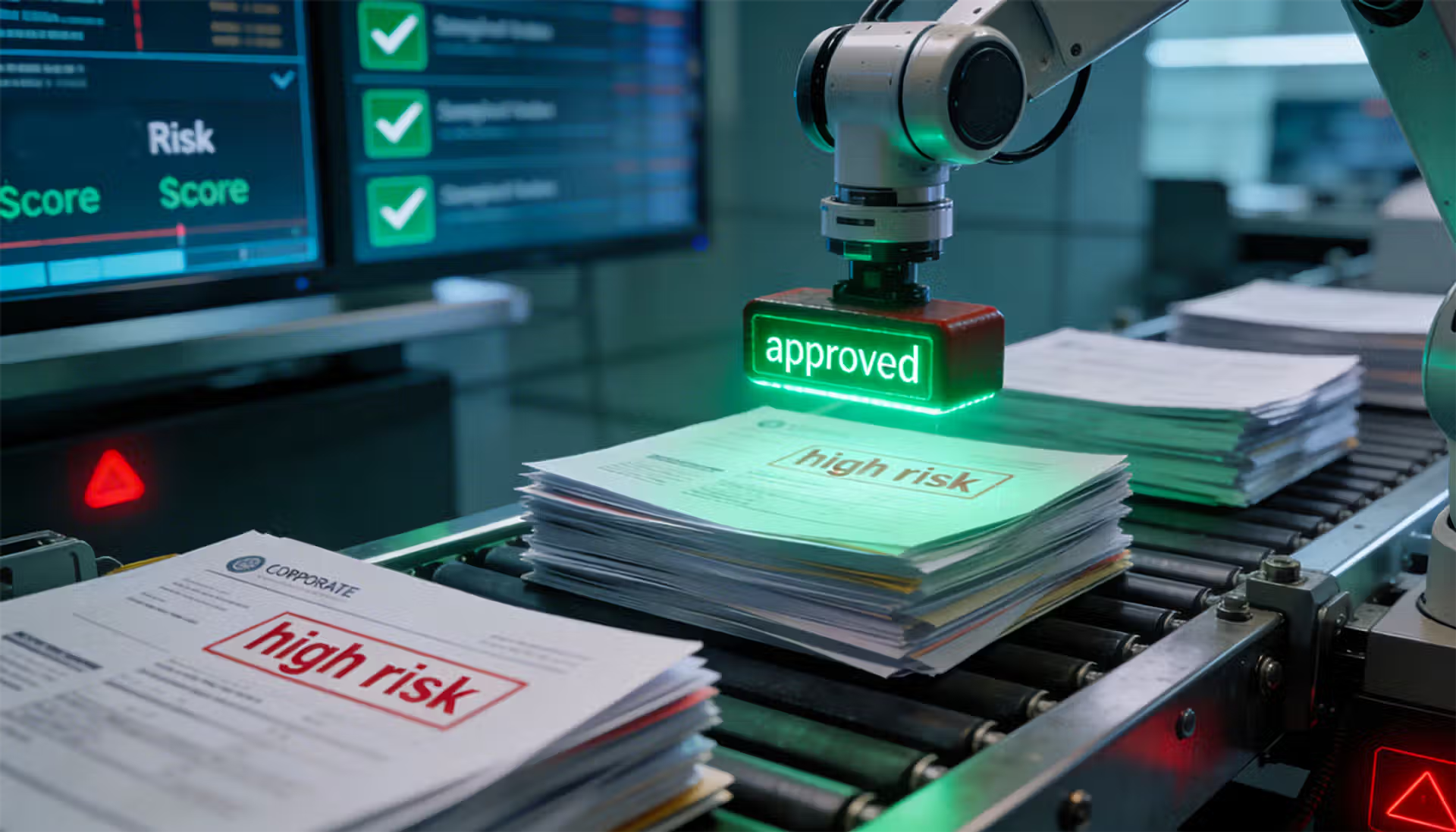
Why High Risk Onboarding Automation Is Weakening Due Diligence
High-risk onboarding automation can streamline compliance, but regulators warn that overreliance may weaken enhanced due diligence and sanctions screening controls.
-

Being an AML Whistleblower: the Compliance Paradox
Why AML whistleblowers faces professional exile despite firms claiming to value integrity and the subtle ways they are punished?
-
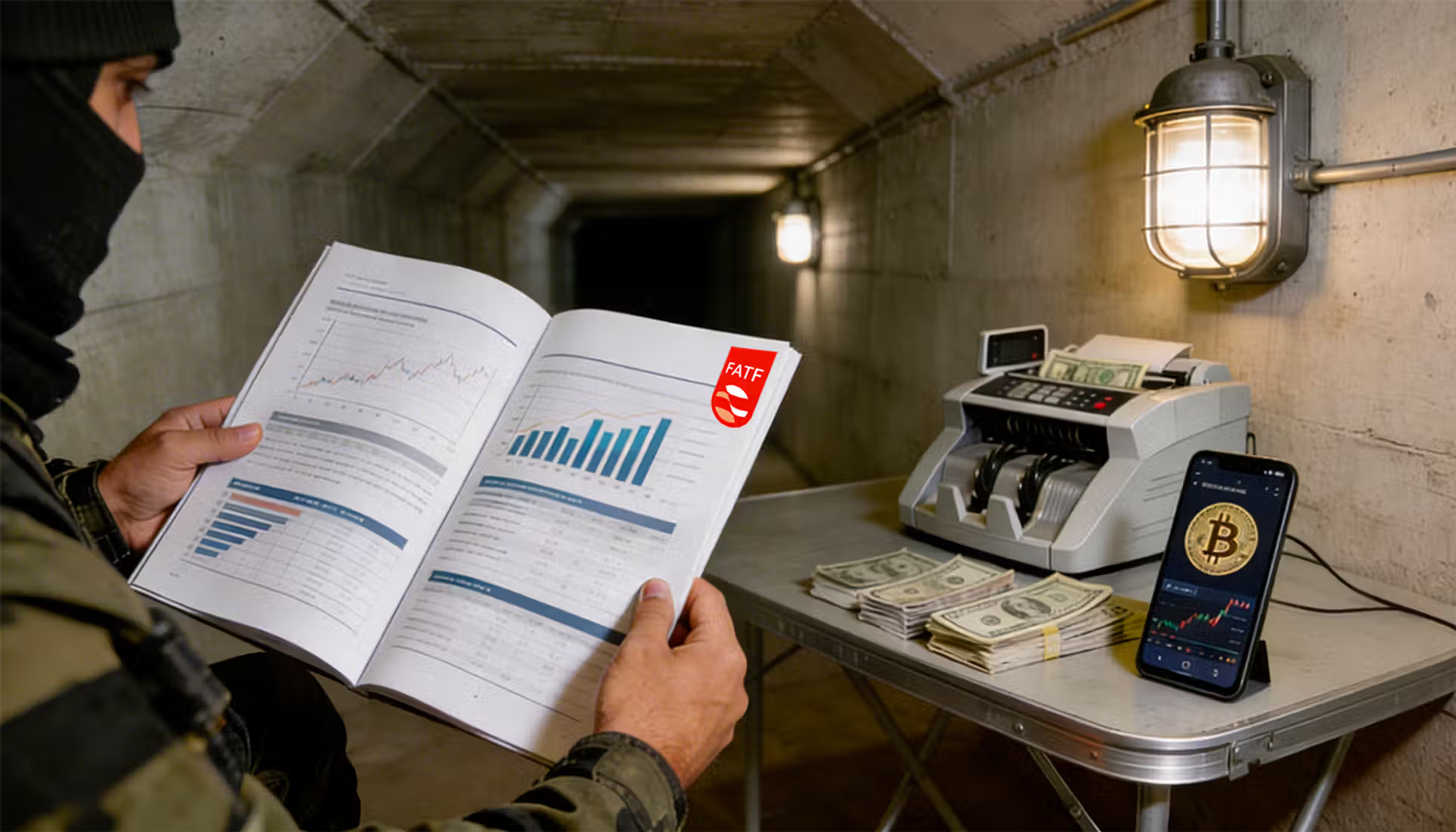
The Bare Reality Behind the 2024-2025 FATF Report
FATF effectiveness gaps reveal persistent weaknesses in money laundering and counter-terrorism financing enforcement despite improved technical compliance.
-

The Hidden Danger of Data Decay in Modern Banking Systems
Financial institutions face massive regulatory penalties when KYC Data Quality issues and internal data decay prevent compliance teams from detecting sophisticated money laundering.


-

MONEYVAL Ignoring Whistleblower Shadows Latvia AML Praise
MONEYVAL ignoring a whistleblower raises sharp procedural concerns in Latvia, with John Christmas asserting that repeated attempts to present evidence were declined despite international validation of the country’s AML framework.
-

The Deterrence Gap: When AML Fines Fail to Change Behavior
AML deterrence remains under scrutiny as record fines raise concerns about proportional impact and lasting behavioral change within global financial institutions.
-

Daigou Surrogate Shopping and the High Cost of Regulatory Failure
Money laundering through daigou surrogate shopping allows criminal networks to move billions by converting illicit cash into luxury goods for global resale.
-

Resilient by Design: How AML/CFT Controls Support Operational Continuity in Regulated iGaming
AML resilience in iGaming depends on embedded controls, data integrity, and explainable monitoring systems that withstand supervisory scrutiny and protect operational stability.
-

Mitigating Financial Crime Risks and the Global Cost of Poor Data
Poor Data Quality in AML causes massive alert inflation and hidden risks. Financial institutions faced 1.2 billion dollars in fines in early 2025 due to monitoring failures.
-

BaFin’s New Era of Enforcement: A Blueprint for RegTech Modernization in German Banking
BaFin’s enforcement focus has changed. Discover how AML monitoring, KYC workflows, data integrity, and RegTech adoption are reshaping audit outcomes for German banks.
-

Living Under the STR Clock: The Silent Pressure on AML & Compliance Teams
Explore the invisible psychological toll on the modern AML professional pressure cooker. Learn how STR reporting challenges and high-stakes decision-making impact the frontline of financial crime defense.
-

Digital Identification Risks in the Era of Deepfake Technology
The collapse of facial biometrics as a secure anchor is creating massive AML exposure. Learn how deepfake identity fraud bypasses ID&V systems and what firms like Revolut are doing to stop impersonation scams.
-
We Fight Fraud Community Becomes We Fight Fincrime Association as Polycriminality Threat Escalates
The relaunch of the We Fight Fincrime Association strengthens cross-sector collaboration to combat polycriminality, bringing together compliance leaders, law enforcement, and fintech experts to disrupt modern financial crime networks.
-

Sanctions Evasion in the Age of Crypto, Shell Companies, and AI
Sanctions evasion now uses crypto, shell companies, and AI, forcing institutions to adapt their compliance frameworks to detect rapidly evolving threats.
-

Analyzing Global Hawala Networks as a Major Money Laundering Vector
Recent investigations into hawala networks reveal how underground banking is a primary vector for laundering hundreds of millions in criminal proceeds, necessitating new red flag detection strategies for AML professionals.
-

The Unmasking Myth: UBO Registers and Money Laundering
Ultimate Beneficial Ownership registers are easily circumvented by money launderers using complex trust structures and nominee arrangements, turning transparency into mere procedural compliance and failing to stop illicit flows, as experts cite widespread non-verification of UBO data.

Other Opinion Papers on FinCrime Central
Why High Risk Onboarding Automation Is Weakening Due Diligence
High-risk onboarding automation can streamline compliance, but regulators warn that overreliance may weaken enhanced due diligence and sanctions screening controls.
Being an AML Whistleblower: the Compliance Paradox
Why AML whistleblowers faces professional exile despite firms claiming to value integrity and the subtle ways they are punished?
The Bare Reality Behind the 2024-2025 FATF Report
FATF effectiveness gaps reveal persistent weaknesses in money laundering and counter-terrorism financing enforcement despite improved technical compliance.