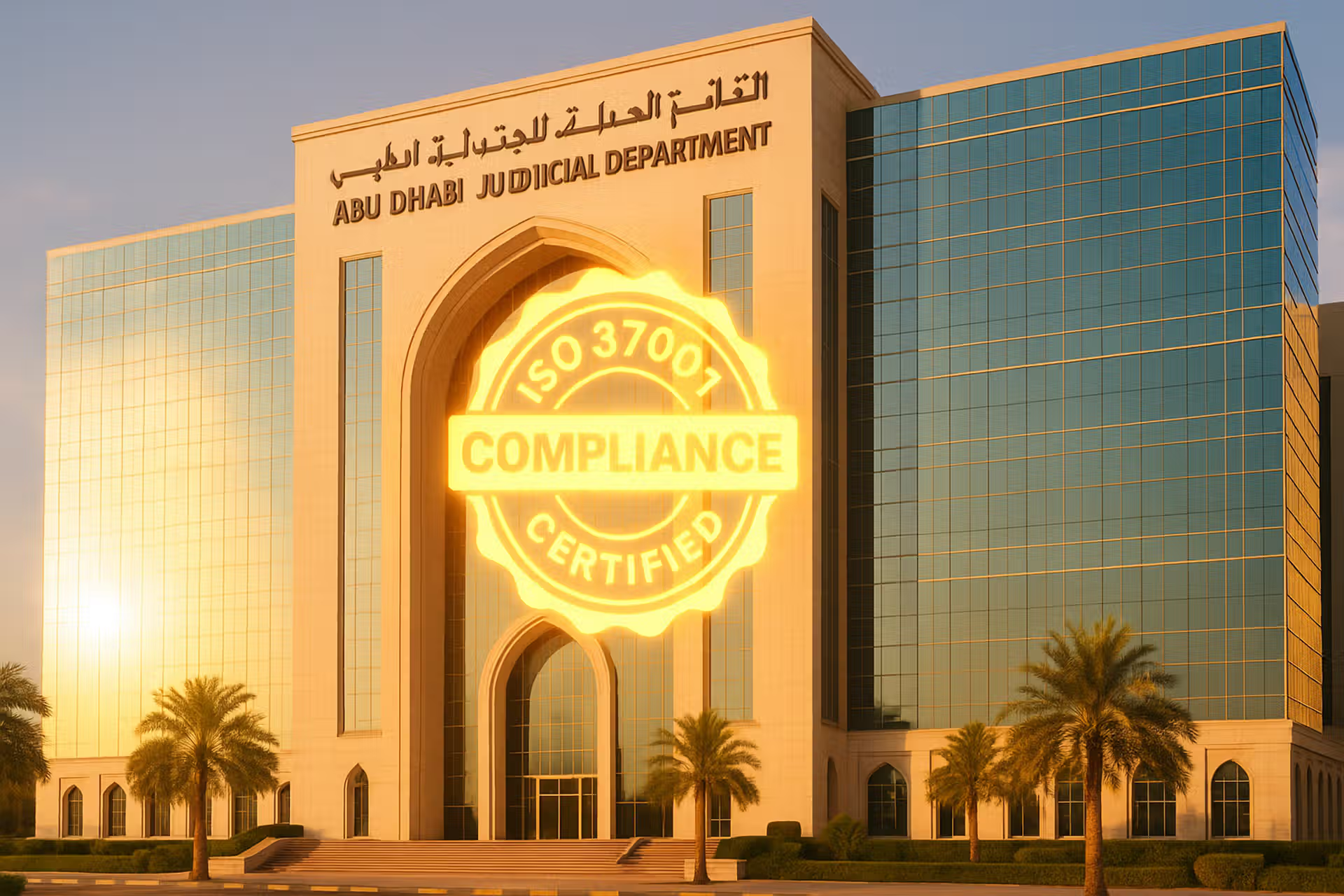
Abu Dhabi has taken a decisive step toward embedding measurable integrity in financial crime prevention by achieving ISO 37001:2016 certification for its Anti-Bribery, Anti-Corruption, and Anti-Money Laundering Management System. This milestone, awarded to the Public Funds Prosecution under the Abu Dhabi Judicial Department, reflects a deep structural transformation in how the Emirate enforces transparency, compliance, and accountability across its institutions. The certification is not symbolic — it represents a technical, auditable, and performance-based approach that could set a new benchmark for AML governance in the region.
Table of Contents


ISO 37001 Certification and Abu Dhabi’s Evolving AML Framework
The ISO 37001:2016 certification is not merely an award but a structured management framework that demands a demonstrable system of controls to prevent and detect bribery, corruption, and money laundering. Abu Dhabi’s Public Funds Prosecution has now integrated this framework into its operational DNA, establishing a risk-based compliance environment governed by continuous monitoring, measurable objectives, and third-party audits.
ISO 37001:2016 defines specific requirements for anti-bribery and corruption management systems, which Abu Dhabi extended to include AML risk governance. The system mandates a blend of governance oversight, internal controls, whistleblowing procedures, investigations, due diligence protocols, and corrective action processes. It is designed to identify weaknesses, assign accountability, and create measurable outcomes — a significant departure from traditional compliance models that rely primarily on regulatory interpretation.
By aligning with ISO 37001:2016, Abu Dhabi’s judicial and prosecutorial bodies now possess a verifiable blueprint for financial integrity. Each process — from financial crime investigation to asset recovery — must meet documented standards and undergo regular compliance verification. The result is a shift from reactive enforcement to proactive governance.
The Architecture of a Certified AML Framework
At the heart of ISO certification lies the concept of “system integrity.” Abu Dhabi’s Public Funds Prosecution implemented multiple structural reforms to reach certification readiness. These reforms included mapping of risk-prone processes, establishing internal audits, and developing measurable indicators for detecting anomalies linked to bribery and money laundering.
The certification process requires a demonstrable commitment from senior leadership, integrated risk assessments, and cross-departmental collaboration. Abu Dhabi’s certification involved coordination between the Prosecution, the Judicial Department, and strategic partners across the Emirate. The certification’s audit cycle evaluated factors such as the segregation of duties, financial transparency, evidence management, and whistleblower protection.
A defining element of this initiative is the operational traceability of AML processes. ISO 37001:2016 ensures that no action, transaction, or decision remains unverified. Every approval, investigation trigger, or compliance control must be linked to a documented rationale, creating an institutional memory that is auditable and defensible. This model builds credibility in the eyes of foreign investors, correspondent banks, and international regulators that increasingly demand proof of governance, not mere declarations of compliance.
Furthermore, the certification brings measurable accountability. Regular surveillance audits ensure that the institution not only maintains but continuously improves its AML control systems. Each review identifies nonconformities, corrective actions, and new risk areas — a cycle that enforces improvement rather than complacency.
ISO Certification as a Strategic AML Enforcement Tool
The broader implications of Abu Dhabi’s certification go far beyond symbolic alignment with global standards. The certification integrates directly into the Emirate’s AML enforcement mechanisms, where structured risk controls enhance the prosecutorial response to financial crime.
For example, within the Public Funds Prosecution, ISO-driven processes strengthen the chain of custody and evidentiary standards in money laundering cases. Documentation, disclosure protocols, and audit trails ensure that investigative procedures meet international judicial expectations, reinforcing the admissibility and reliability of evidence.
At a macro level, the certification harmonizes Abu Dhabi’s AML oversight with international risk management systems used by multinational banks and corporations. This alignment reduces friction in cross-border cooperation, mutual legal assistance, and asset recovery proceedings. The message to the global financial community is clear: Abu Dhabi’s institutions are not merely compliant with law, they are certified against a universally recognized standard of integrity.
The operational effects of the certification are already visible in the Emirate’s wider AML ecosystem. Specialized courts and prosecution offices now integrate standardized reporting templates, case tracking tools, and control matrices that align with ISO’s structured documentation principles. These enhancements increase efficiency, reduce procedural errors, and improve accountability at every stage of the financial crime lifecycle.
Abu Dhabi’s move also signals a broader intent: to transform compliance from a bureaucratic requirement into a performance discipline. ISO certification introduces measurable compliance, where every AML control is an auditable metric and every process can be independently verified. This transformation is reshaping how financial crime risk management is evaluated across the Middle East.
The Future of AML Through Certified Governance
Abu Dhabi’s adoption of ISO 37001:2016 comes at a time when global regulators are intensifying scrutiny over financial transparency and beneficial ownership frameworks. The Emirate’s decision to embed ISO standards within its public institutions reflects a strategic understanding that credibility in AML enforcement requires traceable governance.
The certification places Abu Dhabi among a limited number of jurisdictions whose AML and anti-corruption systems are externally validated. It builds investor confidence, supports cross-border financial cooperation, and positions the Emirate as a credible compliance hub within the GCC and beyond.
For compliance professionals and AML specialists, the shift to ISO-certified governance presents both opportunities and obligations. Firms operating in Abu Dhabi must now align their own compliance programs to meet the expectations of ISO-integrated authorities. This includes enhancing documentation practices, introducing internal audits, and ensuring that risk management policies are measurable and continuously reviewed.
As enforcement sophistication grows, so will the demand for qualified AML professionals capable of translating ISO frameworks into actionable institutional controls. Compliance teams that adapt early will benefit from smoother audits, reduced risk exposure, and better engagement with regulators. Those that remain static risk being viewed as non-aligned with the Emirate’s evolving compliance culture.
Ultimately, Abu Dhabi’s ISO certification redefines the region’s approach to money laundering prevention. It transforms compliance from an interpretive exercise into a systemized discipline based on evidence, documentation, and continuous improvement. The result is an institutional ecosystem where integrity is measurable, accountability is enforceable, and prevention becomes proactive rather than reactive.
Related Links
- ISO 37001:2016 Anti-Bribery Management Systems (International Organization for Standardization)
- UAE Federal Decree-Law No. 20 of 2018 on Anti-Money Laundering and Combating the Financing of Terrorism
- Cabinet Decision No. 10 of 2019 on the Implementing Regulation of the AML Law
- Abu Dhabi Judicial Department Official Portal
- UAE Ministry of Justice AML/CFT Initiatives
Other FinCrime Central News About CBUAE Anti-Money Laundering Measures and Actions
- CBUAE Regulators Raise the Bar with a License Revocation and a AED 3 Million Penalty
- CBUAE Moves to Freeze New Customers Amid Islamic Banking Governance Failures
- The UAE’s AML Transformation: From High-Risk to Trusted Financial Hub
Source: Zawya
Some of FinCrime Central’s articles may have been enriched or edited with the help of AI tools. It may contain unintentional errors.
Want to promote your brand, or need some help selecting the right solution or the right advisory firm? Email us at info@fincrimecentral.com; we probably have the right contact for you.