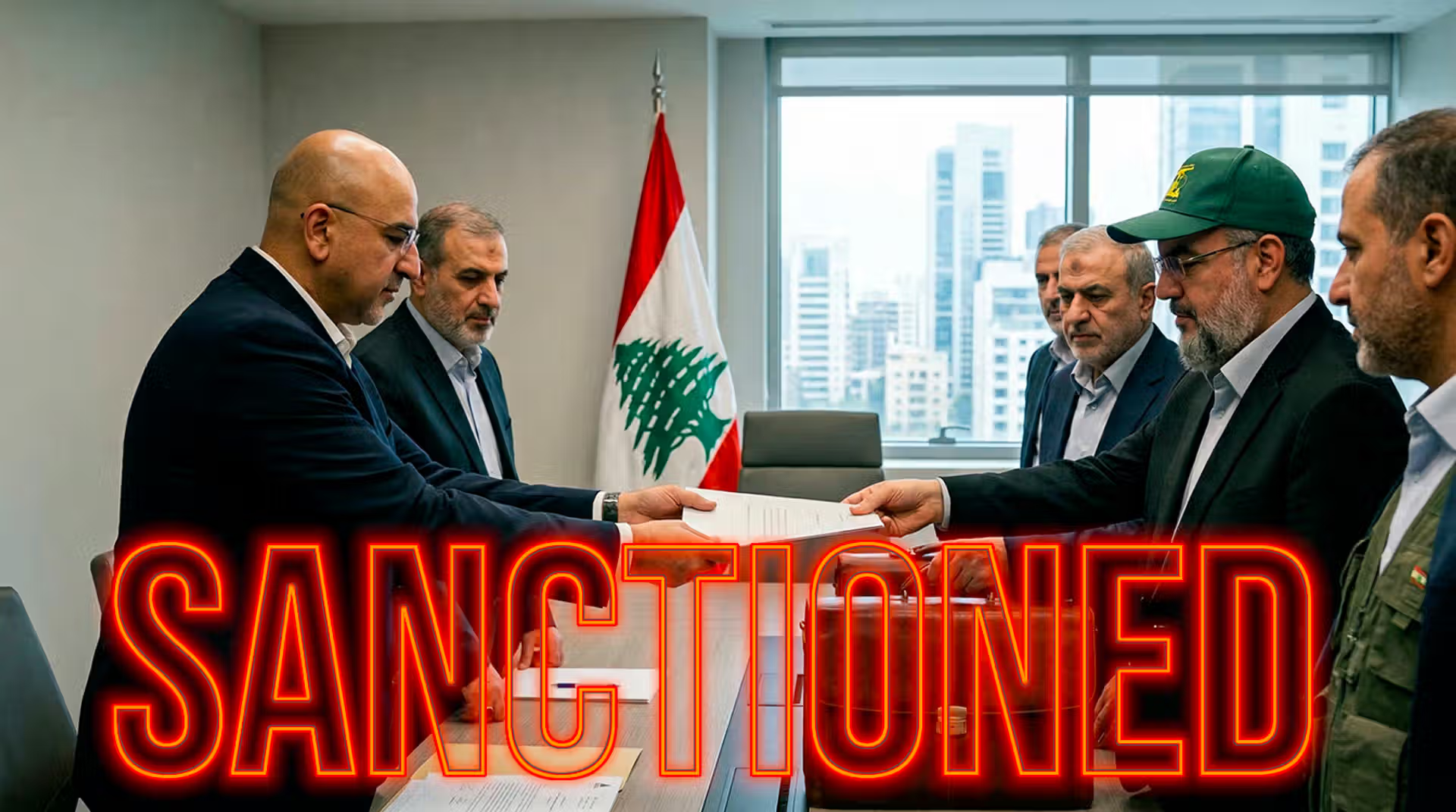
The United States Department of the Treasury recently moved to freeze all property and interests of specific Lebanese and international entities involved in complex financial schemes. This regulatory action targets the exploitation of the informal economy and global shipping routes to generate revenue for prohibited organizations. By blocking these assets, the Office of Foreign Assets Control aims to isolate operatives from the global banking system and prevent the movement of illicit funds. These measures highlight the ongoing vulnerability of the commodity and precious metals markets to sophisticated trade-based manipulation.
Table of Contents


Hezbollah Financial Strategy
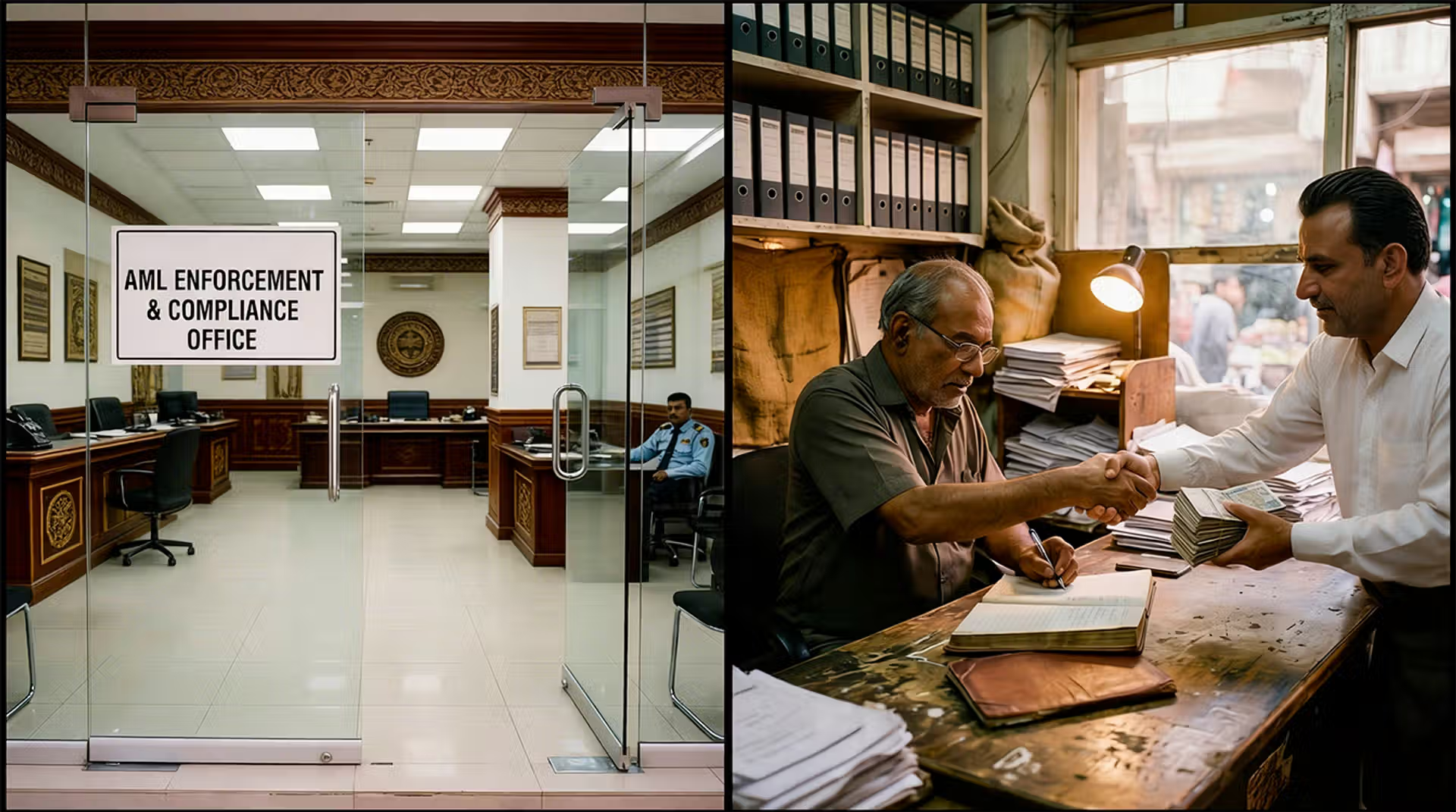
Government regulators have identified a persistent pattern of behavior where militant organizations utilize shadow banking structures to maintain liquidity during times of economic distress. A central component of this specific investigation involves an entity that obtained a license to operate as a non-governmental organization while secretly providing unauthorized financial services. This organization used its legal status as a shield to perform functions similar to a traditional bank, effectively creating a parallel financial system outside the view of national regulators. By operating under the cover of a charitable or social license, the group was able to process transactions and hold assets that would otherwise be subject to strict anti-money laundering protocols and reporting requirements. This method of obfuscation is a classic technique used to integrate illicit proceeds into the broader economy without triggering the red flags usually associated with high-volume cash movements. The strategic use of localized branches allowed the network to maintain a presence in specific geographic regions, ensuring that funds could be moved rapidly through physical cash and gold exchanges. This reliance on the informal sector demonstrates how groups adapt when they are cut off from the formal global financial infrastructure.
As financial pressures mounted in early 2025, the group intensified its reliance on non-traditional value transfer systems to maintain its operational capabilities. The exploitation of Lebanon’s cash economy became a primary objective, as it allowed for the rapid movement of wealth without the need for traditional bank accounts that could be easily monitored by international authorities. By leveraging the existing infrastructure of unlicensed financial providers, the network established a series of high-volume cash hubs. These hubs acted as the connective tissue between illicit revenue streams and the group’s militant reconstitution efforts. The scale of this operation necessitated a sophisticated management structure, which was hidden behind the mundane paperwork of legitimate businesses. Each node in the network was designed to function independently, yet remained under the strict supervision of senior finance officials based in Beirut and Tehran. This decentralized approach provided a layer of protection against localized law enforcement actions while allowing the central organization to maintain total control over its global assets.



Gold Exchanges and Commodity Fraud Mechanisms
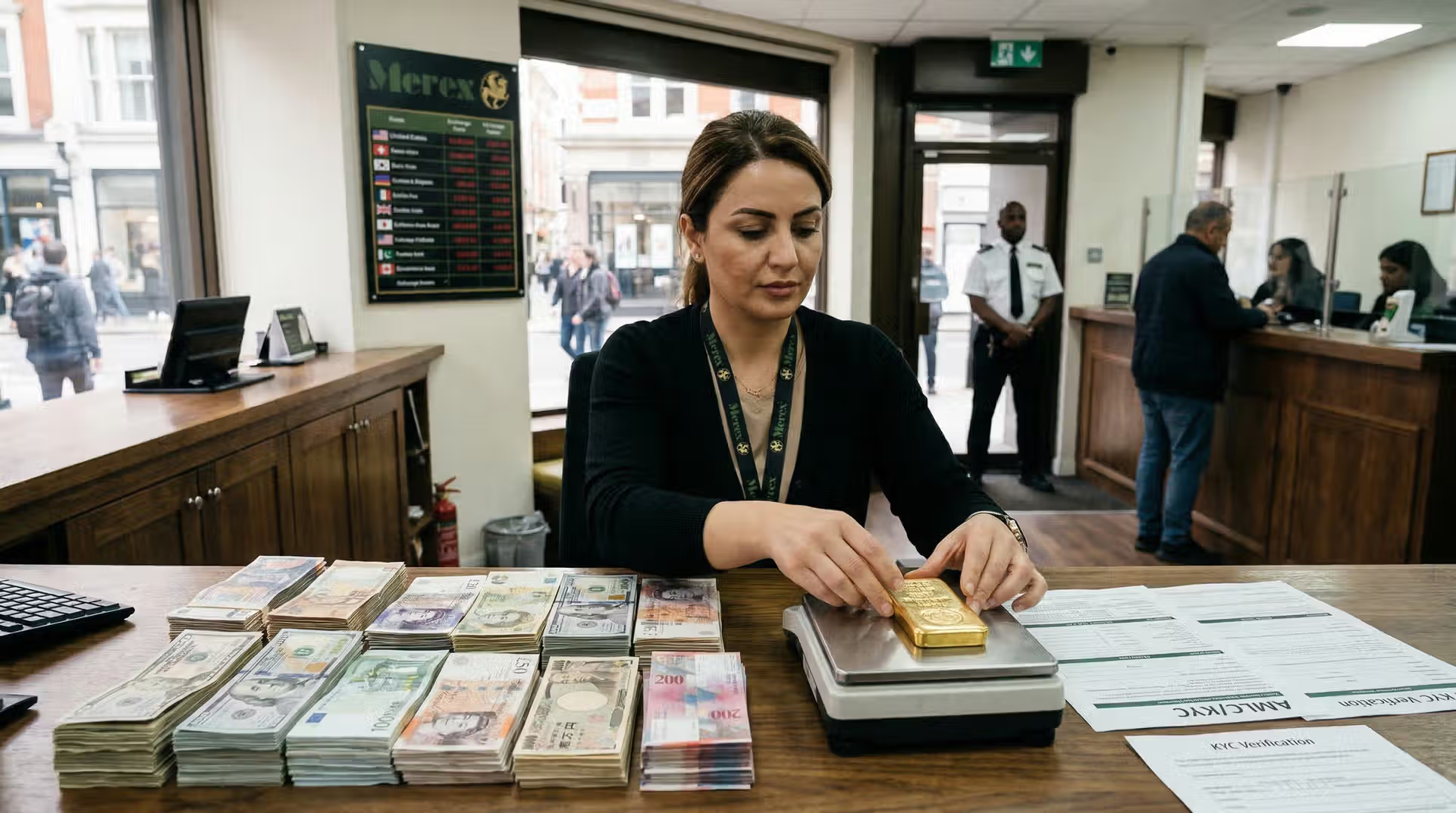
The establishment of Jood SARL, a gold exchange company, serves as a primary example of how precious metals are used to facilitate value transfer in a sanctioned environment. Because gold is highly liquid and can be traded with a degree of anonymity, it remains a high priority for groups seeking to convert their reserves into usable currency. The investigation revealed that this company was directly overseen by officials associated with a shadow banking network, with the specific intent of mitigating cash flow pressures identified in early 2025. By funneling wealth through gold trading, the network attempted to bypass the digital footprints left by wire transfers and other electronic payment systems. This was not merely a local enterprise, as the chain of companies was designed to facilitate gold movements both within Lebanon and potentially overseas. The proximity of gold exchange branches to existing shadow bank offices allowed for a seamless transition between cash deposits and physical metal storage. This integration of precious metals into the laundering cycle provided a stable store of value that was largely immune to the hyperinflation and currency instability affecting the local economy.
Furthermore, the operation extended into the international commodities market, where millions of dollars in fertilizer were exported using deceptive documentation. Operatives allegedly claimed that the cargo originated in Oman when it actually came from restricted sources, a process known as origin fraud. This type of trade-based money laundering relies on the complexity of global supply chains to hide the true source of goods and the ultimate destination of the resulting profits. By falsifying the country of origin, the network could sell products to unsuspecting international buyers, effectively laundering the proceeds of the sale back into their operational accounts. The use of fertilizer as a front was particularly strategic, as it is a common industrial commodity that moves in large volumes across regional borders. This volume provided the necessary cover to blend illicit shipments with legitimate trade, making it difficult for customs officials to identify suspicious cargo without detailed intelligence. The proceeds from these sales were then fed back into the central finance team, completing a circuit that turned sanctioned Iranian resources into liquid cash available in Turkish and Lebanese markets.
Global Shipping and Sanctions Evasion Networks
The maritime sector played a critical role in the revenue generation activities of the sanctioned network, involving multiple jurisdictions and sophisticated corporate layering. Key individuals, including Russian and Syrian nationals, coordinated the movement of commodities through front companies like Mira Ihracat Ithalat Petrol and Platinum Group International. These entities acted as intermediaries to distance the prohibited group from the actual trade transactions. The inclusion of Russian national Andrey Viktorovich Borisov in the designation list underscores the international scope of the operation, linking Moscow-based corporate entities to the procurement of weapons and the sale of commodities. This partnership allowed the network to access markets that would otherwise be closed to them, leveraging the commercial influence of Russian associates to facilitate deals that benefited the finance team in Iran. Each transaction was carefully structured to include multiple layers of shell companies and professional facilitators, making it extremely challenging for financial investigators to trace the ultimate beneficial owners.
The use of vessels such as the BRILLIANCE and the LARA, which were flagged in various maritime jurisdictions, allowed the network to move goods across international waters with a reduced risk of immediate detection. These ships were part of a fleet managed by businessmen with documented ties to foreign militant finance teams, showing the deeply interconnected nature of global illicit finance. When a vessel is identified as blocked property, it significantly hampers the ability of the network to conduct future trade, as port authorities and service providers are prohibited from engaging with the asset. This maritime enforcement is essential for disrupting the logistics of money laundering, as it cuts off the physical means by which bulk commodities are turned into liquid wealth. The multi-jurisdictional nature of this scheme, stretching from Moscow to Istanbul and Beirut, illustrates the scale of the challenge facing global regulators today. By blocking these vessels, the United States has effectively neutralized a significant portion of the group’s physical logistics chain, forcing them to find more expensive and less efficient ways to move goods.
Protecting the Integrity of the Global Financial System
The broader implications of these designations serve as a stern reminder of the strict liability standards applied to international sanctions compliance. Financial institutions and private enterprises must maintain rigorous due diligence to ensure they are not inadvertently facilitating transactions for blocked persons or their subsidiaries. Under the current enforcement guidelines, the Office of Foreign Assets Control can impose civil or criminal penalties on any person who violates these prohibitions, regardless of whether the violation was intentional or the result of negligence. This regulatory environment forces banks to look beyond the immediate names on a transaction and investigate the ultimate beneficial owners of companies and the true origin of maritime cargo. The objective of such aggressive enforcement is to create a transparent financial landscape where illicit actors find it impossible to hide their assets. The integrity of the global banking system depends on the ability of institutions to detect and report these layered schemes before the funds can be used to support militant activities.
By targeting the facilitators and the commercial vehicles used for money laundering, the government aims to degrade the economic stability of organizations that threaten regional peace. The ultimate success of these measures depends on international cooperation and the willingness of the private sector to adhere to high standards of transparency. As illicit networks evolve to use new technologies and informal channels, the regulatory response must remain equally adaptive and comprehensive to ensure that the global economy remains a hostile environment for the laundering of funds. The transition toward stricter monitoring of non-governmental organizations and informal currency exchanges is a direct response to the gaps identified in this case. Regulators are now placing greater emphasis on the verification of NGO activities, ensuring that they do not serve as fronts for prohibited banking operations. This holistic approach to financial security aims to not only punish current offenders but also to build a resilient system that can withstand future attempts at exploitation by sophisticated transnational networks.
Key Points
- Regulators designated Jood SARL for its role in converting gold reserves into usable cash for a prohibited militant organization in Lebanon.
- The investigation uncovered a massive origin fraud scheme involving the export of fertilizer through Turkish and Syrian front companies.
- Two specific cargo vessels, the LARA and the BRILLIANCE, were identified as blocked property due to their involvement in illicit commodity shipping.
- Operatives in Russia and Iran collaborated to procure military hardware and sell commodities to sustain a shadow banking infrastructure.
- The Office of Foreign Assets Control applied strict liability standards, warning that any person facilitating these transactions faces severe civil penalties.
Related Links
- OFAC Recent Actions and Sanctions List Updates
- Financial Action Task Force Reports on Terrorist Financing
- United States Executive Order 13224 Counterterrorism Authority
- Department of State Foreign Terrorist Organization Designations
Other FinCrime Central Articles About Hezbollah’s Money Laundering Machine
- US Treasury Sanctions Expose Hezbollah Secret High Volume Cash Laundering Structure
- Hezbollah’s Secret Car Trade Networks in Canada Fuel Billions in Dirty Money
- OFAC Hits Hezbollah with Fresh Sanctions Shaking Lebanon’s Banking Sector
- Massive $1.8Bn Terrorism Financing Network Linked to Hezbollah Uncovered
Source: US Treasury
Some of FinCrime Central’s articles may have been enriched or edited with the help of AI tools. It may contain unintentional errors.
Want to promote your brand, or need some help selecting the right solution or the right advisory firm? Email us at info@fincrimecentral.com; we probably have the right contact for you.