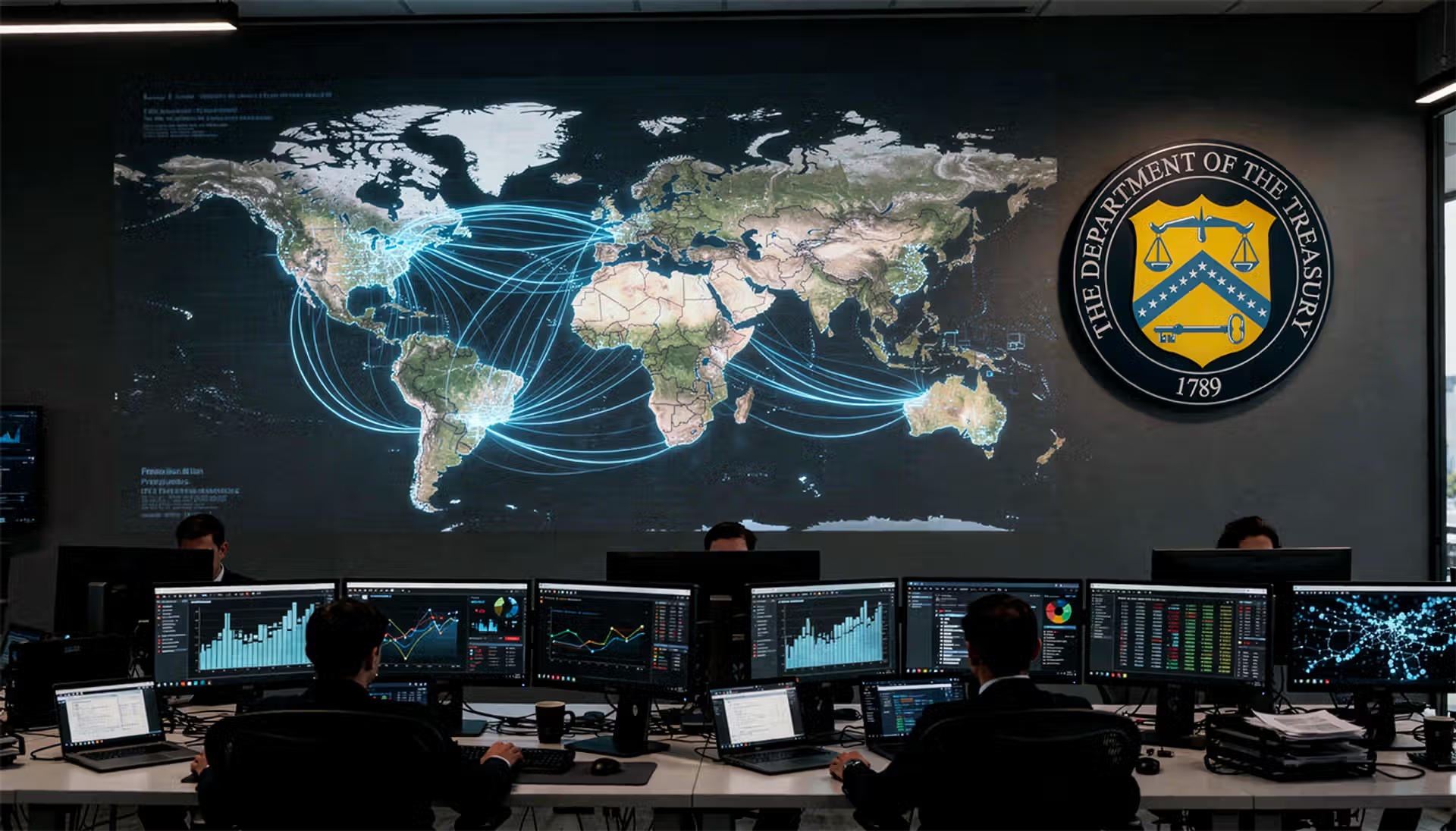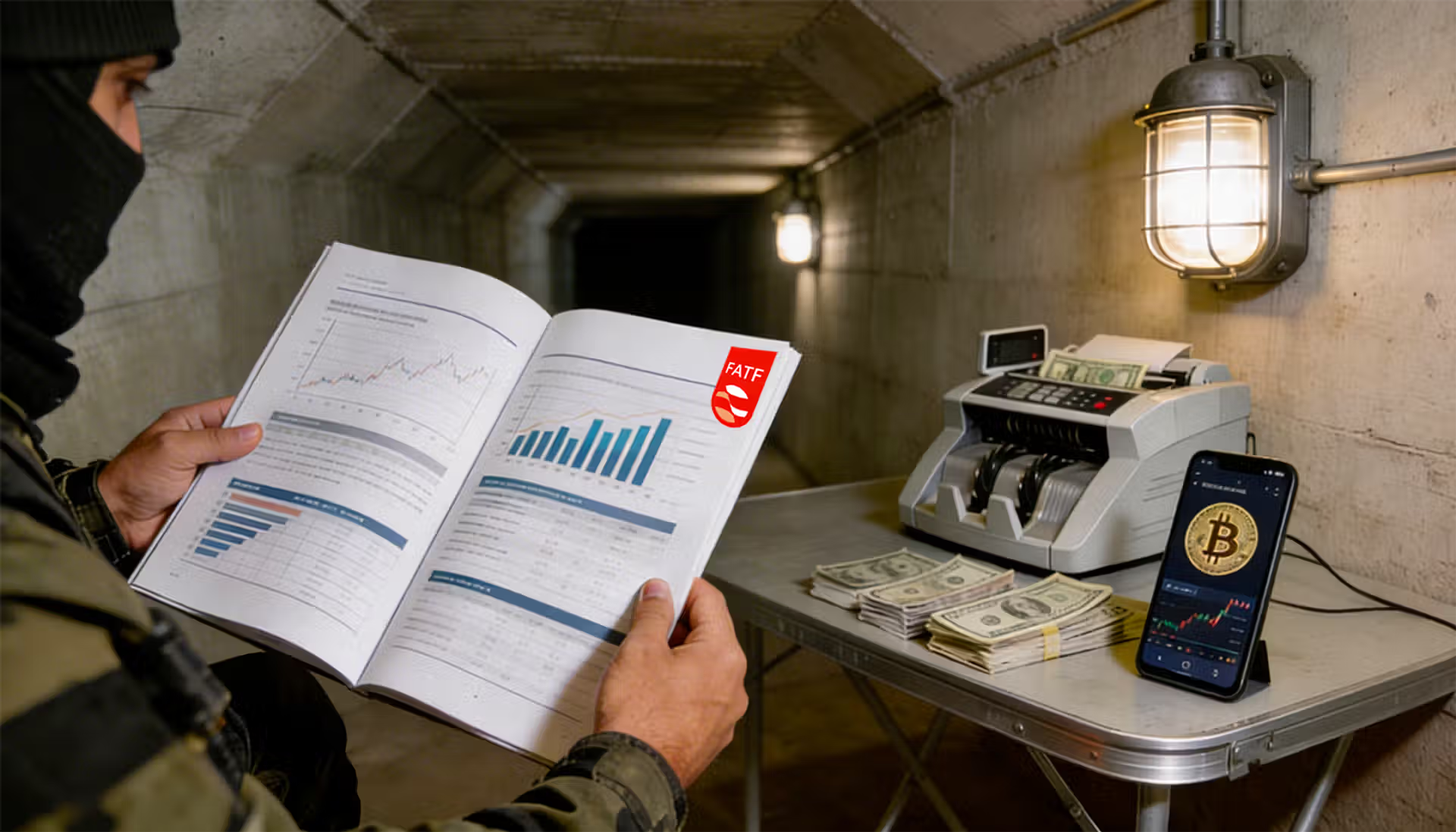
The United Nations (UN) Security Council has intensified its mandate to disrupt the financial lifelines of terrorism, recognizing that extremist networks adapt faster than ever to exploit gaps in the global financial system. With the convergence of traditional informal channels, cutting-edge technology, and complex corporate structures, terrorism financing risk has become a highly dynamic threat that demands equally dynamic countermeasures. Across jurisdictions, governments, regulators, and financial institutions are scaling up coordinated strategies to identify, freeze, and confiscate assets linked to extremist groups, while enhancing resilience against future threats.
Table of Contents


Terrorism Financing Risk Landscape
Terrorism financing risk operates at the intersection of criminal innovation and geopolitical instability. Extremist organizations rely on both long-standing and newly emerging channels to fund their operations. Informal value transfer systems, such as hawala, remain deeply embedded in certain regions due to their speed and trust-based nature. These systems are often unregulated, making them attractive for illicit transfers that avoid scrutiny.
In parallel, modern technologies have created entirely new pathways for financing terrorism. Virtual assets, including privacy-focused cryptocurrencies and decentralized exchanges, are increasingly used to move funds quickly across borders without relying on conventional banking infrastructure. These tools offer anonymity, speed, and global reach, making them ideal for actors seeking to avoid detection.
Another significant development is the use of mobile payment systems and prepaid digital vouchers. In regions with limited access to traditional banking, mobile money services have become indispensable for legitimate transactions. Unfortunately, the same accessibility is exploited by extremist groups to collect ransoms, solicit donations, and channel illicit funds. Even legitimate-looking crowdfunding campaigns have been infiltrated by covert agendas, with donors often unaware that their contributions are being redirected toward violent ends.
Corporate structures also play a role. Shell companies, trade-based laundering, and fraudulent invoicing schemes can mask the movement of funds intended for terrorist activities. In many cases, the transactions appear legitimate on paper, with goods or services serving as a cover for value transfer.
Non-profit organizations (NPOs) remain a double-edged sword in this context. While most operate transparently for humanitarian purposes, some are deliberately established or infiltrated to funnel resources to extremist networks. Weak governance, lack of due diligence, and insufficient oversight make them vulnerable to misuse.
These diverse channels create a complex environment for detection. The challenge lies not only in identifying the funds but also in dismantling the infrastructure that supports them.
Regulatory and Framework Measures
Global frameworks to combat terrorism financing are continually evolving. The United Nations Security Council has been instrumental in creating binding resolutions that require member states to criminalize terrorism financing, implement targeted financial sanctions, and enhance cross-border cooperation. These resolutions are supported by broader multilateral standards that set the baseline for national legislation.
Member states are expected to implement robust laws that give authorities the power to freeze and confiscate assets tied to extremist activities without delay. The scope extends beyond direct funding to include assets that are indirectly linked through intermediaries, front companies, or layered transactions.
National regulatory frameworks often include specific provisions for monitoring high-risk sectors, such as remittance providers, virtual asset service providers, and charitable organizations. These provisions require customer due diligence, ongoing monitoring, and prompt reporting of suspicious activities.
In addition to legislative measures, capacity-building initiatives are critical. Many jurisdictions have strengthened their financial intelligence units, provided specialized training for law enforcement, and invested in advanced analytics to track and disrupt illicit flows. Cross-border intelligence sharing agreements have also expanded, allowing for faster exchange of actionable data.
However, legal authority alone is insufficient. Enforcement must be consistent and proactive. This includes imposing penalties on institutions that fail to meet compliance obligations, conducting targeted inspections, and taking public enforcement actions to deter future breaches.
Institutional and Operational Responses
Financial institutions are on the front lines of detecting and reporting suspicious activity. Effective operational responses require integrated compliance programs that go beyond ticking regulatory boxes. A risk-based approach is essential, focusing resources where the threat is most acute.
Transaction monitoring systems must be calibrated to identify red flags specific to terrorism financing. These can include patterns such as multiple small-value transactions to high-risk jurisdictions, sudden activity in dormant accounts, use of accounts inconsistent with customer profiles, or complex layering of funds through multiple entities. For virtual assets, monitoring extends to wallet addresses linked to illicit activity, unusual transaction volumes, or rapid asset conversion to avoid detection.
Collaboration between departments is vital. Compliance teams should work closely with fraud, cyber security, and operational risk units to ensure a holistic view of emerging threats. Data from different parts of the organization can reveal connections that might otherwise be missed.
Externally, partnerships with law enforcement and intelligence agencies can amplify detection capabilities. Timely reporting of suspicious transactions, combined with additional intelligence, can lead to asset freezes and prosecutions. Private-public partnerships are increasingly recognized as a force multiplier, bridging gaps between institutional monitoring and law enforcement investigations.
Training plays a critical role. Staff at all levels should understand how terrorism financing can manifest in legitimate-looking transactions. Scenario-based exercises help employees recognize subtle indicators, from unusual customer behavior to complex transaction chains that seem innocuous in isolation but are suspicious in aggregate.
Risk-Based Detection and Disruption Tactics
Detecting and disrupting terrorism financing requires precision and adaptability. Institutions must tailor their risk assessments to reflect their unique exposure to high-risk customers, products, services, and geographies.
Enhanced due diligence (EDD) is a key tactic, particularly for customers operating in sectors vulnerable to misuse. This involves deeper scrutiny of ownership structures, funding sources, and transaction purposes. For NPOs, EDD can include verifying the legitimacy of beneficiaries, the authenticity of field operations, and the transparency of financial reporting.
Technology can be a powerful ally. Advanced analytics, artificial intelligence, and machine learning tools can process vast datasets to identify unusual patterns that human analysts might overlook. These tools can correlate data points across multiple systems, revealing links between transactions, accounts, and entities associated with known or suspected extremist networks.
Proactive disruption also involves targeted financial sanctions. Institutions must maintain up-to-date sanction lists and apply them rigorously across all products and services. This requires automated screening systems capable of handling large volumes of transactions without causing excessive false positives.
Another tactic is pre-emptive engagement with high-risk sectors. By providing education, guidance, and compliance support to vulnerable industries—such as money service businesses, fintech platforms, and charities—institutions can reduce the likelihood of exploitation.
Regularly updating typologies based on current intelligence ensures that detection systems remain relevant. As extremist networks evolve, so must the indicators used to identify them.
Moving Forward on AML/CFT Momentum
The fight against terrorism financing is not a static effort. It demands constant vigilance, strategic innovation, and unwavering cooperation among stakeholders. The United Nations Security Council’s role in setting global standards and fostering international collaboration remains indispensable.
Financial institutions must continue refining their risk assessments, enhancing detection capabilities, and investing in staff training. Regulators should maintain a balance between strict enforcement and supportive engagement, helping institutions meet their obligations without stifling legitimate activity.
International cooperation will be the deciding factor in success. Terrorism financing does not respect borders, and neither should the mechanisms designed to combat it. Shared intelligence, synchronized sanctions, and coordinated enforcement actions create a united front that can dismantle the financial underpinnings of extremist operations.
Ultimately, defeating terrorism financing is not only about cutting off funds—it is about disrupting the ecosystem that enables violent extremism to thrive. By combining strong legal frameworks, effective operational practices, and international solidarity, the global community can safeguard the integrity of the financial system and, by extension, the stability of societies worldwide.
Related Links
- United Nations Security Council Counter-Terrorism Committee
- Financial Action Task Force Recommendations on Terrorist Financing
- Egmont Group on Counter-Terrorism Financing
- European Union AML/CFT Legislative Framework
- World Bank Resources on Combating the Financing of Terrorism
Other FinCrime Central Articles About the Fight Against Terrorism Financing
- How Terrorism Financing Exploits Bitcoin’s Safe-Haven Status in Argentina
- FATF Flags $Billions at Risk from Evolving Terrorist Financing Gaps
- OFAC Crackdown Unveils Hidden Millions Flowing to Hamas and FPLP via Sham Charities
Source: United Nations – Security Council (PDF)
Some of FinCrime Central’s articles may have been enriched or edited with the help of AI tools. It may contain unintentional errors.
Want to promote your brand, or need some help selecting the right solution or the right advisory firm? Email us at info@fincrimecentral.com; we probably have the right contact for you.