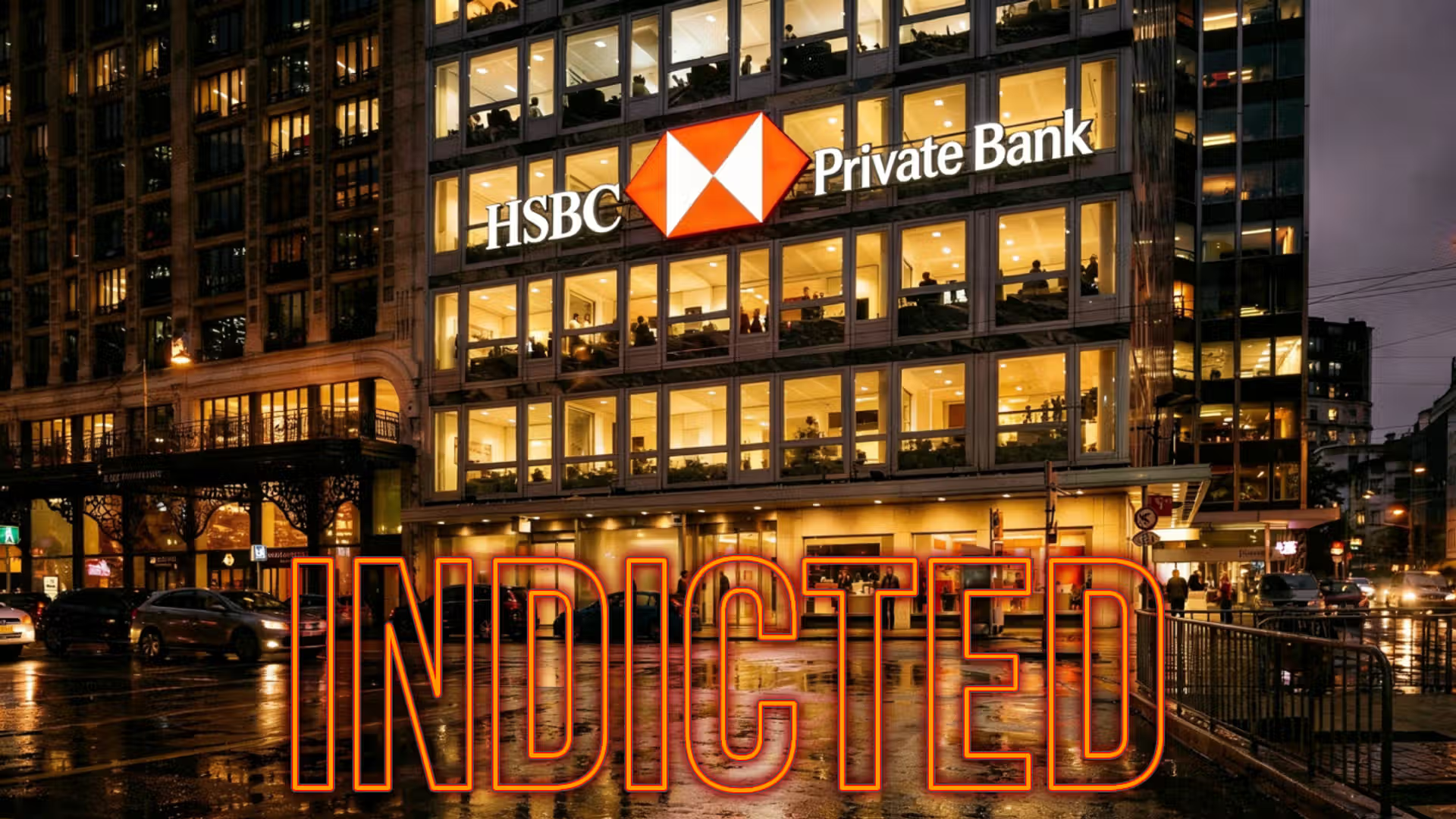
Financial securities firms must maintain rigorous compliance protocols to safeguard the broader ecosystem from illicit capital placement and structural exploitation. The Financial Industry Regulatory Authority (FINRA) recently issued a severe sanction against the brokerage firm known as TradingBlock, enforcing a substantial penalty for critical administrative deficiencies. This regulatory intervention highlights the ongoing efforts by independent oversight bodies to ensure that market participants fulfill their systemic duties. Brokerage entities are legally compelled to design, establish, and continuously execute operational frameworks capable of identifying suspicious patterns within customer accounts. When these corporate frameworks break down, financial portals become vulnerable to criminal manipulation, which erodes consumer confidence and threatens market integrity. The final consent agreement documents how structural vulnerabilities remained unaddressed over a prolonged multi-year period, resulting in public censure and a major financial penalty.
Table of Contents



Anti Money Laundering Compliance Failures
The regulatory enforcement documentation details how the brokerage institution, recognized formally under the Central Registration Depository number 128605, failed to meet its structural obligations over several consecutive years. Specifically, from December 2018 through the recent investigative period, the firm did not establish and implement an anti-money laundering compliance program reasonably designed to detect and report suspicious transactions. Under the Bank Secrecy Act and specific industry self-regulatory guidelines, broker-dealers are required to construct risk-based systems tailored to the exact nature of their business activities. The financial regulator discovered that the corporate mechanisms utilized by the firm were deeply inadequate, creating dangerous gaps in transaction monitoring and routine auditing. Financial operations must be reviewed continuously to detect potential patterns of illicit movement, yet the tracking systems at this institution were insufficient to trigger standard investigative protocols.
Regulatory mandates require that brokerages account for specific risk variables, including customer geographic placement, transaction volume volatility, and the nature of the securities traded. The disciplinary findings confirm that the brokerage lacked the internal architecture necessary to properly handle warnings or suspicious indicators that would normally prompt further scrutiny. Because of these systemic flaws, suspicious operations could potentially flow through customer accounts without initiating formal internal investigations or resulting in the submission of federal disclosures. The omission of robust automated or manual monitoring tools meant that the corporate enterprise operated with reduced visibility into high-risk transaction types. Consequently, the Financial Industry Regulatory Authority determined that the firm operated in direct violation of standard compliance rules, which mandate complete, functional systems designed to prevent the masking of illicit funds.
To maintain systemic defense lines, firms must continuously evaluate their risk exposure, adapting automated filters to capture shifts in bad actor behaviors. The failure to deploy functional screening algorithms allowed unusual patterns to process without corporate awareness. When an organization lacks an end-to-end framework to assess transaction velocity, the probability of missing layer events increases exponentially. Security platforms must integrate disparate customer streams, ensuring that historical deposit activities match current trading volume expectations. Without this baseline calibration, transaction patterns remain unanalyzed, leaving the firm blind to structural red flags that would normally cause automated security tools to trigger defensive investigations.




Brokerage Oversight Gaps
A primary factor contributing to this enforcement action was the structural failure of corporate supervision regarding suspicious account patterns and transaction monitoring. Broker-dealers are required to designate experienced personnel to oversee compliance mechanisms, ensuring that automated warnings or unusual customer behaviors receive appropriate professional review. The investigation revealed that the supervisory protocols implemented by the firm were not scaled appropriately to manage the complexity and scope of its expanding financial activities. When compliance personnel are under-resourced or operate without clear operational guidelines, the capacity to investigate background irregularities decreases significantly. This systemic gap meant that standard operational alerts regarding massive asset transfers, unusual liquidation patterns, or foreign capital routing could pass through the corporate infrastructure completely unnoticed.
Effective oversight within the securities sector demands that every unusual transaction pattern trigger a clear, documented chain of custody and verification. The firm failed to construct these mandatory internal pipelines, which resulted in a prolonged period of operational vulnerability where supervisory staff lacked the tools to execute their legal duties. In addition to general transaction monitoring failures, the firm suffered from internal tracking errors related to corporate transparency and registration updates. This lack of comprehensive oversight created a fragmented internal environment where compliance data stayed isolated, preventing supervisors from connecting multiple independent warning indicators. The regulatory body emphasized that maintaining a compliance department without giving it the necessary resources, authority, or written procedures constitutes a severe breach of general supervision protocols.
Supervisory tracking must extend across all branches of a brokerage enterprise, connecting individual account registrations with broader market activities. When data siloing occurs, internal reviewers cannot identify coordinated networks attempting to execute suspicious liquidations across multiple accounts. The absence of interconnected systems meant that high-risk fund transfers could occur concurrently without triggering a unified corporate alert. Regulatory frameworks mandate that compliance officers possess an uninterrupted view of fund movements, from initial deposit through terminal execution. This seamless tracking capability is critical for blocking complex integration schemes that split large assets into minor transactions to bypass standard internal boundaries. By neglecting these supervisory channels, the entity failed to maintain an auditable control environment capable of repelling financial threats.


Regulatory Sanctions Imposed
To resolve these documented compliance deficiencies, the brokerage entity entered into a formal agreement involving a public censure, a 210000 dollar fine, and a mandatory compliance undertaking. This settlement demonstrates that the regulatory authority refuses to tolerate weak internal controls that compromise the safety of the financial markets. The financial penalty serves as a deterrent to other market participants who might prioritize corporate growth over standard anti-money laundering protocols. Under the terms of the consent order, the firm must pay the 210000 dollar fine directly to the self-regulatory body as a consequence of its multi-year administrative breakdown. Furthermore, the public censure functions as an official warning on the firm’s permanent regulatory record, visible to institutional partners and the investing public alike.
Beyond the immediate financial penalties, the settlement requires the brokerage firm to execute a detailed internal remediation strategy to overhaul its compliance framework. This mandatory undertaking requires the firm to certify, through senior corporate officers, that it has updated, implemented, and fully tested its anti-money laundering policies. The enterprise must demonstrate to regulators that its revised system can accurately identify red flags, manage transaction monitoring alerts, and document internal investigations. This operational transition ensures that the firm cannot simply return to business as usual after paying the monetary penalty. Regulators increasingly demand these forward-looking remedies to ensure that penalized firms actively reconstruct their compliance culture, moving away from passive check-the-box approaches toward active, threat-based surveillance.
Corporate governance structures must absorb the lessons of this disciplinary action, treating the penalty as a clear indicator that administrative passivity carries a high cost. The requirement for officer certification places direct legal and professional accountability upon senior leadership, forcing them to prioritize compliance infrastructure updates. Remediation schedules are closely monitored by independent examiners, meaning any secondary failure to meet the agreed-upon milestones could trigger compounding regulatory actions. By linking corporate survival to verifiable structural upgrades, the enforcement framework ensures that market participants actively eliminate systemic vulnerabilities. This proactive approach strengthens the entire industry, reducing the footprint of unmonitored transactional channels that criminal elements seek to exploit for capital preservation.
Compliance Failure Typologies
Financial crime professionals must understand the specific operational vulnerabilities that commonly lead to structural breakdowns within brokerage compliance systems. In environments identical to this case, several distinct patterns emerge that allow illicit activities to bypass corporate defense mechanisms. Anti-money laundering specialists should remain highly vigilant regarding these specific institutional weaknesses:
- Inadequate System Calibration: The failure to adjust automated transaction monitoring systems to match the specific volume, frequency, and risk profile of the brokerage customer base.
- Insufficient Supervisory Resources: Allocating minimal personnel or inadequate technological tools to handle the volume of compliance alerts generated by everyday trading.
- Undocumented Internal Investigations: Closing potential warning indicators without keeping formal, written records explaining why the activity was deemed non-suspicious.
- Isolated Compliance Data: Storing registration updates, customer documentation, and transaction histories in separate corporate databases that prevent comprehensive risk analysis.
- Outdated Written Procedures: Relying on generic, unmodified compliance manuals that fail to address modern financial crime threats or specific institutional developments.
Key Points
- The independent financial regulator issued a public censure and an official 210000 dollar fine against the corporate entity known as TradingBlock.
- The enforcement action resulted from a multi-year failure to establish and implement a compliant anti-money laundering program between 2018 and the recent review.
- Internal systems were not reasonably designed to detect, track, or cause the legal reporting of suspicious transactions occurring within consumer brokerage accounts.
- The settlement requires a formal corporate undertaking to certify the complete remediation of all internal surveillance and supervisory protocols.
- Compliance professionals use this case as a primary example of how prolonged technical neglect leads to severe financial and reputational penalties.
Related Links
- Financial Industry Regulatory Authority Disciplinary Actions Database
- Bank Secrecy Act Compliance Guidance From Financial Crimes Enforcement Network
- Securities and Exchange Commission Anti-Money Laundering Broker-Dealer Rules
- Financial Action Task Force Guidance For The Securities Sector
Other FinCrime Central Articles About FINRA’s Latest Actions
- FINRA Fines Brentwood Capital Advisors 45000 Dollars for AML Failures
- MCAP LLC Faces FINRA Censure for Failing to Maintain Independent AML Testing Standards
- FINRA Penalizes Canaccord Genuity 20M$ for AML Failures
Source: FINRA
Some of FinCrime Central’s articles may have been enriched or edited with the help of AI tools. It may contain unintentional errors.
Want to promote your brand, or need some help selecting the right solution or the right advisory firm? Email us at info@fincrimecentral.com; we probably have the right contact for you.