Money laundering has increasingly shifted into the digital space, where criminals exploit fragmented compliance systems, anonymous payment rails, and lightly supervised platforms to conceal illicit assets. The evolution of technology has forced financial institutions to balance two competing priorities: rapid customer onboarding and effective detection of suspicious activity. Cases across Europe, North America, and Asia continue to demonstrate that outdated monitoring tools cannot keep up with the sophistication of organized networks that weave together stolen identities, synthetic accounts, and proxy transactions.
Table of Contents


Money laundering risks in the digital ecosystem
This gap between regulatory requirements and operational capacity has led to fines that exceed billions annually under frameworks such as the US Bank Secrecy Act, the EU’s Anti-Money Laundering Directives, and global standards set by the Financial Action Task Force. Institutions are under pressure not just to identify suspicious transactions but to provide full transparency on why activity was flagged and how decisions were made. Against this backdrop, SEON has launched a new suite of explainable artificial intelligence tools designed to tackle the persistent bottlenecks of anti-money laundering investigations.
Rather than relying on static databases and lengthy manual reviews, SEON’s system emphasizes real-time detection through over 900 behavioral and digital signals. This approach highlights how technology can move compliance from a reactive model to one that actively prevents laundering attempts before they penetrate the financial system.
The role of explainable AI in AML investigations
The central innovation in SEON’s launch is explainable AI, a model that provides investigators with transparent reasoning behind every risk score. Traditional black-box systems have long been criticized for producing risk alerts without disclosing the underlying logic, leaving compliance teams in a weak position when facing regulators. Explainable AI resolves this by breaking down each factor contributing to a score, from device data to behavioral anomalies, making the decision process traceable and auditable.
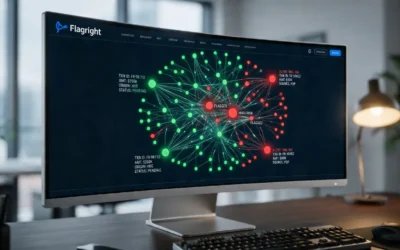
Money launderers typically attempt to fragment their activities across multiple accounts or identities to disguise the source of funds. SEON’s similarity ranking tool directly addresses this by linking users who share devices, IP addresses, or behavioral traits. By automatically mapping these connections, the platform bypasses one of the most labor-intensive tasks in AML: manual graph-building. Analysts can now trace patterns of coordinated laundering activity that previously slipped through the cracks due to workload constraints.
The screening agent also tackles the challenge of false positives, which have historically consumed significant compliance resources. By prioritizing alerts that present the highest likelihood of true risk, SEON allows analysts to focus on genuine threats while maintaining compliance with regulatory requirements. The result is not just efficiency but a meaningful reduction in missed red flags, ensuring launderers face fewer opportunities to exploit blind spots.
How SEON addresses global laundering patterns
Money laundering networks increasingly rely on speed, anonymity, and the ability to exploit cross-border regulatory gaps. Online gambling, e-commerce, and digital banking are prime channels where illicit actors can blend illegal proceeds with legitimate flows. The AI-driven risk indicators in SEON’s suite monitor precisely these entry points, including email addresses, phone numbers, device fingerprints, and IP histories.
By capturing signals at the first customer interaction, financial institutions can flag risks before accounts are established and transactions processed. This early-stage detection matters because launderers often operate in short cycles, using mule accounts for a few weeks before discarding them. Delayed intervention allows these cycles to complete, enabling funds to vanish through layering techniques that obscure their origin.
The natural language rule builder empowers compliance teams to react quickly to emerging laundering typologies. Instead of waiting for developers to hard-code detection scenarios, analysts can describe logic in plain language and deploy it immediately. This adaptability is critical in a landscape where criminals are constantly testing new methods, from using prepaid debit instruments to embedding payments in gaming platforms.
The relevance extends beyond commercial institutions. Regulators worldwide are moving toward requiring explainability and auditability in automated decision systems, particularly under the EU’s AI Act and the tightening supervisory expectations in the United States. By aligning investigative transparency with regulatory expectations, SEON positions itself not just as a tool for operational teams but as a shield against regulatory enforcement actions.
A future shaped by technology and compliance synergy
The money laundering threat will not diminish, but the way institutions fight it is evolving. SEON’s expansion into advanced AI illustrates a larger industry shift where compliance is no longer treated as a regulatory burden but as a strategic defense capability. By cutting investigation times in half and providing clarity on each decision, explainable AI can free analysts from repetitive tasks and allow them to concentrate on higher-value activities such as building complex case narratives and coordinating with law enforcement.
Financial institutions must remain cautious, as technology alone cannot solve every challenge. Governance frameworks, staff training, and cross-border intelligence sharing remain central to preventing laundering at scale. However, solutions like SEON represent a turning point in which the tools used by compliance professionals are finally catching up with the methods used by criminals. The move from opaque scoring to transparent and traceable risk analysis is particularly significant, as it strengthens the credibility of financial institutions when interacting with regulators and auditors.
Looking ahead, the most effective AML programs will be those that integrate human expertise with AI-driven detection and explainability. The ability to demonstrate not only that suspicious activity was detected, but also how and why, will become a baseline requirement for operating across jurisdictions. SEON’s innovations highlight the direction of travel: compliance technology must become faster, clearer, and smarter if financial institutions are to stay ahead of money laundering networks.
Related Links
- Financial Action Task Force
- European Banking Authority
- Financial Crimes Enforcement Network
- European Commission AML
- US Office of the Comptroller of the Currency
Source: SEON
You can find SEON’s page in the FinCrime Central AML Solution Provider Directory: here.
Want to know which solutions can be envisaged for your specific needs? Access the full feature-based AML Solution Provider Directory
Some of FinCrime Central’s articles may have been enriched or edited with the help of AI tools. It may contain unintentional errors.
Want to promote your brand with us or need some help selecting the right solution or the right advisory firm? Email us at info@fincrimecentral.com; we probably have the right contact for you.