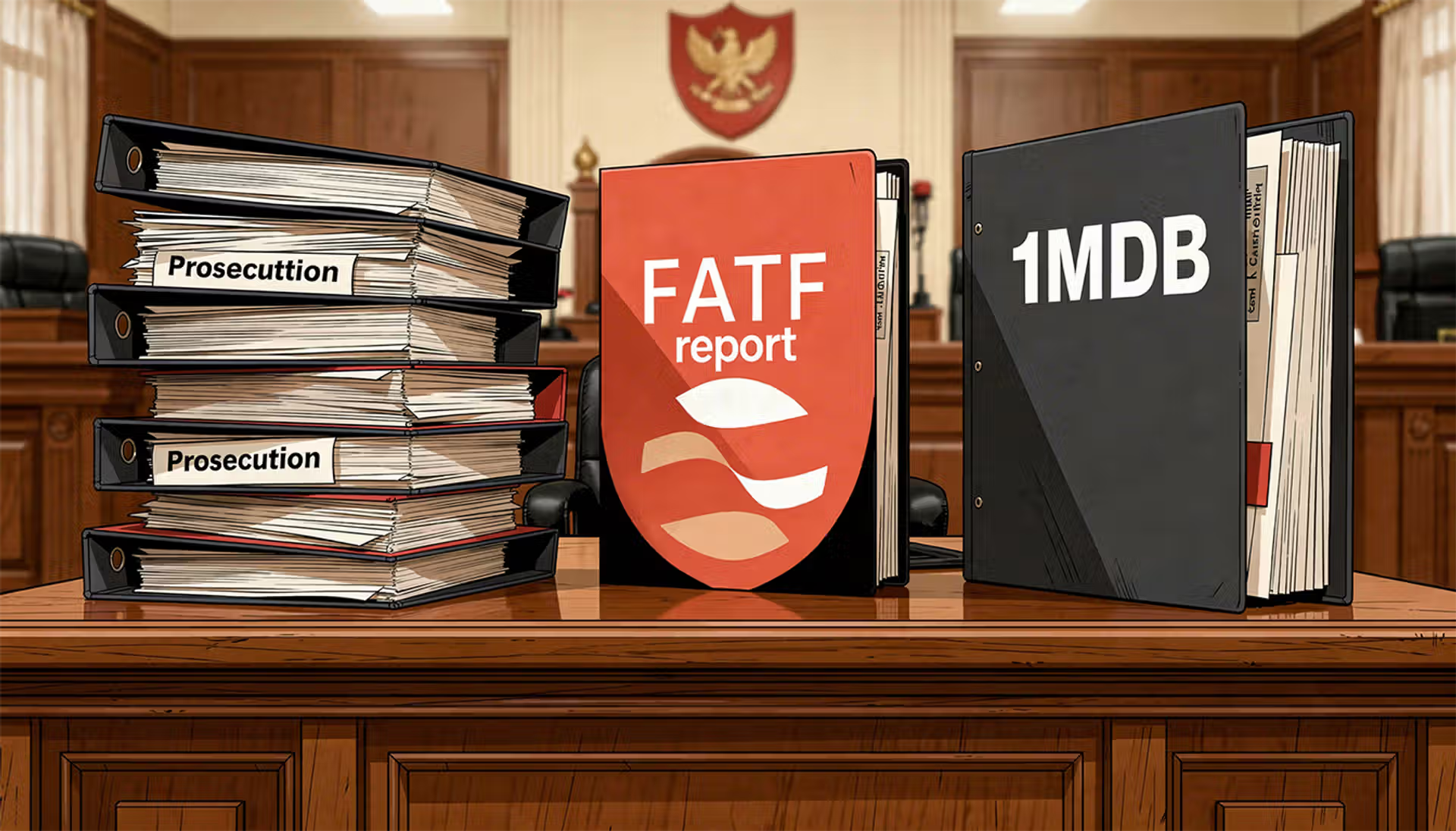
Malaysia’s system for combating money laundering has undergone a substantial enhancement, particularly in its legal framework and supervisory practices, a crucial development since its 2015 mutual evaluation. The Financial Action Task Force (FATF) and the Asia/Pacific Group on Money Laundering (APG) assessment noted that the country must address persistent challenges in effectively prosecuting money laundering cases and converting investigations into convictions, despite its demonstrated capacity to manage complex, high-profile matters. The nation’s Anti-Money Laundering, Anti-Terrorism Financing and Proceeds of Unlawful Activities Act 2001, or AMLA, serves as the central statute for its anti-financial crime regime. This foundational law, alongside its various amendments, mandates specific compliance measures for regulated entities, aiming to fortify the integrity of the financial system against the threat of illicit financial flows.
Table of Contents


Money Laundering Risk Profile and Systemic Weaknesses
The country’s money laundering risks are multifaceted, emanating from several key domestic and transnational criminal activities. These principal threats include corruption, sophisticated fraud schemes such as investment fraud and scams, and the economic vulnerabilities associated with a large informal sector. Geographically, Malaysia’s strategic position functions as a transit point, exposing it to extensive smuggling operations involving drugs, wildlife, weapons, and migrants, alongside human trafficking, organised crime, and piracy. The national authorities possess a solid general understanding of these risks, routinely conducting assessments, yet there is an acknowledged need to deepen this comprehension in specific high-risk areas. These areas demanding more attention involve cross-border crimes and the complexities of third-party money laundering and trade-based money laundering schemes, which criminals exploit to obscure the origins of criminal proceeds. The misuse of corporate structures, which facilitates beneficial ownership opacity, is an additional, well-understood risk, and while the country has implemented measures to obtain beneficial ownership data, further refinements are needed to fully satisfy the urgent requirements of law enforcement agencies.
Supervisory Framework and Preventive Measures
The framework for supervision and preventive measures across financial institutions, virtual asset service providers, and designated non-financial businesses and professions (DNFBPs) is generally robust. This system is largely governed by the AMLA, which imposes stringent obligations, including customer due diligence, suspicious transaction reporting, and comprehensive record-keeping requirements for all regulated entities. For the financial sector, a substantial level of effectiveness in anti-money laundering controls has been achieved, reflecting the central bank’s detailed guidelines and rigorous oversight. However, significant deficiencies remain in the non-financial sectors, specifically among DNFBPs, which are urgently required to enhance the effectiveness of their preventive measures. Smaller financial institutions and various DNFBPs demonstrate underdeveloped risk awareness and mitigation protocols, suggesting a need for more granular supervision and targeted educational outreach to ensure consistent application of the risk-based approach across all regulated entities. The integrity of the AML regime relies on universal compliance to prevent criminals from exploiting the weakest links in the system.
The 1MDB Case and its Enduring Money Laundering Impact
The investigation into the 1Malaysia Development Berhad, or 1MDB, case stands as a landmark example of both the scale of financial crime risk and the resulting structural reforms in the country. This colossal fraud involved billions in misappropriated funds diverted through a sophisticated, international network of transactions, shell companies, and bank accounts across multiple jurisdictions. The sheer complexity of the money laundering scheme exposed systemic weaknesses, triggering comprehensive legislative and policy overhauls within Malaysia’s anti-financial crime infrastructure, including significant amendments to its principal anti-money laundering legislation.
The case demonstrated the government’s capacity to pursue complex financial crimes involving high-profile persons, often requiring extensive cross-border tracing and legal cooperation. Crucially, the period under review saw the recovery of approximately €8 billion in assets, with the vast majority directly linked to the 1MDB-related assets. This remarkable achievement in asset recovery, facilitated by civil forfeiture actions and settlements, underscored the effectiveness of the proceeds of crime laws and international collaboration.
However, the intensive focus required for the 1MDB investigation also created an unintended operational bottleneck. Law enforcement agencies’ substantial commitment of personnel and resources to this singular, complex case regrettably curtailed their capacity to pursue other important money laundering matters during the same review period. This operational diversion highlights a critical challenge for the country: maintaining effective and consistent enforcement across the entire spectrum of financial crime risks while managing the demands of politically sensitive or extraordinarily complex cases. This situation has contributed to the overall challenge of translating money laundering investigations into a consistently high volume of prosecutions and convictions commensurate with the country’s high-risk profile.
Future Focus: Strengthening Enforcement and Global Cooperation
The ultimate success of Malaysia’s strengthened anti-money laundering legal and supervisory framework hinges on its ability to demonstrate a sustained, significant increase in money laundering prosecutions and convictions. The recent mutual evaluation report clearly outlined this enforcement gap as a key area demanding immediate and strategic focus. Furthermore, while the country has modernised its legal tools for international cooperation, including a new case management system, the use of mutual legal assistance in supporting cross-border investigations and prosecutions for serious crimes such as drug trafficking, fraud, and organised crime remains underutilised. Enhancing the effectiveness of this international cooperation mechanism is fundamental to combating the pervasive nature of transnational money laundering, which routinely exploits global financial pathways. The official recommended actions for the country within the next three years mandate a concentrated effort on strengthening this international cooperation, enhancing the sanctions framework, and demonstrating a decisive and measurable increase in the rate of money laundering prosecutions and convictions. These efforts must address the operational capacity constraints and the legal hurdles that presently impede the effective translation of robust investigations into compelling legal outcomes that ultimately disrupt criminal networks and recover illicit proceeds.
Key Points
- Money laundering risks in Malaysia are driven by corruption, fraud, the informal economy, digital finance growth, and its location as a smuggling and trafficking transit hub.
- The legal framework, including the Anti-Money Laundering, Anti-Terrorism Financing and Proceeds of Unlawful Activities Act 2001, has been strengthened, notably since the 1MDB case.
- Supervision of the financial sector is robust, but major improvements in effectiveness are still required for Designated Non-Financial Businesses and Professions (DNFBPs).
- The 1MDB scandal revealed systemic weaknesses and led to significant reforms but also diverted law enforcement resources from pursuing other money laundering cases.
- The primary ongoing challenge is a low rate of money laundering prosecutions and convictions, requiring a strategic focus on enforcement capacity and increased international legal assistance.
Related Links
- Financial Action Task Force Official Website
- Bank Negara Malaysia Anti-Money Laundering, Countering Financing of Terrorism Policies
- Text of the Anti-Money Laundering, Anti-Terrorism Financing and Proceeds of Unlawful Activities Act 2001
- Asia/Pacific Group on Money Laundering (APG) Mutual Evaluation Reports
- United Nations Office on Drugs and Crime, Corruption and Economic Crime Section
Other FinCrime Central Articles About Malaysia
- Alipay Malaysia fined for sanctions screening lapse
- Malaysia Proposes Blockchain Identity System to Fight Growing Fraud
Source: FATF
Some of FinCrime Central’s articles may have been enriched or edited with the help of AI tools. It may contain unintentional errors.
Want to promote your brand, or need some help selecting the right solution or the right advisory firm? Email us at info@fincrimecentral.com; we probably have the right contact for you.