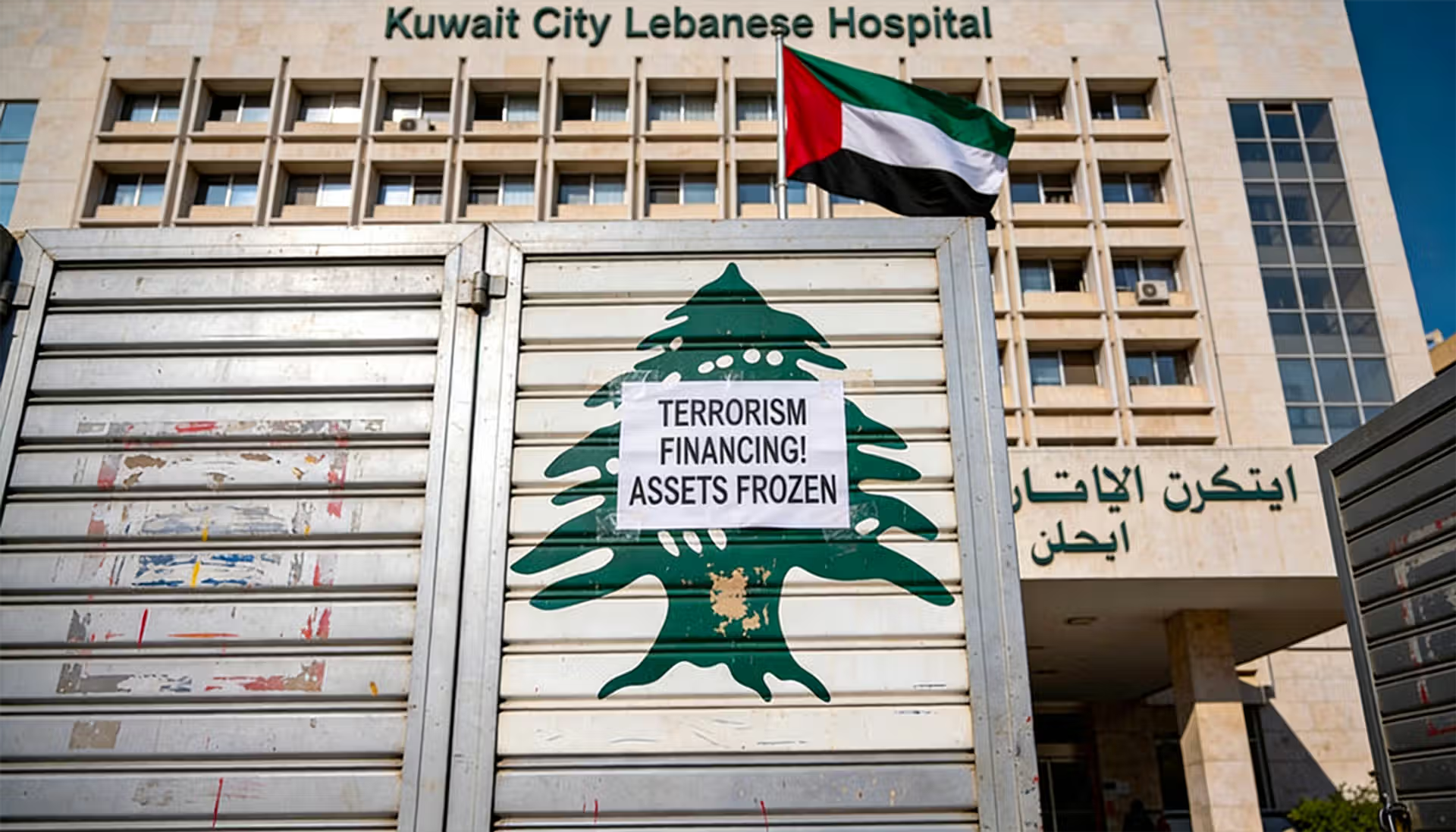
Kuwaiti authorities have initiated a comprehensive freeze on all financial assets associated with eight medical facilities in Lebanon due to identified links with terrorist financing networks. This decisive action follows the mandates of the United Nations Security Council resolutions under Chapter VII, which empower member states to block resources that could facilitate acts of violence or the proliferation of weapons of mass destruction. All financial institutions and commercial entities operating within the state of Kuwait must comply immediately with these restrictive measures to ensure no capital flows toward the blacklisted entities. Local regulators have warned that any failure to implement these asset freezes within the specified twenty-four-hour window will result in severe legal consequences for the non-compliant parties. This specific case highlights the growing intersection between healthcare infrastructure and illicit financial pipelines used by non-state actors to move funds across international borders.
Table of Contents


Strategic Implementation of Global Sanctions and Financial Freezes
The decision by the Kuwaiti government to target specific medical institutions in Lebanon represents a significant escalation in the regional fight against the laundering of funds for extremist purposes. By listing these hospitals, Kuwait is effectively cutting off a vital artery of financial support that often masquerades as humanitarian or social service expenditures. The regulatory framework used for this enforcement is rooted in the sovereign right to protect the national financial system from being exploited as a conduit for criminal wealth. Under the current directives, every person or corporation under Kuwaiti jurisdiction is prohibited from providing any funds, economic resources, or related financial services to the designated parties. This includes not only direct transfers but also any indirect support that could lead to the appreciation or utilization of existing frozen assets. The transparency required by these regulations ensures that the committee overseeing the sanctions is informed of every attempted transaction involving the blacklisted hospitals, thereby creating a robust audit trail for international investigators.



Mechanism of Asset Freezing and Reporting Requirements
The operational aspect of this sanctions regime relies on the speed and accuracy of the private sector in identifying and isolating accounts tied to the Lebanese hospitals. Article 21 of the executive regulations mandates an immediate halt to all activity involving funds owned or controlled by these entities, whether such control is held directly or through intermediaries. This requirement extends to Article 22, which specifies that any revenue generated from previously held assets, such as interest or investment dividends, must also be subjected to the freeze. Furthermore, Article 24 imposes a strict reporting obligation, requiring that those who implement the freeze notify the central committee within one day. This report must detail the exact nature, value, and current status of the resources held to prevent the clandestine shifting of capital. By enforcing these high standards of documentation and speed, Kuwait aims to close the window of opportunity for entities to withdraw or hide assets before the legal restrictions take full effect.
Compliance Obligations for Financial Intermediaries and Nationals
The reach of these Kuwaiti sanctions extends beyond domestic borders, applying to Kuwaiti nationals residing abroad and any foreign entity conducting business within the state. The prohibition against making financial services available to the eight listed hospitals is absolute, with the only narrow exception being the accumulation of interest on accounts that have already been frozen. Legal intermediaries, including banks, insurance companies, and investment firms, are tasked with conducting thorough due diligence to ensure that their client portfolios do not contain hidden links to the medical facilities in Nabatieh, Bint Jbeil, or Beirut. The complexity of modern money laundering often involves the use of pharmacy fronts or third-party contractors to disguise the ultimate destination of the money. Therefore, institutions must look beyond the surface-level names on accounts and investigate the beneficial ownership structures to identify any shadow influence from the sanctioned hospitals. The integrity of the Kuwaiti financial sector depends on the collective vigilance of these professionals in upholding the rule of law against global terrorism.
Regional Stability through Targeted Financial Enforcement
The proactive stance taken by Kuwait serves as a critical component of the broader Middle Eastern effort to stabilize the economy by removing the influence of illicit actors. By blacklisting institutions like the Al Rasoul Al Aazam Hospital and the Sheikh Ragheb Harb University Hospital, the state is addressing the specific vulnerabilities present in the cross-border flow of charitable and medical funding. This strategy acknowledges that the infrastructure of a state, including its healthcare system, can sometimes be compromised by entities seeking to launder the proceeds of crime or fund political violence. The ongoing coordination between Kuwaiti supervisory bodies and international regulators ensures that these measures are part of a unified front against financial crime. As the global landscape of money laundering evolves, the reliance on Chapter VII resolutions provides a clear and authoritative legal basis for states to act decisively. The successful isolation of these Lebanese hospitals from the Kuwaiti financial market is expected to significantly degrade the operational capacity of the networks they are alleged to support.
Key Points
- Kuwaiti regulators have officially blacklisted eight Lebanese hospitals, including Al Rasoul Al Aazam and Sheikh Ragheb Harb, due to confirmed ties with terrorist financing operations.
- The legal action is taken under Chapter VII of the United Nations Security Council resolution,s which focus on counterterrorism and preventing the spread of weapons of mass destruction.
- All Kuwaiti entities and nationals are legally prohibited from providing any financial services or economic resources to the listed hospitals to prevent the flow of capital to illicit networks.
- Compliance officers must report any identified frozen assets or attempted transactions involving the sanctioned entities to the government committee within twenty-four hours of discovery.
- The sanctions apply to all direct and indirect holdings, including funds derived from the assets and any resources controlled by individuals acting on behalf of the hospitals.
Related Links
- United Nations Security Council Subsidiary Organs Sanctions Committees
- Kuwait Ministry of Foreign Affairs International Resolutions Committee
- Financial Action Task Force Guidance on Counter Terrorist Financing
- Central Bank of Kuwait Regulatory Compliance and Anti Money Laundering Portal
- International Monetary Fund Reports on Financial Integrity in the Middle East
Other FinCrime Central Articles About Kuwait
- From Washington to Kuwait City The Quiet Battle Against Dirty Money
- Kuwait, India, and Iraq Forge New AML Intelligence Pact
- Saudi Arabia and Kuwait Advance Regional AML Defenses with New Partnership
Some of FinCrime Central’s articles may have been enriched or edited with the help of AI tools. It may contain unintentional errors.
Source: Gulf News
Want to promote your brand, or need some help selecting the right solution or the right advisory firm? Email us at info@fincrimecentral.com; we probably have the right contact for you.