An exclusive article by Fred Kahn
International crime syndicates have transformed the French financial landscape into a primary destination for the integration of illicit narcotics revenue, prompting a specialized response from the PNACO. By exploiting the stability of the national economy, these organizations have established sophisticated networks that allow for the seamless movement of billions of euros through legitimate commercial channels. The convergence of high volume cash markets, a robust luxury real estate sector, and the rapid adoption of digital assets has created an environment where criminal capital can be effectively shielded from detection. This systemic infiltration poses a significant threat to the integrity of the domestic market as authorities and the newly established PNACO struggle to decouple criminal proceeds from the legal economy.
Table of Contents


France as a Strategic Safe Harbor for Drug Money
International crime syndicates have found a fertile ground for their financial operations within the borders of the French Republic. The mechanism of laundering involves a complex web of transactions designed to obscure the origins of billions of euros generated from the global cocaine and synthetic drug trade. By leveraging the high volume of the national economy, these groups blend illicit funds with legitimate commercial turnover in sectors such as hospitality, retail, and construction. Recent reports from the Financial Action Task Force indicate that the sophisticated nature of these operations makes them particularly difficult to detect without advanced forensic accounting. The strategic location of the country, coupled with its deep links to international trade routes, provides an ideal environment for the layering phase of money laundering. Criminal networks exploit the vastness of the domestic market to move capital without triggering the immediate suspicion of regulatory bodies. This process is often facilitated by a network of professional enablers, including lawyers and accountants, who provide the necessary veneer of legitimacy to these transactions. The scale of this financial infiltration is now considered a threat to the integrity of the national economy and the stability of the Eurozone financial system. Large-scale cash-intensive businesses, such as automotive dealerships and high-end art galleries, serve as convenient conduits for moving physical currency into the digitized banking system. These entities often report inflated sales figures to justify the sudden influx of wealth, creating a distorted economic reality in local communities. The sheer volume of transactions processed daily in French metropolitan areas provides a thick veil of noise, under which illicit actors can operate with a high degree of confidence. Furthermore, the historical strength of the French banking sector, while heavily regulated, offers a level of prestige that cartels desire to validate their holdings on the global stage. As these organizations become more entrenched, they begin to influence local politics and social structures, creating a cycle of dependency that is increasingly difficult to break.
Methods of Infiltration in the French Real Estate Market
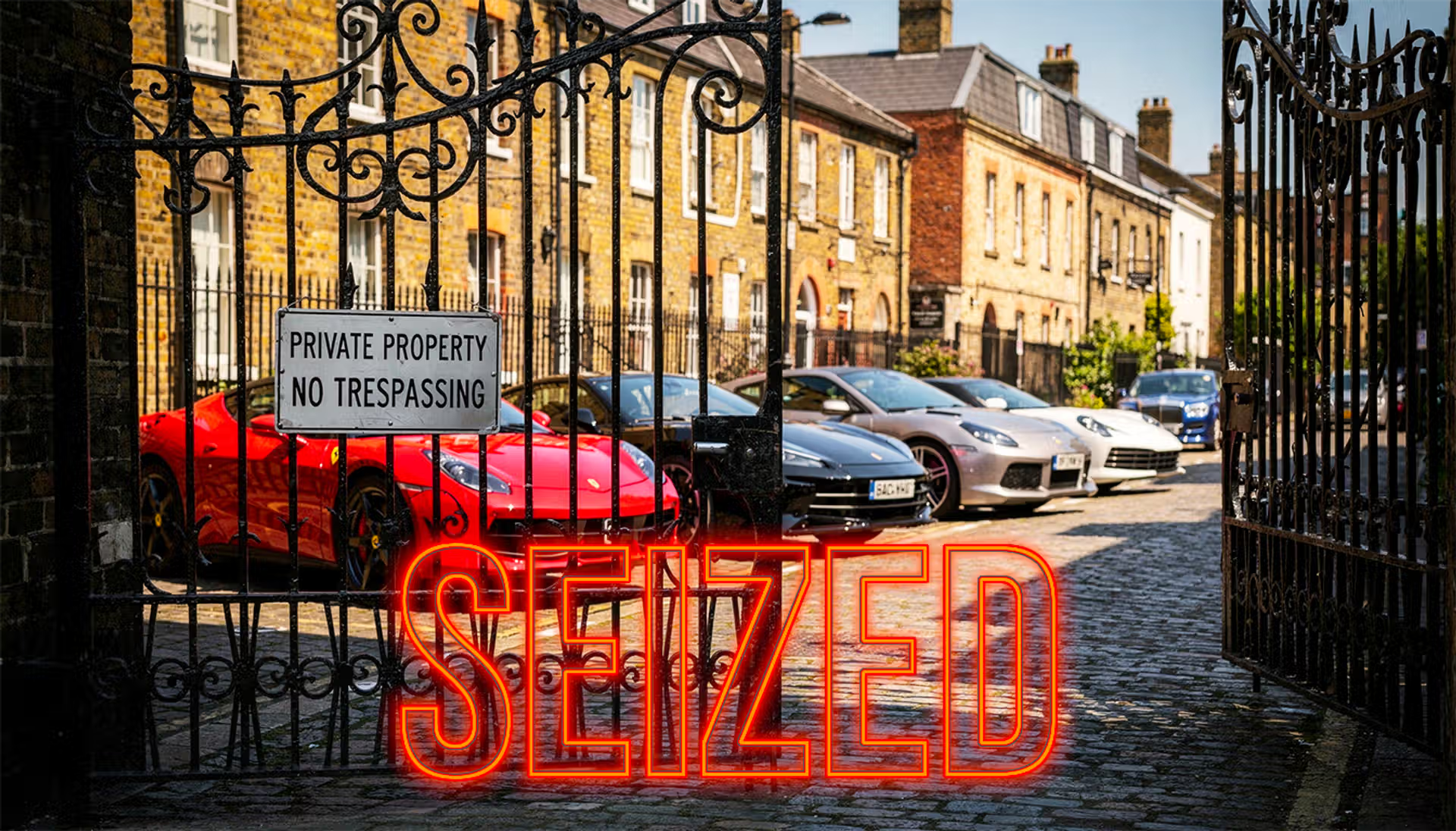
The acquisition of high-value assets has emerged as a preferred method for cartels to park their wealth for long periods. Luxury properties in the capital and on the southern coast are frequently targeted by shell companies based in offshore jurisdictions. These entities often hide the ultimate beneficial owner, making it nearly impossible for local authorities to trace the funds back to specific criminal activities. The use of complex corporate structures allows for the integration of millions of euros into the legal economy with relatively low risk. Furthermore, the renovation of these properties provides an additional avenue for laundering through inflated invoices and cash payments to subcontractors. Regulatory agencies have noted a sharp increase in the number of suspicious activity reports originating from the real estate sector, yet the rate of actual asset seizure remains low relative to the estimated volume of illicit investment. This gap in enforcement has encouraged criminal organizations to expand their portfolios, viewing the domestic property market as a secure vault for their profits. The physical nature of real estate makes it an attractive target for long-term storage of value, shielded from the volatility of more transparent financial markets. New developments in the commercial real estate sector, particularly logistics hubs and warehouse spaces, have also seen a surge in suspicious foreign investment. These properties are not only stores of value but also serve as functional assets for the storage and distribution of physical narcotics. The dual-use nature of these investments makes them highly efficient for criminal syndicates, as they provide both a financial return and an operational advantage. Additionally, the complex legal landscape surrounding property rights and corporate transparency in certain overseas territories linked to France complicates the efforts of investigators to unmask the true investors.
The Launch of PNACO to Dismantle Narcobanditism
A definitive turning point in the national strategy occurred on January 5, 2026, with the official entry into function of the National Anti-Organized Crime Prosecutor’s Office, known as the PNACO. This specialized judicial body was established under the landmark legislation of June 13, 2025, which was specifically designed to extract the country from the systemic traps of the narcotics trade. By centralizing the prosecution of high-level criminal networks at the tribunal in Paris, the state has created a formidable opponent capable of tracking the most complex financial flows across the entire territory. The PNACO operates with a team of elite magistrates and specialized investigators who focus exclusively on the economic foundations of crime, particularly the laundering of drug proceeds through the legal economy. This central authority allows for a unified response to the increasingly professional tactics used by international syndicates, which often involve multiple jurisdictions and sophisticated shell companies. The creation of this office represents a recognition that traditional regional policing is insufficient to combat the global reach of modern cartels. By prioritizing the seizure and confiscation of assets, the PNACO aims to bankrupt criminal organizations and remove the financial incentive for their operations. The office also works in close coordination with international partners, ensuring that illicit funds cannot simply be moved to another European safe harbor once a French investigation begins. This proactive and centralized approach is intended to serve as a blueprint for a broader European offensive against the financial pillars of organized crime.
Digital Assets and the Evolution of Shadow Banking
Technological advancements have provided narcotraffickers with new tools to move capital across borders with unprecedented speed and anonymity. Cryptocurrency mixers and decentralized finance platforms are now integral to the laundering process, allowing cartels to break the link between a digital wallet and a physical identity. In major urban centers, clandestine exchanges operate in the shadows, converting vast sums of cash into digital tokens that can be transferred globally in seconds. This digital shadow banking system operates entirely outside the purview of traditional financial regulators, creating a massive blind spot for law enforcement. Authorities have identified specific instances where digital assets were used to purchase high-end electronics and luxury goods, which were then resold to generate clean fiat currency. The speed of these transactions often outpaces the ability of judicial systems to issue freezing orders, leading to a perpetual game of cat and mouse between investigators and cyber criminals. The integration of traditional cash businesses with modern digital laundering techniques has created a hybrid model that is exceptionally resilient to conventional policing methods. This evolution has led to the rise of specialized brokers who operate within the French borders, facilitating the exchange of paper cash for stablecoins or other crypto assets for a significant commission. These brokers often utilize a network of mules who make small, frequent deposits into various accounts to avoid triggering the automated alerts used by traditional banks. By the time the funds are aggregated in a final destination, they have been split and recombined so many times that the audit trail is effectively destroyed. This decentralized approach to money laundering mirrors the structure of the cartels themselves, making the network nearly impossible to dismantle through the removal of a single node.
Key Points
- France has emerged as a primary hub for international cartels to integrate narcotics profits into the European financial system.
- The luxury real estate markets in Paris and the French Riviera are key targets for high-value layering and long-term capital storage.
- The PNACO officially entered into function on January 5, 2026, to centralize the fight against the financial structures of organized crime.
- Organized crime groups are blending illicit funds with legitimate cash-based retail businesses to mask the volume of drug revenue.
- The transition to digital assets and crypto mixers has created a shadow banking layer that complicates traditional law enforcement monitoring.
Related Links
- FATF Guidance on Anti-Money Laundering and Terrorist Financing Measures in France
- Europol Serious and Organised Crime Threat Assessment 2025 Report
- French Ministry of Justice National Anti-Organized Crime Prosecutor’s Office Guidelines
- The AGRASC Annual Report on Seized and Confiscated Assets in France
- Official French Government Announcement: PNACO Enters into Function January 2026
Other FinCrime Central Articles About France’s Fight Against Drug Money
- Over €4 Million in Luxury Assets Seized in Major Money Laundering Network Between France, Andorra, and Spain
- French and Italian Police Smash International Money Laundering Network Moving Millions in Gold
- The Stunning Money Laundering Bust at Roissy Airport: How 3 Million Euros Were Smuggled
Some of FinCrime Central’s articles may have been enriched or edited with the help of AI tools. It may contain unintentional errors.
Want to promote your brand, or need some help selecting the right solution or the right advisory firm? Email us at info@fincrimecentral.com; we probably have the right contact for you.