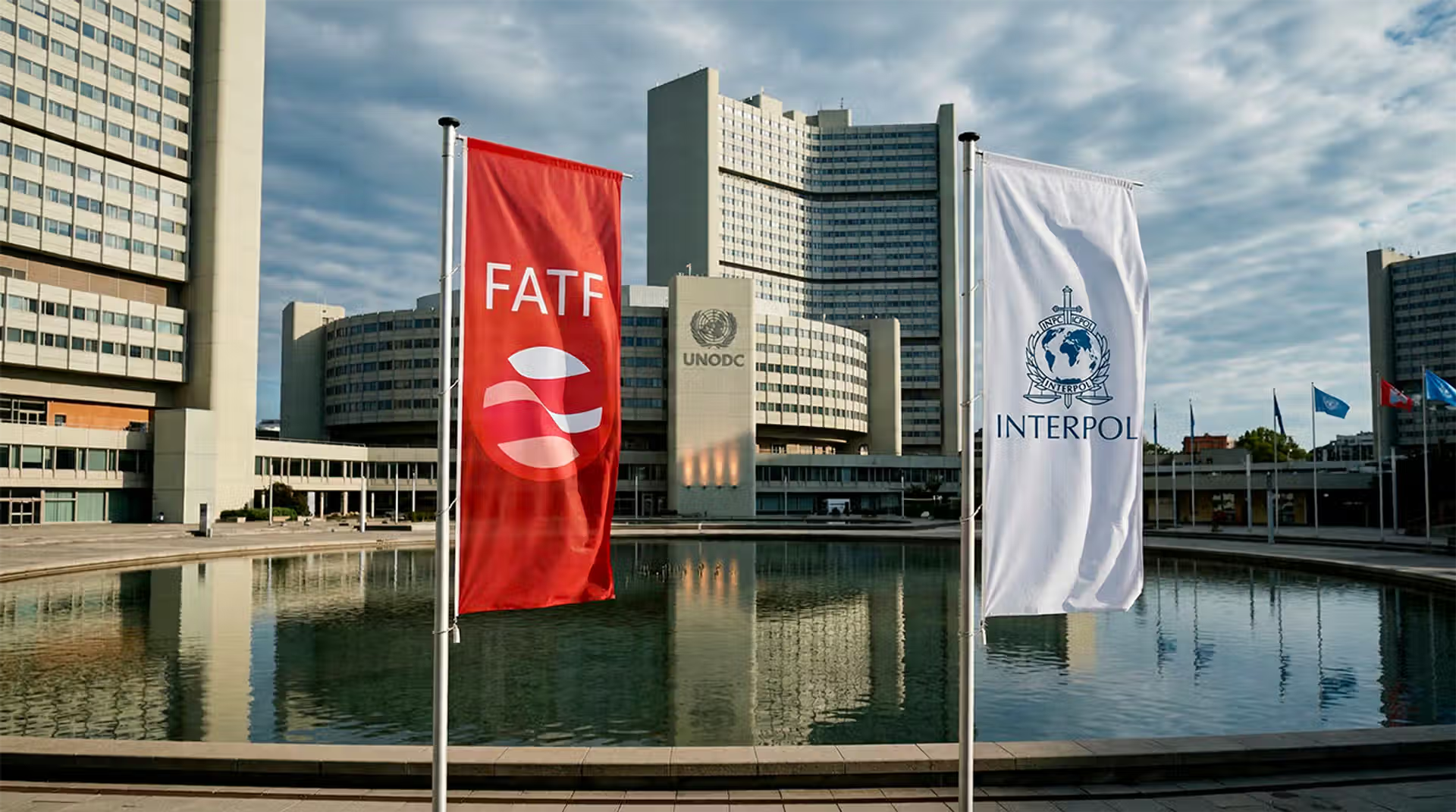
FATF and Interpol joined global leaders this week at the Global Fraud Summit to address the staggering 1.03 trillion dollar annual loss attributed to fraudulent activities. The Financial Action Task Force has emphasized that fraud is no longer a collection of isolated incidents but a sophisticated and technologically enabled criminal economy that requires immediate international intervention. During the summit in Vienna, experts highlighted that nearly half the world’s population faces weekly fraud attempts while recovery rates for victims remain abysmally low at only 4 percent. This high-level meeting serves as a critical turning point for implementing the comprehensive anti-money laundering toolkit designed to disrupt illicit financial flows and recover stolen assets.
Table of Contents


Anti Money Laundering Frameworks
The evolution of financial crime has forced a total reassessment of how nations approach the intersection of fraud and money laundering. Criminal organizations now operate at an industrial scale, using social engineering and instant payment systems to move illicit proceeds across borders before traditional manual detection systems can react. Because fraud is identified as a high-risk predicate offense by 90 percent of countries, the implementation of robust anti-money laundering protocols has become the primary defense mechanism for the global financial system. These protocols are not merely bureaucratic hurdles but are essential structural requirements that mandate transparency in beneficial ownership and the monitoring of suspicious transaction patterns. By treating fraud as a foundational element of money laundering, authorities can utilize specialized legal powers to freeze assets and dismantle the corporate veils that criminals use to hide their identities. The shift toward a risk-based approach allows jurisdictions to prioritize their resources on the most significant threats, such as cyber-enabled scams and cross-border investment fraud, ensuring that the most dangerous criminal networks are targeted first.
Furthermore, the integration of advanced data analytics into the anti-money laundering framework provides a proactive rather than reactive stance against financial predators. Modern systems are now designed to identify the digital footprint of a money launderer by analyzing the velocity and volume of transactions that deviate from established norms. This analytical capability is crucial because the speed of modern banking allows funds to be layered through multiple accounts in seconds, making the task of following the money trail increasingly complex. Regulatory bodies are now pushing for the universal adoption of these technical standards to ensure there are no weak links in the global chain. When one country fails to implement effective oversight, it creates a vacuum that attracts criminal enterprises, effectively turning that jurisdiction into a hub for laundering the proceeds of global fraud. Therefore, the current strategy focuses on closing these gaps through mutual evaluations and peer reviews, ensuring that every member of the global network adheres to the same high standards of vigilance and reporting.



International Cooperation and Virtual Assets
One of the most significant challenges in the modern landscape of financial crime is the rise of virtual assets and their role in facilitating anonymous transfers of stolen wealth. Criminals frequently convert fiat currency obtained through fraud into various cryptocurrencies to obscure the audit trail and move value across jurisdictions without triggering traditional banking alerts. To counter this, the current international strategy involves bringing virtual asset service providers into the regulated space, requiring them to perform the same level of customer due diligence as traditional banks. This regulatory umbrella ensures that digital wallets are no longer black holes for investigators but are instead part of a transparent ecosystem where the travel rule applies to every transfer. By mandating the sharing of originator and beneficiary information for virtual asset transfers, authorities can effectively follow the money through the blockchain, stripping away the anonymity that many fraudsters rely upon. This level of transparency is vital for disrupting the business model of cybercriminals who previously operated with a sense of impunity in the decentralized finance space.
The success of these efforts also hinges on unprecedented levels of international cooperation and information sharing between law enforcement agencies. Since fraud is inherently cross-border in the digital age, a domestic response is often insufficient to catch perpetrators who reside in different continents than their victims. The establishment of joint investigations and the use of mutual legal assistance treaties allow for the rapid exchange of evidence and the coordinated takedown of criminal infrastructure. Public-private partnerships play an equally critical role, as financial institutions often possess the real-time data necessary to identify emerging scam trends before they reach a critical mass. By creating a feedback loop where the private sector shares red flag indicators with the public sector, the entire financial community becomes more resilient. This collaborative environment facilitates the early suspension of suspicious transactions, which is the most effective way to prevent the permanent loss of funds. When information flows freely across borders and between sectors, the net closes on fraudsters, making it increasingly difficult for them to find a safe harbor for their illicit gains.
Asset Recovery and Transaction Freezing
The ultimate goal of any anti-money laundering strategy is the successful recovery of assets and the restoration of funds to the rightful owners. Currently, the low percentage of recovered losses highlights a systemic need for faster intervention mechanisms that can stop a transaction in its tracks. Rapid information sharing is the cornerstone of this act quickly philosophy, as the window for successful recovery often closes within minutes of the initial fraudulent transfer. Specialized units within financial intelligence offices are now focusing on developing the legal and technical infrastructure necessary for the early suspension of payments without requiring a full criminal conviction first. This shift toward administrative freezing allows for the preservation of assets while an investigation is conducted, preventing the criminal from moving the money to an uncooperative jurisdiction. Strengthening these mechanisms not only helps the victims but also serves as a powerful deterrent by removing the profit motive that drives large-scale fraud operations. When the risks of losing the stolen capital outweigh the potential rewards, the attractiveness of the criminal enterprise diminishes significantly.
In addition to technical freezing, the focus on beneficial ownership transparency ensures that investigators can identify the natural persons who ultimately control the accounts used for laundering. Criminals often use complex layers of shell companies and professional money launderers to distance themselves from the original crime. By enforcing strict rules on who truly owns and benefits from a legal entity, the global community makes it much harder for individuals to hide behind a wall of corporate paperwork. This transparency is complemented by payment transparency measures that track the entire journey of a fund transfer from its origin to its final destination. As these tools become more widely adopted and effectively implemented, the global financial system transforms from a playground for illicit actors into a hostile environment for those seeking to exploit others. The ongoing commitment to refining these toolkits ensures that as fraudsters develop new methods of deception, the regulatory framework evolves even faster to protect the integrity of the world’s economy and the security of its citizens.
Future Resilience and Consumer Empowerment
Building a resilient financial system requires a multi-faceted approach that goes beyond just enforcement and regulation to include the empowerment of the end user. While technical barriers and legal frameworks are essential, educating consumers on how to recognize and report fraud attempts serves as the first line of defense. By building trust in the financial system through transparent practices and robust protection laws, governments can encourage more people to engage with formal banking channels, which are inherently more secure than unregulated alternatives. This trust is maintained when victims see that there are clear paths for reporting crimes and that the authorities are actively working to disrupt criminal networks. The collective action of 200 jurisdictions working in harmony creates a formidable barrier against the evolving threats of the digital age, ensuring that the global network stays ahead of criminal innovations.
The integration of artificial intelligence and machine learning into the detection process also promises to enhance the precision of anti-money laundering efforts. These technologies can process vast amounts of data to identify subtle correlations that might be invisible to human analysts, such as the synchronized movement of small amounts across thousands of accounts. As these tools become more sophisticated, they will allow for even earlier detection and more effective disruption of fraud rings. The ongoing dialogue between technologists, policy makers, and law enforcement is vital for ensuring that these innovations are used ethically and effectively. By maintaining a constant state of vigilance and adaptation, the global community can continue to protect the financial infrastructure from those who wish to undermine it for personal gain. The path forward is one of continuous improvement, where the lessons learned from every mutual evaluation and every successful recovery are used to strengthen the collective defense.
Key Points
- Fraud acts as the primary predicate offense for money laundering in 90 percent of global jurisdictions.
- International standards now require virtual asset providers to implement the same transparency rules as traditional banks.
- Rapid transaction freezing and beneficial ownership disclosure are the most effective tools for disrupting illicit financial flows.
- Cooperation between the public and private sectors is essential to identify and stop industrial-scale social engineering scams.
- The global fraud economy currently accounts for over one trillion dollars in illicit financial flows each year.
Related Links
- Financial Action Task Force International Standards on Money Laundering
- United Nations Office on Drugs and Crime Global Program against Money Laundering
- INTERPOL Financial Crime and Anti-Corruption Centre Resources
- Egmont Group of Financial Intelligence Units Operational Guidelines
- Global Anti Scam Alliance State of Scams Annual Report
Other FinCrime Central Articles About the Latest FATF Actions
- FATF Guidelines for Managing Risks of Offshore VASPs
- Digital Assets Face Stricter Oversight as FATF Targets Stablecoin Risks
- FATF Addresses Global Surge in Cyber-Enabled Fraud and Digital Risk
Source: FATF
Some of FinCrime Central’s articles may have been enriched or edited with the help of AI tools. It may contain unintentional errors.
Want to promote your brand, or need some help selecting the right solution or the right advisory firm? Email us at info@fincrimecentral.com; we probably have the right contact for you.