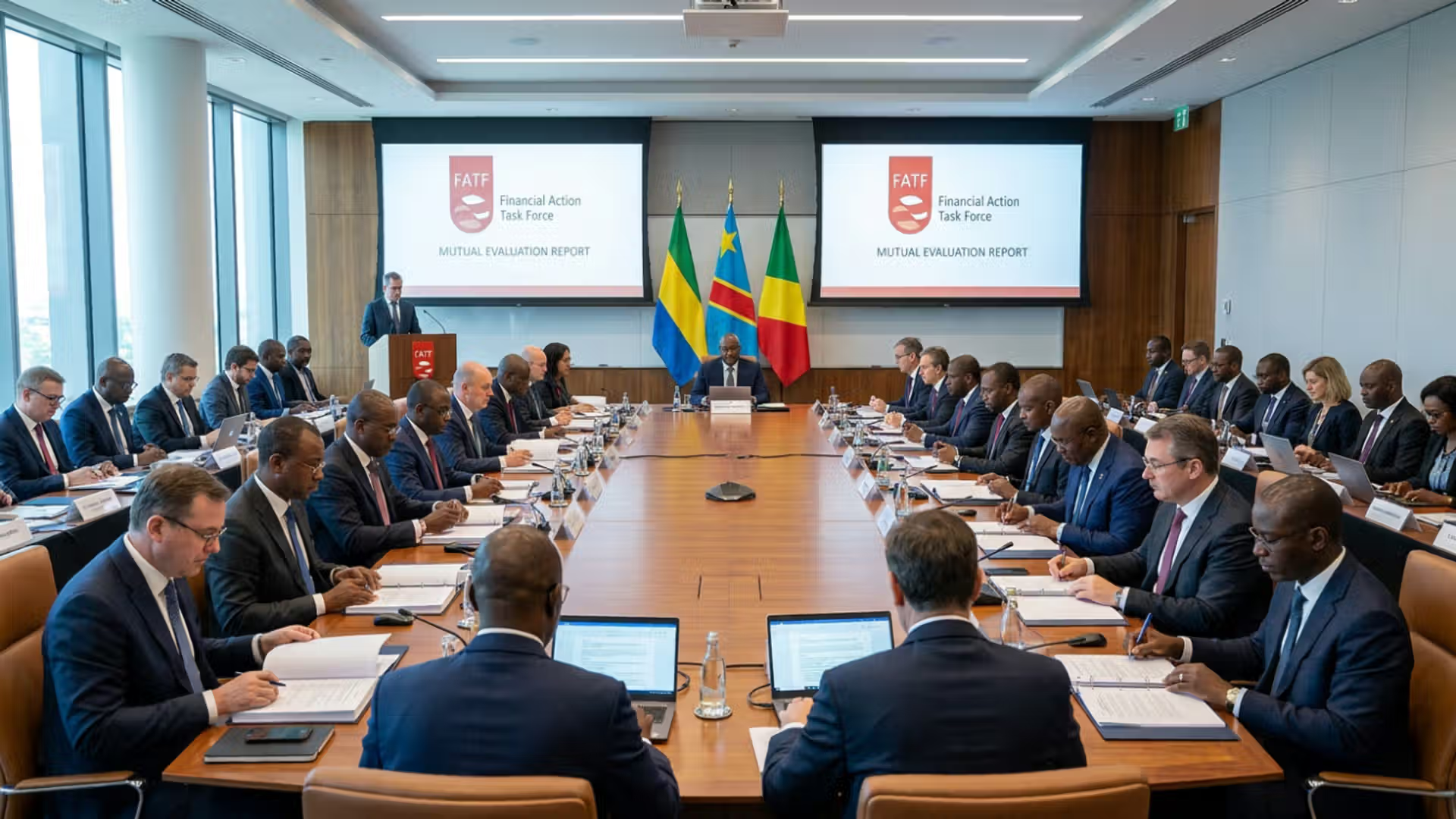
The Financial Action Task Force continues to monitor the progression of defensive fiscal mechanisms across sub-Saharan Africa, publishing highly comprehensive institutional performance evaluations for multiple regional jurisdictions. Financial intelligence infrastructure inside Central Africa faces ongoing systemic adjustments to minimize the strategic exploitation of resource extraction networks, cross-border transactional interfaces, and informal shadow economies. Domestic enforcement panels are executing multi-year legislative mandates intended to align tracking mechanisms with international benchmarks, focusing extensively on high-risk corporate registries and asset tracing protocols. Regulatory entities across the continent recognize that deficient supervisory oversight directly threatens access to global credit lines and dampens foreign infrastructure investments.
Table of Contents



Anti-Money Laundering Frameworks in Africa
African regulatory bodies are expanding their operational perimeter to counter sophisticated corporate concealment and illicit commodity trading. The implementation of automated customer screening and beneficial ownership repositories has become a critical focal point for sub-Saharan central banks looking to insulate domestic commercial networks from international isolation. Many jurisdictions are reinforcing the operational autonomy of their financial intelligence units, allowing local investigators to isolate suspicious transaction reports more rapidly without political or administrative interference. This structural transition demands deeper integration between corporate registration boards, mining sector oversight ministries, and cross-border customs syndicates to effectively choke off the movement of unverified wealth.
Continental strategies are placing increased emphasis on monitoring designated non-financial businesses and professions, which historically provided seamless integration avenues for criminal profits. Real estate markets, legal practices, accounting consultancies, and precious gem brokerages are being subjected to rigid auditing frameworks and mandatory reporting parameters. By establishing strict penalties for compliance failures in these secondary markets, African states aim to reduce the internal velocity of unauthorized funds. Furthermore, the exponential rise of mobile payment systems and digital banking wallets across sub-Saharan corridors introduces distinct surveillance difficulties that necessitate modernized electronic tracing guidelines and synchronized transaction thresholds.




Technical Deficiencies and Reforms Inside Gabon
Gabon has shown a highly calculated approach to addressing its compliance vulnerabilities, as detailed in its enhanced follow-up documentation approved by regional evaluation panels. The state has focused substantial administrative energy on repairing the systemic transparency gaps originally identified during its baseline mutual assessment cycle. Local authorities are actively updating the regulatory parameters governing corporate tracking to guarantee that the ultimate beneficial owners of corporate vehicles cannot obscure their identities behind complex holding structures. These structural improvements are heavily concentrated within the extractive resource sector, where oil and timber revenues require precise transactional auditing to prevent grand corruption, tax minimization schemes, and unapproved capital flight.
The Gabonese financial intelligence infrastructure is undergoing systematic modernization to better ingest, analyze, and disseminate intelligence regarding suspicious corporate movements. Regulators are forcing domestic commercial banking entities to implement advanced verification protocols for politically exposed persons, ensuring that state-linked transactions undergo deep-dive risk categorization. Additionally, the legal framework has been adjusted to enhance international cooperation pathways, allowing Gabonese investigators to share transactional data with global counterparties more spontaneously. The long-term success of these adjustments rests entirely on translating updated legal texts into permanent judicial actions and successful state asset recovery operations.
Monitoring Increased Risks in the Democratic Republic of Congo
The Democratic Republic of Congo continues its extensive institutional overhaul under the direct observation of international assessors, attempting to address the deep structural gaps highlighted during its previous mutual evaluation timelines. Operating under an increased monitoring status, the jurisdiction is working through a comprehensive action plan designed to enhance the speed of criminal justice interventions and reinforce state asset seizure protocols. Given the massive geographical footprint of the nation and its numerous porous borders, the physical tracking of cross-border currency movements remains an exceptionally vulnerable interface that requires aggressive cooperation between customs teams and financial intelligence units. The latest findings emphasize that the state must shift its focus from merely updating legislative text to increasing the actual volume of high-level financial crime prosecutions.
Specialized investigative panels within the country are prioritizing the tracing of funds linked to mineral smuggling and environmental degradation, as these sectors represent primary generation points for unauthorized domestic capital. The central banking authority has expanded its compliance guidelines for microfinance institutions and mobile network operators, which manage an immense volume of everyday transactions across remote provinces. Forcing these non-traditional financial platforms to adopt rigid client identification measures is vital for closing the surveillance gaps utilized by underground networks. Achieving sustainable compliance requires the continuous allocation of technical resources to judicial benches handling complex economic conspiracies.


Tracking Progress and Compliance in the Republic of the Congo
The Republic of the Congo has progressed through its enhanced follow-up evaluation cycle, focusing on the systematic dismantling of technical deficiencies identified within its domestic financial defense networks. Government departments in Brazzaville are updating the statutory responsibilities placed on local financial intermediaries, legal professionals, and luxury asset dealers to ensure the immediate reporting of unusual transactions. The nation is concentrating its administrative capabilities on reinforcing the operational capacity of its domestic analytical bureaus, enabling tracking specialists to better trace illicit funds derived from public sector misappropriation and resource misinvoicing. Regulators acknowledge that maintaining international fiscal connections requires sustaining these enforcement trends beyond basic legislative drafting.
The regulatory architecture within the state is being adapted to facilitate faster information exchanges with regional asset recovery networks, allowing for the rapid freezing of suspicious corporate bank accounts. Supervisory authorities are conducting unannounced on-site audits of commercial banks to verify the effectiveness of their automated transaction monitoring systems and look-through capabilities. These initiatives aim to eliminate regulatory arbitrage opportunities where criminal elements attempt to exploit disparate enforcement levels between adjacent regional economies. The ongoing challenge centers on cultivating a permanent pool of specialized financial investigators capable of dismantling complex cross-border corporate structures.
Institutional Resilience and African Fiscal Security
The continuous release of regional evaluation summaries highlights the permanent nature of global financial monitoring mechanisms and the need for continuous institutional adaptation. Central African states cannot treat compliance upgrades as temporary administrative projects, but must integrate them into the daily operations of their commercial and judicial systems. Future evaluation methodologies will focus significantly less on the theoretical existence of legal statutes on paper and far more on the demonstrable effectiveness of domestic enforcement operations. Evaluators are demanding clear data regarding the total volume of suspicious transaction reports processed, the dollar value of assets frozen, and the definitive judicial outcomes of money laundering cases.
To maintain a positive trajectory, African regional associations must cultivate deeper technical training frameworks and resource-sharing protocols among adjacent member states. Standardizing investigative techniques regarding digital asset tracing, international trade misinvoicing, and shell company identification is essential for long-term continental security. Collaborative cross-border workshops help build the operational alignment and institutional trust required to execute rapid multi-jurisdictional asset seizures. As regional jurisdictions navigate their respective follow-up paths, their experiences demonstrate that true financial security requires total coordination between central ministries, banking supervisors, customs enforcement agencies, and private compliance officers.
Key Points
- International oversight panels released comprehensive compliance performance updates for multiple Central African jurisdictions.
- Gabon is expanding transparency measures across its extractive sectors by implementing mandatory beneficial ownership registration protocols.
- The Democratic Republic of Congo is working under enhanced monitoring parameters to increase financial crime prosecution rates and secure porous borders.
- The Republic of the Congo is strengthening transaction reporting requirements for legal professionals and commercial intermediaries.
- Sub-Saharan nations are actively modernizing financial intelligence units to counter risks associated with digital wallets and natural resource exploitation.
Related Links
- Financial Action Task Force Consolidated Rating Assessment Criteria
- Regional Anti Money Laundering Evaluation Network Oversight Standards
- African Central Bank Financial Intelligence Modernization Guidelines
- Global Beneficial Ownership Transparency and Extractive Industry Framework
Other FinCrime Articles About FATF Country Reports
- Analyzing Post Evaluation FATF Monitoring Progress Across Nepal And Laos
- FATF Report: Dual Realities of Singapore Financial Oversight
- FATF Publishes Updated 2025 Reports for Central European Nations
Source: FATF
Some of FinCrime Central’s articles may have been enriched or edited with the help of AI tools. It may contain unintentional errors.
Want to promote your brand, or need some help selecting the right solution or the right advisory firm? Email us at info@fincrimecentral.com; we probably have the right contact for you.