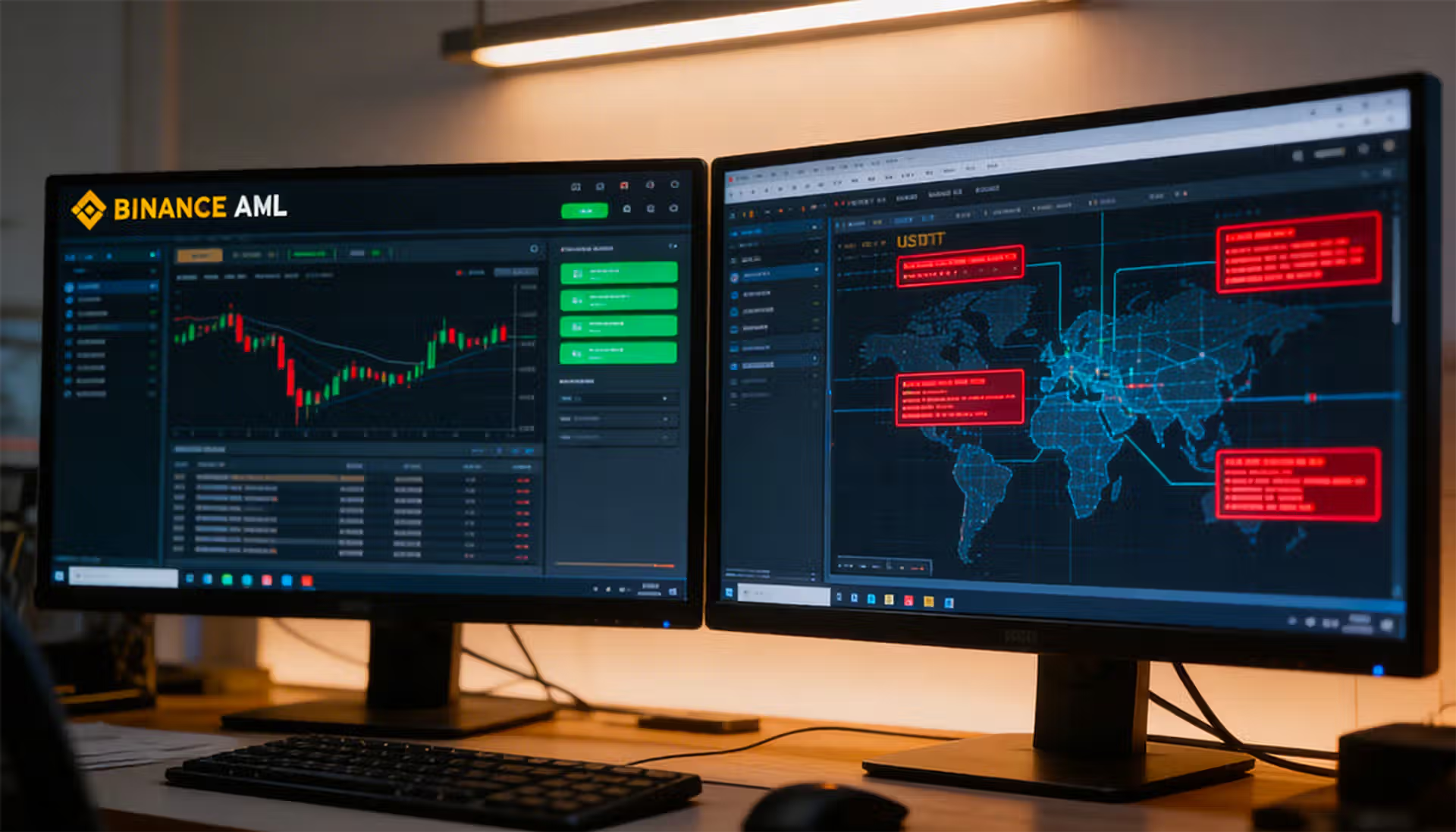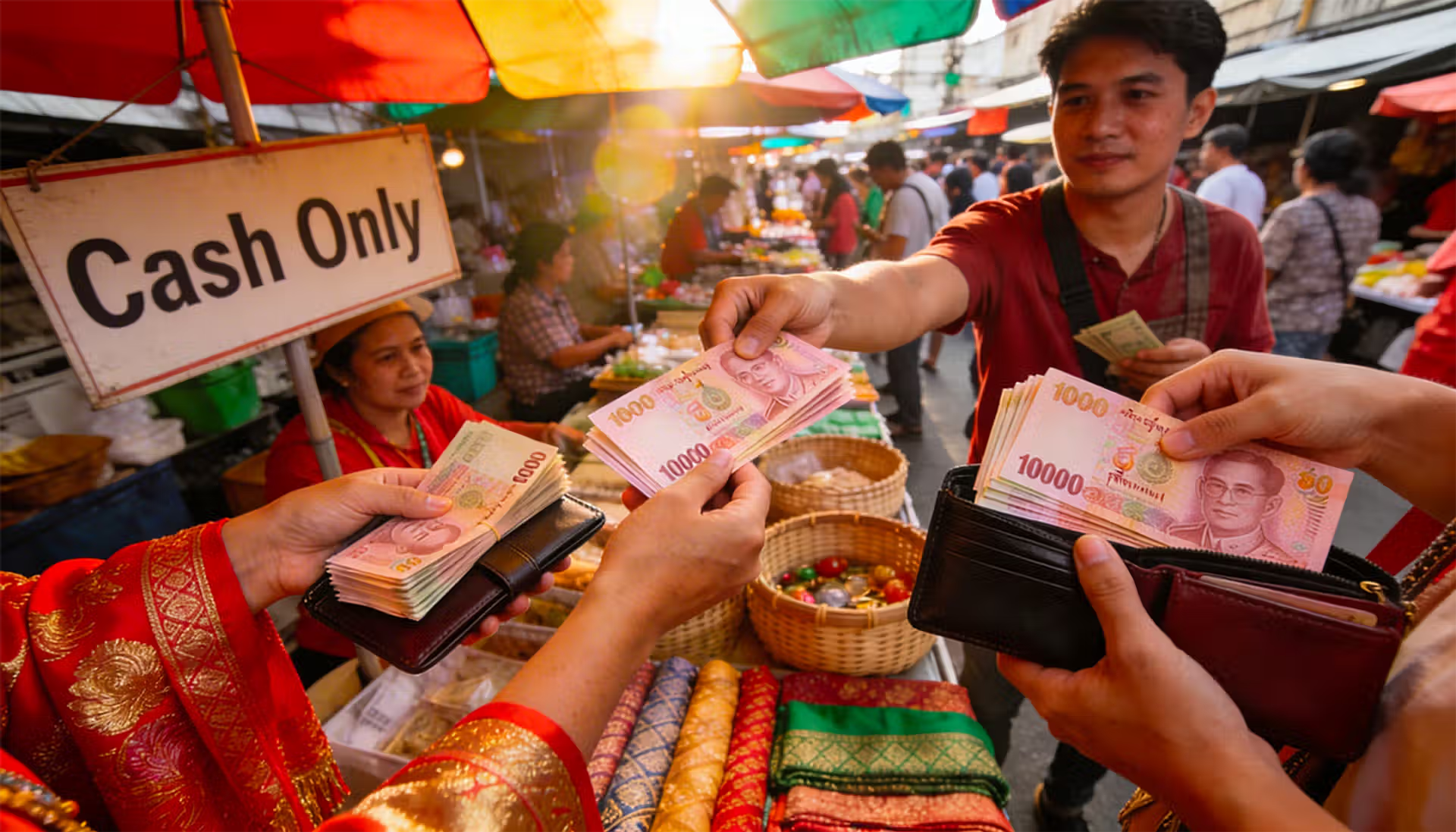
Money laundering through the exploitation of global trade and retail consumption has reached an unprecedented scale as criminal networks increasingly utilize daigou surrogate shopping to bypass international financial controls. This practice is a sophisticated form of personal shopping that has transitioned from a niche consumer service into a primary vehicle for moving illicit value across borders. While the practice originated to fulfill demand for authentic luxury goods and lower-cost inventory in mainland China, it has evolved into a professionalized industry that criminal organizations use to wash the proceeds of drug trafficking and fraud. By masking large financial transfers as legitimate retail purchases, these networks can effectively hide criminal wealth within the high volume of global commerce. The infrastructure of this trade is now pervasive across international borders, extending beyond its traditional focus into Southeast Asian hubs like Laos, Vietnam, and Cambodia to facilitate the anonymous movement of wealth. This evolution presents a profound challenge for financial institutions tasked with identifying the difference between legitimate retail arbitrage and professional criminal layering.
Table of Contents


The Mechanics of Surrogate Shopping, aka Daigou, and Shadow Finance
Surrogate shopping functions as a bridge between the physical retail market and the shadow financial system, allowing for the rapid integration of cash proceeds into the global economy. In a typical laundering cycle, a professional network provides bulk cash derived from local criminal activity to a group of shoppers who are instructed to buy high-end electronics, designer accessories, or luxury watches. These physical items act as stable stores of value that are resistant to the volatility of currency markets and can be easily moved across borders. Once these products are shipped to their final destination, they are sold to consumers who pay in local currency, effectively providing the laundering network with clean, usable funds that appear to come from legitimate retail sales. The scale of this activity is often hidden within the sheer volume of global e-commerce, making it difficult for compliance systems to flag individual purchases as part of a larger criminal conspiracy.
The process often relies on mirror transactions, which allow for value transfer without any actual international wire transfers. A broker in a western city will accept a cash deposit from a criminal group, while a corresponding amount is paid out to the group associates in Asia from the proceeds of the resold goods. This bypasses the formal banking sector entirely, making it nearly impossible for standard surveillance tools to link the initial crime to the final payout. Furthermore, the expansion of these activities into Laos, Vietnam, and Cambodia has created new corridors for value movement. In these regions, surrogate shoppers often focus on bulk commodities or specialized electronics, taking advantage of more porous borders and varying levels of customs enforcement to facilitate the high-frequency movement of inventory. This regional diversification ensures that even if one transit route is compromised, the network can continue to operate with minimal disruption.
Because these operations mimic legitimate consumer behavior, they are highly effective at evading detection. A shopper might visit multiple luxury boutiques in a single day, spending thousands of dollars in cash provided by a broker. To the retailer, this looks like a high-net-worth tourist making authentic purchases. To the bank, the credit card transactions or cash deposits look like typical retail activity. However, when viewed in aggregate, these transactions reveal a systematic effort to wash millions of dollars. The complexity is compounded by the use of social media platforms to coordinate the purchases, where instructions are sent via encrypted messages that law enforcement cannot easily access. This digital coordination allows the network to react in real time to price changes or increased security at specific retail locations. The shoppers themselves are often recruited as money mules, receiving a small commission for their participation while the masterminds of the network remain shielded from exposure.



Large Scale Examples and Enforcement Trends
Enforcement agencies have recently exposed the massive financial scale of these operations through high-profile investigations and record-breaking penalties. In early 2024, a major international financial institution was ordered to pay approximately 3.1 billion dollars in fines for systemic failures that allowed laundering networks to exploit its infrastructure. The case revealed that billions of dollars in suspicious transactions were processed through accounts linked to surrogate shopping rings, which the bank had incorrectly categorized as low-risk retail activity. This failure to perform adequate due diligence allowed criminal syndicates to move hundreds of millions of dollars in drug proceeds by disguising them as payments for luxury merchandise and shipping services. The investigation found that the bank had prioritized transaction speed over compliance, ignoring clear patterns of illicit wealth movement. This landmark case served as a wake-up call for the global banking community regarding the dangers of trade-based laundering.
Another significant case involved a coordinated multi-jurisdictional effort known as Operation Take Back America, where members of a professional network pleaded guilty to laundering over 92 million dollars. The scheme utilized thousands of individual shoppers who were recruited to use illicit cash to buy luxury items across the United States, which were then consolidated and exported to hubs in Asia. Similar patterns have been identified in the United Kingdom, where the case of HMRC v Xing in 2025 resulted in a freezing order for assets valued at over 1.4 million pounds. The investigation uncovered that the individuals involved were managing a network of shoppers whose spending patterns were completely inconsistent with their declared income, spending tens of thousands of pounds on high-end goods and international postage while reporting minimal earnings. These cases demonstrate that the problem is not limited to any single jurisdiction but is a global phenomenon that requires international cooperation.
In Southeast Asia, the nexus between casinos and surrogate shopping has become a major focus for regional regulators. In Cambodia and Laos, investigators have documented cases where junket operators use the proceeds from illegal gambling to fund shopping expeditions for luxury cars and high-end electronics. These items are then moved across the border into Vietnam or Thailand for resale. This highlights the adaptability of the model, as it can be integrated into different types of criminal enterprises. The 312 billion dollar estimate for global suspicious activity linked to these networks, as provided by international regulators, underscores the urgency of the situation. Without a coordinated global response, these networks will continue to exploit the seams between different national regulatory frameworks, moving value through whichever path offers the least resistance. The regional hubs in Southeast Asia provide a strategic advantage for these groups, allowing them to leverage high cash volume environments to mask their activities through multiple layers of retail transactions.
Detection Red Flags for Compliance Professionals
For an analyst to effectively detect surrogate shopping used for laundering, they must look beyond simple transaction amounts and focus on the underlying behavioral patterns. A primary red flag is the presence of account activity that is not commensurate with the stated occupation or demographic profile of the customer. For instance, student accounts that receive frequent, large transfers labeled as tuition or living expenses, followed by immediate debits at luxury retailers, are highly suspicious. This is especially true if the transfers do not align with the academic calendar or if the spending occurs in clusters at high-end malls. Analysts should also be wary of accounts that show a high volume of small peer-to-peer payments from unrelated third parties, which may indicate the pooling of funds for large-scale purchases. The use of digital wallets and mobile payment apps to collect these small sums before making a large retail purchase is a classic sign of coordinated layering by professional money brokers.
Geographic risk also plays a significant role in identifying these networks. Transactions involving shipping companies or exporters that operate primarily in transshipment hubs like Hong Kong, or regional centers in Laos and Cambodia, should receive additional scrutiny. If a business account for a small electronics retailer suddenly reports a massive surge in international revenue without a corresponding increase in staff or physical infrastructure, it may be functioning as a front for a shopping ring. Furthermore, analysts should monitor for the use of multiple credit cards that show consistent overpayments, which is a common tactic used to convert illicit cash into a clean credit balance before making high-value acquisitions. The coordination of several individuals visiting the same high-end boutiques at similar times can also be a strong indicator of a managed laundering operation. In many cases, these individuals will use the same contact information or shipping addresses on their loyalty accounts, providing a digital trail for investigators.
Another key indicator is the nature of the goods being purchased. While luxury fashion is a common target, professional networks often focus on items with high resale value and low technical barriers to entry, such as infant formula, high-end cosmetics, and specialized vitamins. When an individual makes repeated large purchases of these items that are clearly not for personal consumption, and the funding source is unclear, it signals a potential trade-based money laundering operation. Analysts must also pay attention to the addresses used for shipping. If multiple customers are shipping goods to a single consolidation point or warehouse, it suggests a centralized management structure behind the individual shoppers. This type of pattern recognition requires analysts to synthesize data from multiple sources, including transaction logs, customer profiles, and public records. The arrival of funds from multiple third parties, followed by rapid payouts to electronics exporters, is another critical pattern to watch.
Advanced Analytical Approaches and Future Compliance
The conclusion for modern compliance departments is that manual monitoring is no longer sufficient to address the agility of professional laundering networks. Financial institutions must integrate typology-based rules that specifically target the characteristics of surrogate shopping, such as the rapid movement of funds between unconnected personal accounts. Advanced behavioral analytics can help identify the synthetic digital identities and automated structuring techniques that criminals use to create transactional noise. By using machine learning to detect deviations from a customer’s normal historical behavior, banks can flag suspicious activity in real time before the funds are layered through the retail system. This proactive approach is essential in an era where laundering networks can shift their tactics in a matter of hours to avoid detection.
Moreover, enhanced cooperation between the public and private sectors is vital for dismantling these international networks. Financial intelligence units often provide specific reference codes for suspicious activity reports to help authorities connect individual reports to larger global investigations. Institutions should also utilize information-sharing platforms to verify if the same network of names or addresses appears across multiple banks. As surrogate shopping continues to evolve as a global trade-based laundering technique, the industry’s ability to share intelligence and adapt its monitoring strategies will be the deciding factor in protecting the integrity of the international financial system. The focus must remain on the ultimate beneficial owners of the funds, tracing the capital back through the web of shoppers and brokers to the source of the criminal activity.
Training programs for front-line retail and banking staff are also increasingly important. Staff who are trained to recognize the signs of a surrogate shopper can provide the initial intelligence that leads to a larger investigation. This includes noticing individuals who pay with large amounts of cash, use multiple credit cards for a single transaction, or appear to be receiving instructions via phone while shopping. By creating a unified front across the retail and financial sectors, the barriers to entry for laundering networks become significantly higher. The future of AML compliance lies in this type of collaborative, data-driven strategy that looks beyond individual transactions to understand the complex networks of value movement that define modern criminal finance. As the global economy becomes more interconnected, the tools used to protect it must be equally sophisticated and globally integrated to ensure that no jurisdiction remains a safe haven for illicit wealth.
Key Points
- Surrogate shopping involves using illicit cash to buy high-value goods for export, allowing criminal groups to move value across borders without using formal bank wires.
- The practice has expanded beyond China into Laos, Vietnam, and Cambodia, where networks exploit regional trade routes and informal economies to mask their activities.
- Major banks have faced penalties as high as 3.1 billion dollars for failing to detect the structured transactions and retail spending patterns associated with these laundering rings.
- Red flags include high-volume spending by individuals with low declared income, frequent wires to obscure shipping companies, and the use of overpaid credit cards for luxury purchases.
- Effective AML detection requires integrating geographic risk and behavioral analysis to identify the coordinated efforts of professional money mules and brokers.
Related Links
- FinCEN Advisory on Chinese Money Laundering Networks 2025
- AUSTRAC Money Laundering in Australia National Risk Assessment 2024
- FATF Report on Trade-Based Money Laundering Trends and Typologies
- INTERPOL Operation HAECHI VI Financial Crime Recovery Report
Other FinCrime Central Articles About Chinese Money Laundering Networks (CMLN)
- Louis Vuitton Fined 500,000 Euros for Dutch AML Compliance Failures
- US Sanctions Target Chinese Money Laundering Networks for Billions
- Chainalysis Data on 16.1 Bn$ Chinese Money Laundering Networks
Some of FinCrime Central’s articles may have been enriched or edited with the help of AI tools. It may contain unintentional errors.
Want to promote your brand, or need some help selecting the right solution or the right advisory firm? Email us at info@fincrimecentral.com; we probably have the right contact for you.