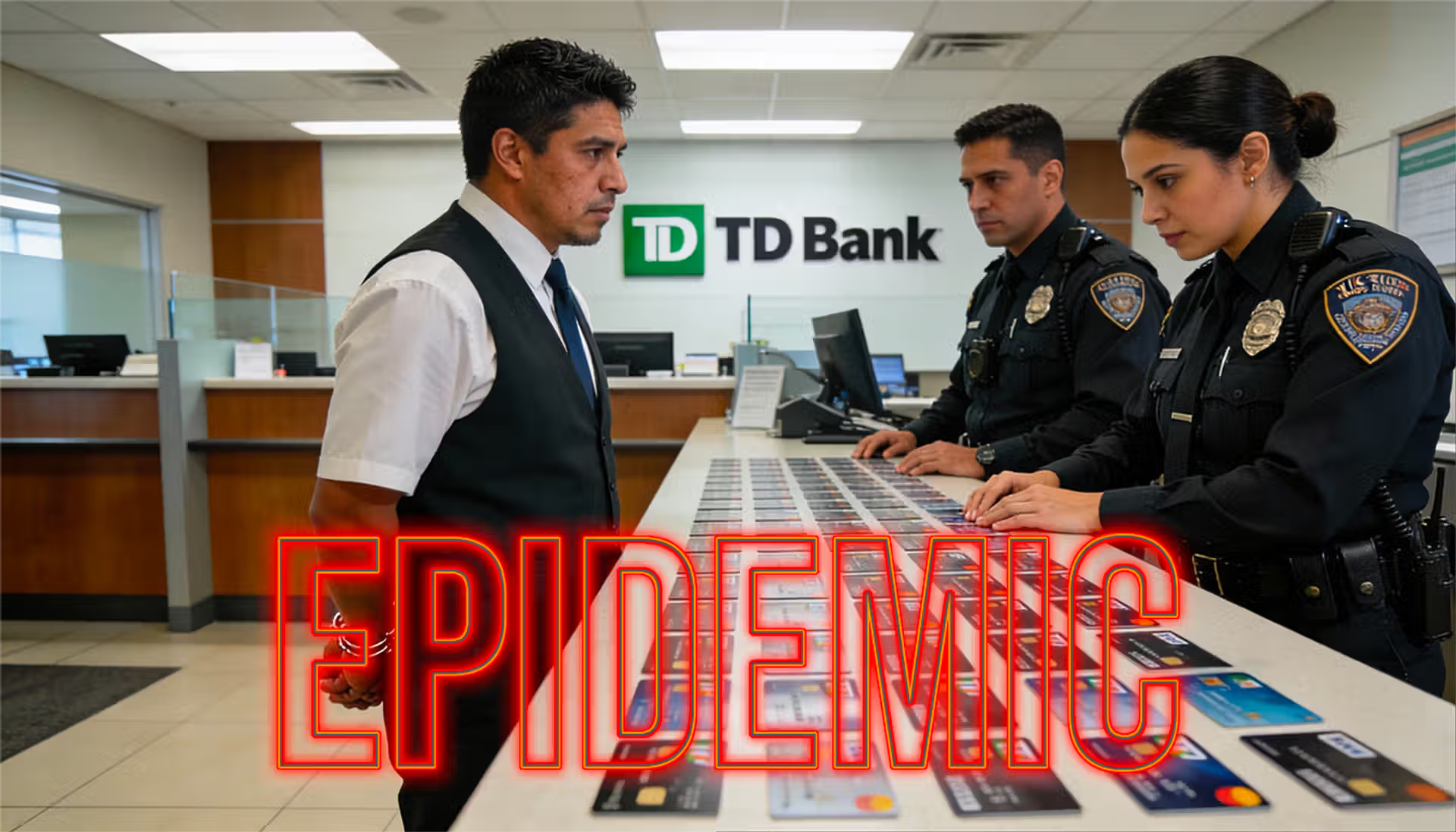
Renat Abramov, a former relationship manager at a Brooklyn bank branch, pleaded guilty today to laundering more than $8 million in proceeds from a massive Medicare fraud scheme. This case represents a significant milestone for federal authorities as it marks the first time the Health Care Fraud Unit has secured a conviction against a bank employee for conspiring to launder medical insurance proceeds. Abramov faces a maximum statutory penalty of 20 years in prison for his role in facilitating the financial operations of a transnational criminal organization. The illicit operation utilized stolen identities to submit billions in fraudulent claims, relying on internal bank access to move the stolen funds. Federal investigators from the FBI and the Department of Health and Human Services uncovered the scheme through an extensive probe known as Operation Gold Rush.
Table of Contents


Transnational Criminal Organization Money Laundering Operations
The illicit financial activity centered on the systematic exploitation of the United States banking infrastructure to disguise the origin of funds obtained through massive health care fraud. Renat Abramov served as a critical internal link for a transnational criminal organization that allegedly targeted the federal Medicare program with fraudulent claims exceeding $10 billion. By holding a position of trust as a relationship manager at a bank in Sheepshead Bay, Abramov was uniquely positioned to bypass standard anti-money laundering protocols that would typically flag suspicious corporate activity. His involvement demonstrates a sophisticated level of insider threat, where a bank professional actively assists criminal entities in layering and integrating illegal proceeds. The organization relied on the identities of more than one million Americans, focusing on vulnerable populations such as the elderly and disabled, to generate the underlying fraudulent checks that required laundering through the domestic financial system.
The laundering process began with the creation of shell companies designed to mimic legitimate medical equipment providers. Abramov facilitated the opening of bank accounts for these entities using fraudulent corporate registration documents. These accounts were often opened in the names of individuals who were not lawfully present in the country, acting as front people for the criminal enterprise. This phase of the operation was essential for converting the fraudulent insurance checks into liquid assets. Because the checks originated from Medicare and established private insurance carriers, they appeared inherently legitimate to external observers. Abramov ensured these deposits were processed without the usual level of scrutiny, effectively validating the illicit funds through the reputation of a major United States financial institution. Once the money entered these accounts, the organization moved quickly to move the assets out of the reach of domestic regulators.



Financial Layering and Cryptocurrency Integration
After the initial placement of funds into the Brooklyn bank accounts, the criminal organization utilized complex layering techniques to further distance the money from the original crime. Members of the syndicate orchestrated the transfer of the $8 million in processed funds into various offshore accounts. These international transfers were intended to complicate the audit trail and take advantage of jurisdictions with less stringent financial oversight. The movement of such large sums across borders requires a high degree of coordination and knowledge of international banking standards, which the organization possessed. By moving the funds through multiple layers of accounts, the participants hoped to make the eventual integration of the money into the legitimate economy appear as normal business revenue from overseas investments or trade.
A modern and challenging aspect of this specific money laundering case was the heavy reliance on cryptocurrency to further obscure the path of the stolen Medicare funds. Digital assets provide a layer of pseudonymity that traditional bank transfers lack, making them an attractive tool for transnational criminal organizations. By converting the fraudulent proceeds into cryptocurrency, the defendants were able to move value rapidly across the globe without the delays or reporting requirements associated with the traditional SWIFT system. This integration of digital currency into the laundering cycle reflects an evolving threat landscape where traditional banking insiders and modern financial technology intersect to facilitate crime. Federal authorities had to employ advanced forensic accounting and blockchain analysis to trace these transactions back to the Brooklyn bank branch and Abramov.
Operation Gold Rush and Regulatory Enforcement
The investigation into Abramov and the broader criminal network was conducted under the banner of Operation Gold Rush, a multi-agency effort targeting large-scale health care fraud and the associated financial crimes. The Federal Bureau of Investigation worked alongside the Office of Inspector General for the Department of Health and Human Services to dismantle the network. This operation highlights the increasing focus of the Health Care Fraud Strike Force on the financial professionals who enable criminal activity. Since its inception in 2007, the strike force program has been instrumental in charging thousands of individuals involved in billing billions of dollars to federal health care programs. The conviction of a bank relationship manager signals a shift toward holding the gatekeepers of the financial system accountable when they choose to facilitate rather than report suspicious activity.
The prosecution of this case was handled by the Fraud Section of the Justice Department’s Criminal Division, emphasizing the federal government’s commitment to protecting the integrity of the Medicare system. The misuse of bank accounts to process more than $8 million in fraudulent checks required a failure of internal controls that Abramov purposely orchestrated. In addition to the criminal charges, the Centers for Medicare and Medicaid Services continue to work with law enforcement to implement stricter provider accountability measures. These regulatory efforts aim to prevent the initial generation of fraudulent checks, while the criminal justice system focuses on the laundering networks that make the fraud profitable. The plea entered by Abramov confirms the role of banking insiders in modern transnational crime and sets a precedent for future prosecutions of financial professionals involved in similar conspiracies.
Future Sentencing and Financial Security Implications
The sentencing for Renat Abramov is scheduled for April 20, where a federal district court judge will determine the final penalty based on federal guidelines and the scale of the laundering activity. While the maximum sentence is 20 years, the actual time served will reflect the severity of the breach of trust and the total volume of funds laundered. This case serves as a stark warning to the banking industry regarding the potential for internal corruption to facilitate massive fraud. Financial institutions are expected to refine their internal monitoring of relationship managers and other employees with the power to override or bypass standard account opening procedures. The case also underscores the necessity for continuous training and robust internal audits to detect when an employee may be working on behalf of a criminal organization.
The broader impact of this case on the anti-money laundering landscape is significant. It demonstrates that even when the source of funds appears to be a government entity like Medicare, the underlying activity may still be part of a criminal conspiracy. Compliance officers are now being encouraged to look beyond the origin of the check and investigate the legitimacy of the businesses receiving the funds. As transnational criminal organizations continue to refine their methods, the collaboration between the Department of Justice and financial regulators remains the primary defense against the erosion of the United States financial system. The successful conclusion of this aspect of Operation Gold Rush provides a roadmap for future investigations into the intersection of insider banking threats and large-scale health care fraud.
Key Points
- Renat Abramov admitted laundering more than 8 million dollars in health care fraud proceeds through a Brooklyn bank.
- The defendant used his position as a bank relationship manager to open fraudulent accounts for a transnational criminal organization.
- The criminal enterprise submitted over 10 billion dollars in fake Medicare claims using stolen identities of elderly and disabled citizens.
- Money was laundered through a combination of offshore bank transfers and cryptocurrency to evade detection by federal authorities.
Related Links
- United States Department of Justice Office of Public Affairs
- Department of Health and Human Services Office of Inspector General
- Federal Bureau of Investigation Financial Crimes Section
- Centers for Medicare and Medicaid Services Fraud Prevention
- Financial Crimes Enforcement Network Advisory on Health Care Fraud
Other FinCrime Central Articles About Bankers Turned Criminals
- Former Citibank Singapore Banker Jailed Two Years in $3 Billion Laundering Scandal
- Former Monaco bankers convicted for laundering Italian money
- Ex-Cop-Turned-Banker Arrested in Brazil’s Biggest Money Laundering Scandal
Source: US DOJ
Some of FinCrime Central’s articles may have been enriched or edited with the help of AI tools. It may contain unintentional errors.
Want to promote your brand, or need some help selecting the right solution or the right advisory firm? Email us at info@fincrimecentral.com; we probably have the right contact for you.