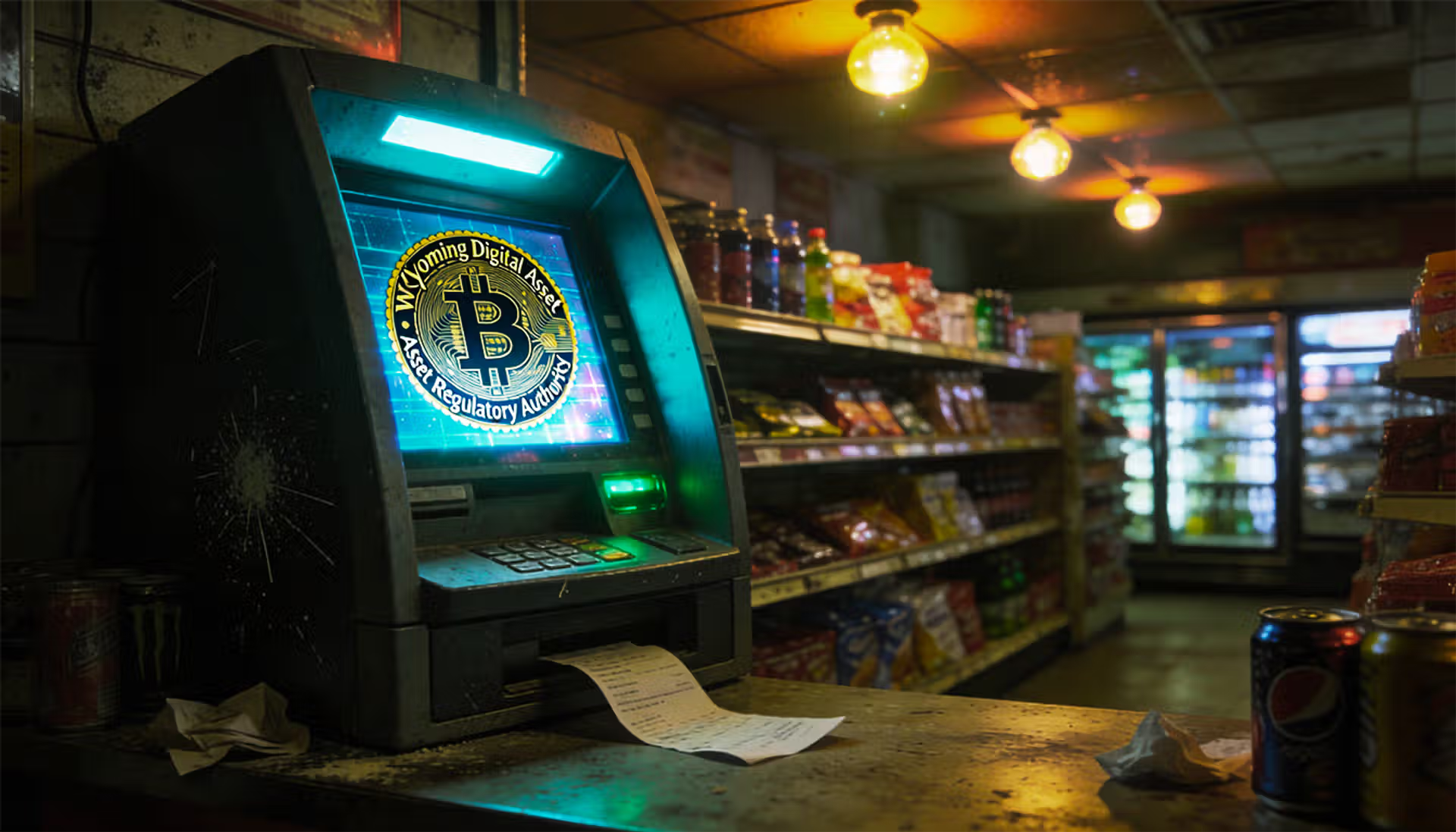
Law enforcement officials in Wyoming are sounding the alarm after residents lost over 3 million dollars to crypto ATM scams in 2025 alone. State Representative Ken Clouston is spearheading a legislative push to bring these automated kiosks under the direct oversight of the Wyoming Division of Banking. The move comes as national fraud figures involving these machines surged to more than 333 million dollars last year, according to federal reporting. Local authorities in Gillette and Campbell County report that vulnerable populations are being targeted with increasing frequency. Lawmakers intend to implement rigorous anti-money laundering standards to stem the flow of illicit funds through these loosely regulated digital portals.
Table of Contents


Virtual Currency Kiosk Regulation and the Wyoming Banking Division
The rapid proliferation of virtual currency kiosks across the state has created significant gaps in financial oversight that criminal elements are actively exploiting. While Wyoming has long positioned itself as a friendly hub for digital asset innovation, the rise in consumer exploitation is forcing a pivot toward more structured supervision. Under the proposed legislative framework, operators of these machines would be required to obtain money transmitter licenses from the Wyoming Division of Banking. This shift ensures that every machine operating within the state is subject to the same regulatory rigor as traditional financial institutions. By centralizing authority, the state can enforce specific operational requirements designed to detect and disrupt the movement of proceeds derived from criminal activity. This includes the implementation of mandatory fraud warnings and strict adherence to established reporting protocols for large or suspicious transactions.
The proposed transition would require every machine owner to undergo a rigorous background check and financial audit. This is a significant departure from the current landscape, where many kiosks operate with minimal registration requirements. By bringing these entities into the formal banking fold, the state can ensure that every operator is bonded and insured, providing a layer of financial recourse for victims of systemic failures. Furthermore, the Division of Banking would have the authority to conduct unannounced inspections of kiosk locations to verify that anti-fraud measures are actively displayed. This level of scrutiny is intended to deter casual criminal use of the machines while maintaining access for legitimate users.


Strengthening Anti-Money Laundering Frameworks in Digital Finance
Current gaps in the oversight of crypto kiosks allow scammers to move illicit funds with minimal friction, making these machines a primary tool for modern financial crimes. Law enforcement agencies note that the anonymity and speed of cash-to-crypto conversions at these terminals facilitate the layering phase of money laundering. To combat this, the new legislation seeks to impose comprehensive know your customer requirements on all licensed operators. This would involve the mandatory collection of verified identification for users, effectively removing the veil of anonymity that currently attracts bad actors. Furthermore, by placing these machines under banking laws, operators would be obligated to monitor for red flag indicators such as multiple rapid transactions or unusual withdrawal patterns from elderly accounts. Such measures are essential for aligning the Wyoming digital asset sector with federal anti-money laundering standards and preventing the state from becoming a haven for digital fraud proceeds.
Detailed record keeping is a cornerstone of this new strategy. Operators will be required to maintain digital logs of every transaction, including the originating cash input and the destination wallet address. This data will be made available to law enforcement through appropriate legal channels, significantly reducing the time it takes to trace stolen assets. In the past, the lack of uniform data standards across different kiosk brands has hampered investigations. By standardizing these requirements, Wyoming creates a more hostile environment for those attempting to wash illicit proceeds through the local economy. The legislation also addresses the issue of offshore wallet transfers, mandating that kiosks provide clear disclosures regarding the risks associated with non-custodial wallets and the irreversible nature of blockchain transactions.
Protecting Vulnerable Citizens Through Transactional Limits and Fees
The financial impact of unregulated kiosks is most visible in the devastating losses suffered by residents who are coerced into transferring their savings. In Campbell County, investigators have documented numerous cases where victims were directed by fraudsters to feed cash into machines to settle fabricated legal or utility debts. Beyond identity verification, lawmakers are considering the implementation of daily transaction caps and fee transparency rules to slow down the pace of these crimes. High transaction fees, which sometimes exceed twenty percent, often go undisclosed and represent a significant secondary loss for victims already under duress. By capping the amount of currency that can be processed in a single day, the state aims to create a critical window of time during which law enforcement or family members can intervene. These protections are designed to mirror the safeguards found in traditional banking environments, where human oversight often prevents fraudulent transfers.
Another critical component of the bill is the requirement for physical fraud warnings to be permanently affixed to the machines. These warnings must be written in plain language and explicitly state that no government agency or utility company will ever ask for payment via a crypto kiosk. This simple intervention has proven effective in other jurisdictions, as it provides a moment of clarity for victims who are often operating under intense psychological pressure. Additionally, the legislation explores the possibility of a cooling-off period for first-time users or for transactions exceeding a certain threshold. During this period, funds would be held in escrow for a short duration, allowing the user to cancel the transaction if they realize they are being scammed. This move would represent some of the most aggressive consumer protection measures in the nation regarding digital assets.
Strategic Implementation of Consumer Safeguards and Reporting Standards
The proposed regulatory shift represents a necessary maturation of the digital asset market in Wyoming, focusing on long-term stability and public safety. Representative Clouston has emphasized that the goal is not to ban the technology but to ensure that it operates within a safe and transparent framework. Effective oversight will include the integration of these kiosks into the nationwide multistate licensing system, allowing for better tracking of operator history and compliance records. As federal agencies like the FBI continue to report a constant rise in kiosk-related fraud, state-level action provides an immediate defense for local communities. The integration of robust reporting obligations will ensure that suspicious activity reports are filed promptly, providing investigators with the digital trail necessary to pursue international scam syndicates. Through these combined efforts, Wyoming aims to reconcile its innovative spirit with a firm commitment to dismantling the financial infrastructure used by criminal organizations.
The broader impact of this legislation extends beyond immediate fraud prevention. By establishing a clean and predictable regulatory environment, Wyoming invites responsible innovation. Large, compliant financial technology firms are more likely to operate in a state where the rules are clearly defined and enforced, as it reduces their own exposure to reputational and legal risks. This creates a virtuous cycle where high-quality services replace the fly-by-night operators who currently dominate the less-regulated corners of the market. The Division of Banking will also be tasked with educating the public about the safe use of digital assets, further empowering residents to identify and report suspicious activities. This holistic approach ensures that the state remains a leader in the digital economy while simultaneously providing a robust safety net for its most vulnerable citizens.
Key Points
- Wyoming legislators are responding to over 3 million dollars in documented losses from crypto ATM fraud in 2025
- The new bill places crypto kiosks under the Wyoming Division of Banking to enforce licensing and money transmitter rules
- National fraud data indicates that losses from these machines reached 333 million dollars in 2025
- Proposed regulations include mandatory fraud warnings and transactional limits to prevent the rapid laundering of stolen cash
Related Links
- Wyoming Division of Banking Money Transmitter Information
- Federal Bureau of Investigation Internet Crime Complaint Center 2025 Reports
- Financial Crimes Enforcement Network Advisory on Virtual Currency Kiosk Scams
- Conference of State Bank Supervisors Multistate Licensing System Resources
- FATF Guidance on a Risk-Based Approach for Virtual Assets
Other FinCrime Central Articles About Crypto ATMs
- Cash To Crypto ATM Machine Network At Center Of $10M Conspiracy
- AUSTRAC Fines Cryptolink as Crypto ATMs Emerge as Laundering Hubs
- Crypto ATM Seizure Highlights London’s Ongoing Money Laundering Fight
Source: Coin Edition, by Anisha Pandey
Some of FinCrime Central’s articles may have been enriched or edited with the help of AI tools. It may contain unintentional errors.
Want to promote your brand, or need some help selecting the right solution or the right advisory firm? Email us at info@fincrimecentral.com; we probably have the right contact for you.