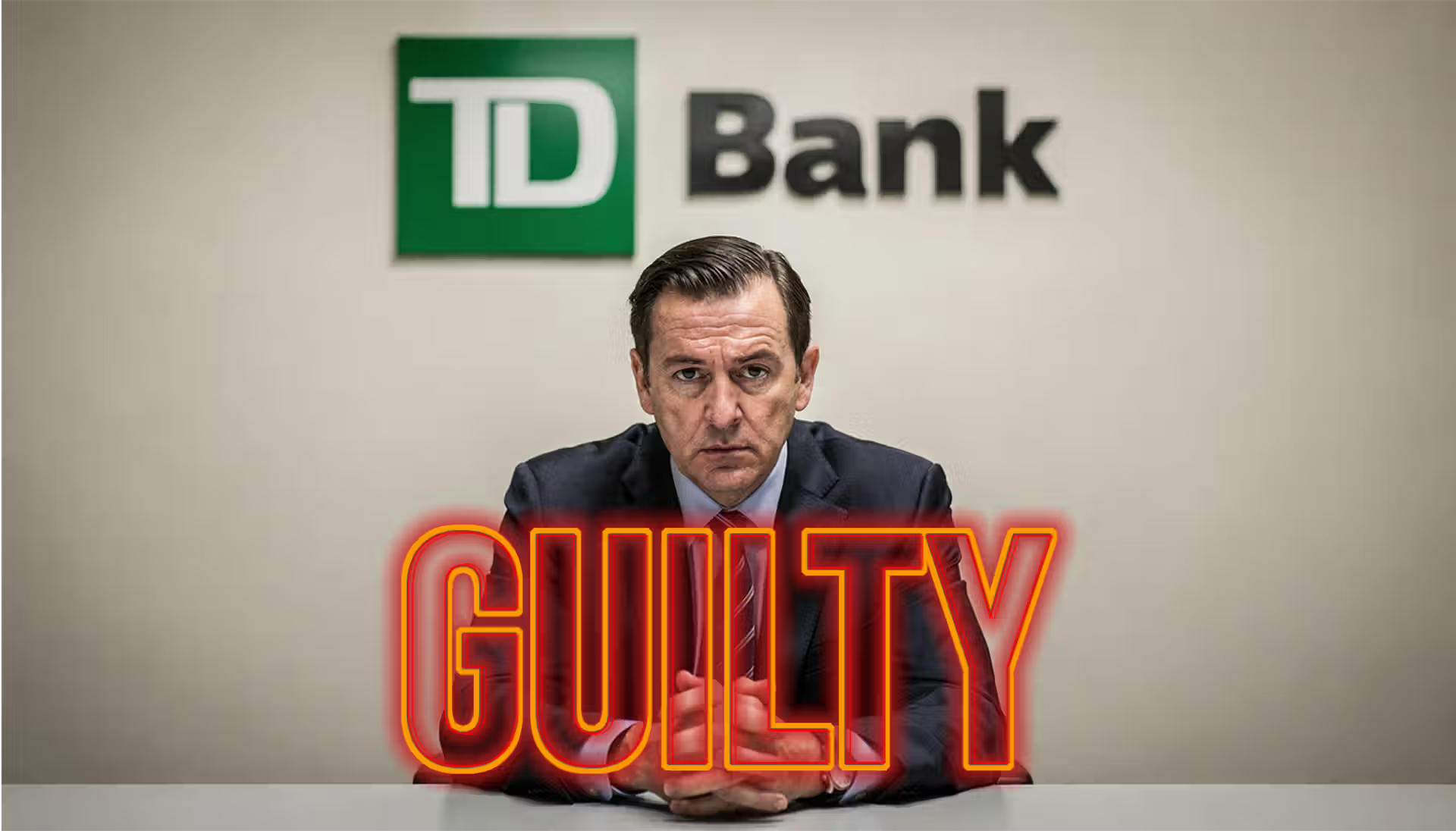
Wilfredo Aquinon, a TD Bank assistant store manager, recently admitted his role in a significant financial conspiracy that allowed a criminal organization to move 474 million dollars through a major banking institution. The former assistant store manager faced charges related to his failure to maintain professional standards and his active participation in hiding the source of illicit funds. As part of his guilty plea, Aquino faces a maximum penalty of 20 years in prison and a fine of 500,000 dollars or twice the total amount of the laundered funds. The investigation by federal authorities revealed a pattern of intentional negligence and bribery that compromised the integrity of the financial system in New York and New Jersey. This case highlights the vulnerabilities within internal bank operations when oversight is bypassed by trusted employees.
Table of Contents


Anti-Money Laundering Failure
Between 2019 and 2021, Wilfredo Aquino utilized his authority to bypass essential reporting requirements designed to flag suspicious financial activity. The network, led by an individual named Da Ying Sze, specialized in processing massive amounts of cash that originated from unknown criminal enterprises. By accepting retail gift cards as bribes, Aquino ensured that the true identities of those conducting the transactions remained hidden from federal regulators. This specific failure allowed hundreds of millions of dollars to enter the legitimate financial system without the scrutiny required by the Bank Secrecy Act. The prosecution emphasized that Aquino was not merely a passive observer but an active facilitator who processed more than 1,600 bank checks for the criminal group.
The financial mechanics of the operation involved a series of cash deposits that frequently exceeded the $10,000 threshold. Under standard federal regulations, any transaction involving more than $10,000 in physical currency must be accompanied by a Currency Transaction Report. These reports are vital tools for law enforcement to track the movement of large sums of money and identify the individuals behind the transactions. Aquino intentionally omitted the name of the network leader as the conductor on these forms, effectively blinding the bank and the government to the person controlling the funds. Even when colleagues warned him that the behavior resembled classic money laundering patterns, the defendant continued to process the transactions. This internal collusion allowed the criminal network to use the bank as a primary conduit for their illicit proceeds for several years.
Dynamics of Internal Bank Corruption
Internal corruption remains one of the most difficult challenges for financial institutions to detect and prevent. In this instance, the defendant occupied a leadership position as an assistant store manager, which gave him the power to override or influence the processing of large deposits. The criminal network recognized this leverage and targeted Aquino with incentives, providing him with over 11,000 dollars in gift cards to maintain his cooperation. This relationship allowed the group to operate with a sense of security, knowing that their primary point of contact would ignore red flags and internal warnings. The case illustrates how a single compromised employee can negate millions of dollars invested in automated compliance software and institutional training.
The impact of such corruption extends beyond the immediate loss of funds or legal penalties for the individual. When a bank employee facilitates the movement of 474 million dollars for a criminal network, it undermines public trust in the entire banking sector. The Department of Justice noted that bank employees are considered the first line of defense against financial crimes, and their betrayal of this duty puts the global economy at risk. The legal filings detailed how the defendant processed transactions even after the bank had closed other accounts linked to the same criminal actors. This persistence in the face of obvious risks demonstrates a high level of intent to defraud the regulatory systems meant to keep the financial environment safe.
The Role of Regulatory Oversight and Enforcement
The successful prosecution of this case was the result of a coordinated effort between the Internal Revenue Service Criminal Investigation Division and the Federal Deposit Insurance Corporation Office of Inspector General. These agencies focused on the paper trail left by the 1,680 official bank checks issued through the Manhattan store. By comparing the physical cash deposits with the subsequent issuance of bank checks, investigators were able to link Aquino directly to the concealment of the network leader. The data showed that nearly every check was funded by a cash deposit specifically structured or managed to avoid proper identification of the source. This forensic accounting was essential in proving that the assistant manager had personal knowledge of the illicit nature of the business.
Regulatory bodies use these cases to send a strong message to other financial professionals who might be tempted to participate in similar schemes. The Bank Integrity Unit of the Department of Justice specifically targets officers and managers whose actions threaten the stability of the financial system. The fact that the network leader, Da Ying Sze, had already pleaded guilty to a larger 653 million dollar conspiracy provided the framework for the charges against Aquino. The enforcement action serves as a reminder that the failure to report suspicious activity is not just a procedural error but can be treated as a criminal conspiracy when accompanied by intent and bribery. The May 12 sentencing will determine the final consequences for the former bank official.
Long-Term Implications for Financial Compliance
The aftermath of this case will likely result in increased scrutiny of internal controls within large retail banking chains. Institutions must now evaluate how a manager was able to process such a high volume of suspicious transactions without triggering immediate intervention from centralized compliance departments. The use of gift cards as a method of bribery also highlights a need for better monitoring of employee incentives and lifestyle changes that might signal corruption. Compliance training will likely evolve to include more robust whistleblowing mechanisms that allow colleagues to report suspicious behavior by their superiors without fear of retaliation. As money laundering techniques become more sophisticated, the human element remains a critical point of failure that requires constant vigilance.
The global financial community closely watches these developments to adapt its own risk management strategies. The movement of nearly half a billion dollars through a single branch location suggests that geographical risk assessments must be updated to account for high-traffic urban centers. Furthermore, the collaboration between different law enforcement agencies in this investigation underscores the importance of data sharing across various jurisdictions. For the banking industry, the Aquino case serves as a landmark example of why anti-money laundering procedures must be enforced strictly at every level of the organization, regardless of an employee’s rank or tenure. The integrity of the financial system depends on the honesty of those tasked with its daily operations.
Key Points
- The defendant facilitated the movement of 474 million dollars through illicit channels.
- Over 1,600 official bank checks were processed to hide the source of cash.
- The bank employee accepted 11,000 dollars in bribes to ignore reporting laws.
- Federal authorities are seeking a prison term of up to 20 years for the conspiracy.
Related Links
- United States Department of Justice Office of Public Affairs
- Internal Revenue Service Criminal Investigation Annual Reports
- Federal Deposit Insurance Corporation Office of Inspector General Investigations
- Financial Crimes Enforcement Network Advisory on Money Laundering Risks
- Financial Action Task Force Guidance on Criminal Financial Flows
Other FinCrime Central Articles About TD Bank
- Did TD Bank’s AML Cleanup Targeted Chinese Heritage Staff
- TD Bank’s 500M$ Compliance Overhaul: The Cost of Compliance Monitoring
- TD Bank and RBC’s Ties to Alleged Mobster Raise Questions About Compliance
- Unbelievable: Another TD Bank Employee Caught in Money Laundering Scheme
- New TD Bank Scandal: Employee Leaking Customer Data on Telegram
- TD Bank Faces $3 Billion Fine in DOJ Settlement
Source: US DOJ
Some of FinCrime Central’s articles may have been enriched or edited with the help of AI tools. It may contain unintentional errors.
Want to promote your brand, or need some help selecting the right solution or the right advisory firm? Email us at info@fincrimecentral.com; we probably have the right contact for you.