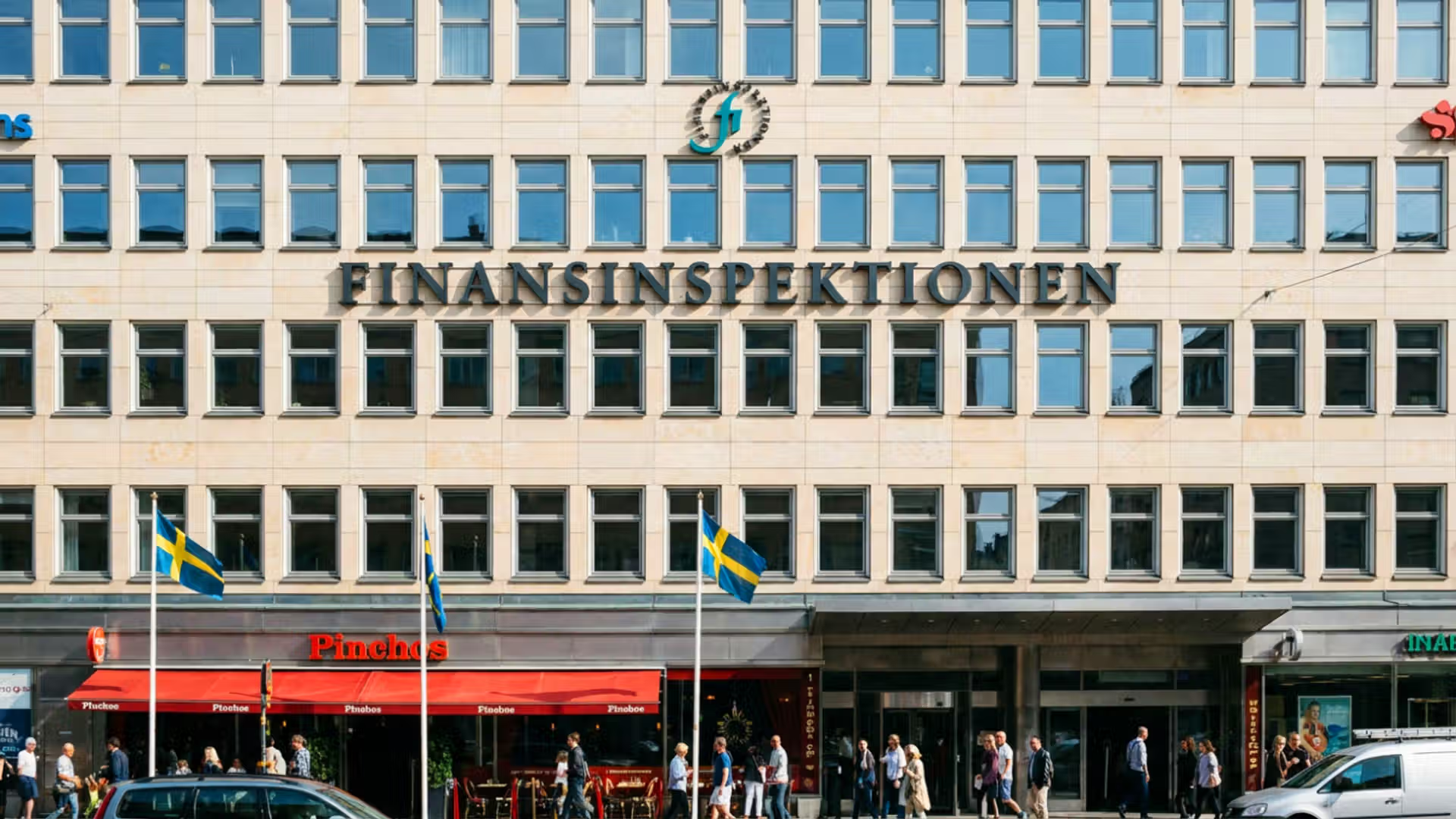
Finansinspektionen has officially released its updated supervisory assessment, highlighting how modern criminal networks exploit vulnerable points within national and international payment networks. The regulatory framework requires continuous evolution as digital banking services and novel payment instruments provide unprecedented speed and anonymity to illicit actors. Financial institutions operating within the Nordic region face heightened expectations to identify, assess, and mitigate these emerging threats effectively. Criminal syndicates increasingly leverage sophisticated technological infrastructures to move illicit funds across borders, making robust oversight a matter of national security. Regulatory authorities emphasize that compliance mechanisms must move beyond passive reporting toward proactive threat detection and systemic resilience.
Table of Contents



Sweden compliance risks 2026
The newly published supervisory documentation from the Swedish financial regulator outlines how the overall threat landscape has evolved dramatically over the past 5 years. Organized crime syndicates have developed highly coordinated methods to infiltrate traditional banking channels and alternative payment platforms, leading to an elevated threat assessment across the entire financial services industry. National tracking metrics indicate that criminal networks are highly adept at exploiting gaps between different jurisdictions, particularly when dealing with rapid cross-border transfers. This reality demands that compliance departments dramatically enhance their transaction monitoring systems to detect anomalies that signify multi-layered laundering schemes.
Supervisory observations indicate that traditional retail banks remain a primary target for illicit fund placement due to the sheer volume of transactions they process daily. Criminals utilize complex networks of shell corporations and legal entities to mask the true beneficial ownership of accounts, making basic customer due diligence insufficient. Financial enterprises must employ advanced data analytics to map relationships between seemingly unconnected accounts and corporate structures. The regulator expects institutions to look past formal registration documents to uncover the actual individuals controlling corporate assets.
Furthermore, the integration of automated onboarding processes has introduced new vulnerabilities that require immediate mitigation. While digital identity verification speeds up customer acquisition, it also presents opportunities for identity fraud and the creation of mule accounts. Compliance frameworks must incorporate behavioral analysis and device fingerprinting to ensure that the individuals opening accounts are genuine and that the accounts are not being aggregated for systematic exploitation. Ongoing monitoring must be dynamic, adapting to shifts in transaction patterns immediately rather than relying on static periodic reviews.




Elevating Oversight Within Digital Payment Channels and Crypto Assets
Alternative payment service providers and electronic money institutions have experienced rapid growth, which correlates directly with an increase in targeted criminal exploitation. These entities often process high volumes of international transactions with low latency, a characteristic that appeals to illicit actors seeking to move funds before traditional detection systems flag the activity. The speed of these systems means that retrospective analysis is no longer sufficient to prevent illicit flows. Regulators demand that these firms implement real-time filtering and robust pre-transaction screening protocols to stop suspect transfers immediately.
The cryptocurrency sector represents another area of intense regulatory focus due to the inherent pseudo-anonymity provided by distributed ledger technology. Trading platforms and custodial wallet providers must establish strict origin-of-wealth protocols to verify where funds originate before they enter the traditional fiat ecosystem. Criminal networks frequently utilize mixing services and decentralized applications to obscure the audit trail of stolen or extorted digital assets. Financial firms that interface with virtual asset service providers must perform enhanced due diligence on these counterparties to ensure they maintain equivalent compliance standards.
Intermediary entities that facilitate fiat-to-crypto conversions are under particular scrutiny because they bridge unregulated spaces with the regulated banking network. The regulator stresses that these businesses cannot treat crypto transactions as inherently low risk simply because they occur on public blockchains. Comprehensive tracking of wallet addresses and alignment with global travel rule standards are mandatory components of a modern compliance architecture. Failing to maintain comprehensive records of both originators and beneficiaries exposes the wider financial framework to systemic contagion.


Targeting Internal Enablers and Corporate Exploitation Vectors
A significant threat identified in recent supervisory reviews is the strategic use of professional enablers who abuse their specialized knowledge to facilitate financial crimes. Legal consultants, accountants, and corrupt insiders within financial institutions provide criminal organizations with the tools necessary to bypass standard compliance controls. These enablers assist in structuring transactions to avoid automated triggers and advise on the creation of complex corporate webs designed to confuse investigators. Firms must establish rigorous internal controls and whistleblowing channels to detect and root out insider collusion.
Corporate structures themselves are frequently weaponized by criminal organizations to create an illusion of legitimacy. Rogue businesses are established solely to issue fraudulent invoices, create fake payroll records, and blend illicit cash with legitimate commercial revenue. Financial institutions must scrutinize the economic rationale behind corporate transactions, particularly when dealing with cash-intensive sectors or businesses displaying unusual turnover patterns relative to their peer group. Verifying the legitimacy of commercial relationships is essential to disrupting these advanced laundering methods.
The threat extends to the exploitation of small and medium enterprises that may be facing financial distress. Criminal networks often offer capital injections to struggling businesses, effectively seizing control of their banking facilities to use them as laundering conduits. This methodology makes detection exceptionally difficult because the corporate history of the entity appears entirely legitimate. Compliance teams must look for sudden changes in management, unexpected shifts in suppliers, or unexplained deviations from historical transaction volumes to identify compromised corporate entities.
Strengthening Sanctions Compliance and Countering Terrorist Financing
The geopolitical environment has made international sanctions compliance a top priority for financial supervisors globally. Financial institutions must maintain sophisticated screening systems that update automatically in response to changes in global sanctions lists. Perimeter controls must extend beyond direct customers to include all intermediaries, beneficial owners, and associated maritime or logistics networks. Sanctions circumvention often involves complex transshipment routes and the use of front companies located in non-aligned jurisdictions, requiring deep investigative capabilities from compliance personnel.
Preventing the financing of terrorism requires a distinct approach compared to traditional anti-money laundering efforts because the funds involved are often legitimate in origin and small in amount. Detection cannot rely solely on high-value transaction alerts; instead, it requires the identification of specific behavioral patterns and funding networks linked to extremist ideologies. Financial entities must cooperate closely with law enforcement and national intelligence agencies to share threat intelligence and refine their detection algorithms based on verified typologies.
Ultimately, the resilience of the financial sector depends on a culture of compliance that starts at the executive level and permeates throughout the entire organization. Board members and senior executives must demonstrate a comprehensive understanding of the specific risk exposures inherent to their business models. Adequate resource allocation for compliance staff, continuous training programs, and the adoption of cutting-edge technological tools are essential elements of an effective defense strategy. Only through continuous vigilance and systemic adaptability can the financial system protect itself from the evolving tactics of international financial criminals.
Key Points
- Organized crime groups have escalated the overall risk level within the financial sector significantly compared to the past 5 years.
- Traditional retail banking systems and international payment processors remain primary targets for systematic money laundering schemes.
- Crypto asset platforms must strictly enforce origin of wealth protocols and adhere to global travel rule requirements to mitigate anonymity risks.
- Professional internal enablers and compromised corporate entities represent a severe threat to the integrity of compliance controls.
- Sanctions compliance demands real-time screening and deep beneficial ownership tracing to counter sophisticated circumvention strategies.
Related Links
- Finansinspektionen Official Prioritised Risks Report 2026
- Financial Action Task Force Global Anti-Money Laundering Standards
- Swedish National Risk Assessment for Money Laundering
- European Banking Authority Financial Crime Guidance
Other FinCrime Articles About Sweden
- Swedish Regulator Hits Ikano Bank With $15M Fine For Severe AML Failures
- Swedish Norion Bank Fined 90 Million Kronor For Regulatory Breaches
- Police Authorities in Sweden Warn of Severe Penalties for Illicit Money Transfers
Source: Finansinspektionen
Some of FinCrime Central’s articles may have been enriched or edited with the help of AI tools. It may contain unintentional errors.
Want to promote your brand, or need some help selecting the right solution or the right advisory firm? Email us at info@fincrimecentral.com; we probably have the right contact for you.