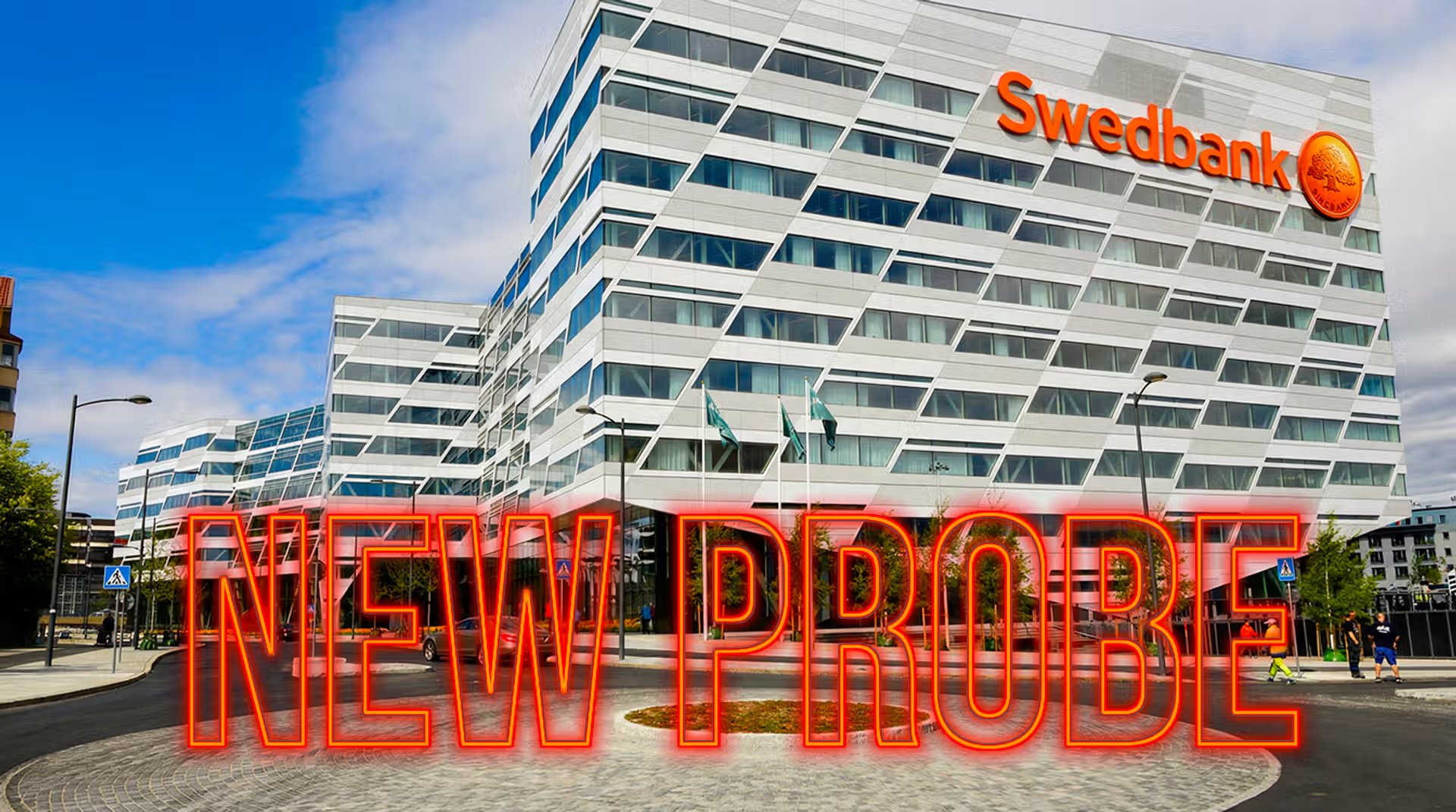
Finansinspektionen announced an investigation into Swedbank for potential failures in customer due diligence measures during a two-year period ending in 2025. The Swedish financial regulator is assessing whether the institution maintained sufficient internal controls to prevent the exploitation of its systems by criminal networks. This oversight action emphasizes the central role that large retail banks play in protecting the broader financial ecosystem from illicit cash flows and terrorist financing. Authorities seek to determine if the bank correctly identified high-risk profiles and monitored transactions effectively to mitigate exposure to financial crime.
Table of Contents


Strengthening Regulatory Oversight of Swedish Banking Operations
The Swedish Financial Supervisory Authority, known as Finansinspektionen, has initiated a formal probe into the operational standards of one of the largest financial institutions in the Nordic region. This specific inquiry focuses on the period stretching from December 2023 through November 2025, a timeframe during which global regulatory expectations for financial institutions reached unprecedented heights. The primary objective of the investigation is to verify if the bank adhered to the strict requirements laid out in the Money Laundering and Terrorist Financing Prevention Act. Effective governance in this area requires more than just administrative checkboxes; it demands a dynamic and risk-based approach to understanding the economic background of every client. When a major bank fails to implement robust verification processes, it creates a systemic vulnerability that can be exploited by international syndicates looking to integrate dirty money into the legitimate economy.
Regulatory bodies have repeatedly stressed that knowing your customer is not merely a bureaucratic hurdle but a fundamental necessity for maintaining the integrity of the global markets. The current investigation into Swedbank will scrutinize the depth and accuracy of the information collected during the onboarding process and the subsequent periodic reviews of client accounts. If the documentation reveals that the bank ignored red flags or failed to update risk ratings when client behavior shifted significantly, the consequences could be severe. Finansinspektionen has the authority to issue substantial fines and public warnings, which serve as both a penalty for the offending firm and a deterrent for the rest of the industry. The focus on the 2023 to 2025 window suggests that regulators are looking for evidence of sustained compliance rather than isolated incidents of administrative oversight.
The broader context of this investigation involves the ongoing struggle to prevent the financial system from being used as a conduit for the proceeds of organized crime. Sweden has faced increasing pressure to bolster its defenses against money laundering following several high-profile scandals across the Baltic and Nordic regions in recent years. As criminal organizations become more sophisticated in their methods, using complex webs of shell companies and digital assets, the burden on traditional banks to act as the first line of defense has grown. Finansinspektionen remains committed to ensuring that all domestic entities, especially those with significant market share, maintain a defensive posture that is proportional to the risks they face. This probe into Swedbank represents a continuation of that strategy, signaling that no institution is above scrutiny when it comes to the safety of the financial infrastructure.



Evaluating Customer Due Diligence and Risk Assessment Frameworks
At the heart of the current regulatory action is the concept of customer due diligence, which serves as the cornerstone of any effective anti-money laundering program. This process involves verifying the identity of clients, understanding the nature of their business activities, and identifying the ultimate beneficial owners of corporate entities. For a massive organization like Swedbank, managing millions of accounts across multiple jurisdictions, this task is incredibly complex and requires sophisticated automated systems balanced by expert human judgment. The investigation will likely examine whether the bank’s automated monitoring tools were properly calibrated to detect suspicious patterns without generating an unmanageable volume of false positives.
A critical component of the inquiry will be the bank’s internal risk categorization. Regulators want to see that the institution differentiates between low-risk retail customers and high-risk entities, such as politically exposed persons or businesses operating in jurisdictions with weak regulatory frameworks. If the investigation finds that Swedbank applied a one-size-fits-all approach, it would constitute a significant breach of the prevailing legal standards. Furthermore, the bank must demonstrate that it took enhanced measures when dealing with high-risk scenarios, including more frequent monitoring and more detailed inquiries into the source of wealth and the source of funds. These steps are vital for ensuring that the bank does not inadvertently facilitate the movement of money derived from drug trafficking, tax evasion, or corruption.
The time period under review, specifically late 2023 to late 2025, coincided with significant geopolitical shifts and changes in international sanctions regimes. Banks were required to adapt their screening processes rapidly to account for new lists of sanctioned individuals and entities. Finansinspektionen will evaluate how well Swedbank integrated these updates into its existing compliance architecture. Any delay in updating screening databases could have allowed prohibited transactions to pass through the bank’s systems, potentially leading to violations of international law. The regulator’s focus on the bank’s risk analysis capabilities suggests a move toward more qualitative assessments of compliance, looking beyond whether policies exist to whether those policies are actually effective in practice.
The Critical Role of Financial Institutions in Society
Financial institutions occupy a unique position in modern society, acting as the gatekeepers of the monetary system and the engines of economic growth. With this power comes a heavy responsibility to ensure that the services they provide are not used to undermine the rule of law. The Swedish Financial Supervisory Authority has made it clear that combating financial crime is a top priority for 2026, and this investigation is a direct manifestation of that policy. When money is laundered through a reputable bank, it gains a veneer of legitimacy that allows criminals to enjoy the fruits of their illegal acts while further funding their operations. This cycle poses a direct threat to social stability and public trust in the financial industry.
The impact of money laundering extends far beyond the financial sector, influencing everything from real estate prices to the stability of democratic institutions. By allowing illicit funds to enter the system, banks can inadvertently contribute to the rise of shadow economies that compete unfairly with legitimate businesses. Finansinspektionen’s role is to protect the public interest by ensuring that banks like Swedbank operate with the highest levels of transparency and accountability. The investigation will also look at the culture of compliance within the bank, seeking to determine if the leadership prioritized growth and profit over the rigorous application of anti-money laundering controls. A healthy compliance culture starts at the top and must permeate every level of the organization, from the front-line tellers to the board of directors.
As the investigation progresses, the financial community will be watching closely for any findings that might indicate broader trends in regulatory expectations. The outcome could lead to a redefinition of what constitutes adequate due diligence in the digital age. Banks may find themselves pressured to invest even more heavily in artificial intelligence and machine learning to stay ahead of both the criminals and the regulators. Regardless of the final result, the mere existence of the probe highlights the ongoing tension between operational efficiency and the need for exhaustive oversight. For Swedbank, the challenge will be to prove that its systems were robust enough to handle the immense volume of transactions it processes every day while remaining sensitive to the subtle indicators of criminal activity.
Ensuring Future Resilience Against Financial Exploitation
The concluding analysis of this case reveals a regulatory landscape that is increasingly intolerant of lapses in oversight. Finansinspektionen’s decision to launch this investigation underscores the fact that the battle against financial crime is never truly won, but rather represents a continuous effort of adaptation and vigilance. For Swedbank, the goal moving forward must be to refine its internal mechanisms to not only meet the current legal requirements but to anticipate future challenges. This involves a commitment to ongoing training for staff, the adoption of cutting-edge technology for transaction monitoring, and a willingness to cooperate fully with supervisory authorities. The lessons learned from this inquiry will likely shape the bank’s strategy for years to come, influencing how it manages risk and interacts with its global customer base.
The broader implications for the banking sector are clear: regulators are moving toward a more proactive and data-driven model of supervision. It is no longer enough for a bank to show that it has a compliance department; it must prove that the department has the resources, authority, and information necessary to stop illicit activity in its tracks. As the 2026 supervisory year continues, other institutions should take note of the focus on customer due diligence and use it as a prompt to conduct their own internal audits. By identifying and fixing weaknesses before they attract the attention of the authorities, banks can protect their reputations and avoid the heavy penalties associated with non-compliance. Ultimately, a more secure financial system benefits everyone, fostering a climate of trust that is essential for long-term economic prosperity.
Key Points
- Finansinspektionen has launched a formal investigation into Swedbank’s compliance with anti-money laundering and terrorist financing regulations during a two year period.
- The probe specifically targets the effectiveness of the bank’s customer due diligence measures and its ability to accurately assess and manage client risk.
- The investigation covers activities occurring between December 1, 2023, and November 30, 2025, focusing on whether the bank met established legal standards for verification.
- Regulatory authorities emphasized that the financial sector plays a pivotal role in preventing the proceeds of crime from entering the legitimate global economy.
- Potential outcomes for the institution include public warnings or significant administrative fines if systemic failures in internal controls are discovered.
Related Links
- Swedish Anti-Money Laundering Act and Regulations
- FATF Guidance on Customer Due Diligence for Financial Institutions
- European Banking Authority AML/CFT Compliance Standards
- Swedish Financial Intelligence Unit 2024 Report
Other FinCrime Central Articles About Sweden
- Police Authorities in Sweden Warn of Severe Penalties for Illicit Money Transfers
- Swedish Regulator Fines SBB 80 Million SEK for Reporting Violations
- Swedish Watchdog Slams Svea Bank With 15M€ For AML Lapses
Source: Finansinspektionen
Some of FinCrime Central’s articles may have been enriched or edited with the help of AI tools. It may contain unintentional errors.
Want to promote your brand, or need some help selecting the right solution or the right advisory firm? Email us at info@fincrimecentral.com; we probably have the right contact for you.