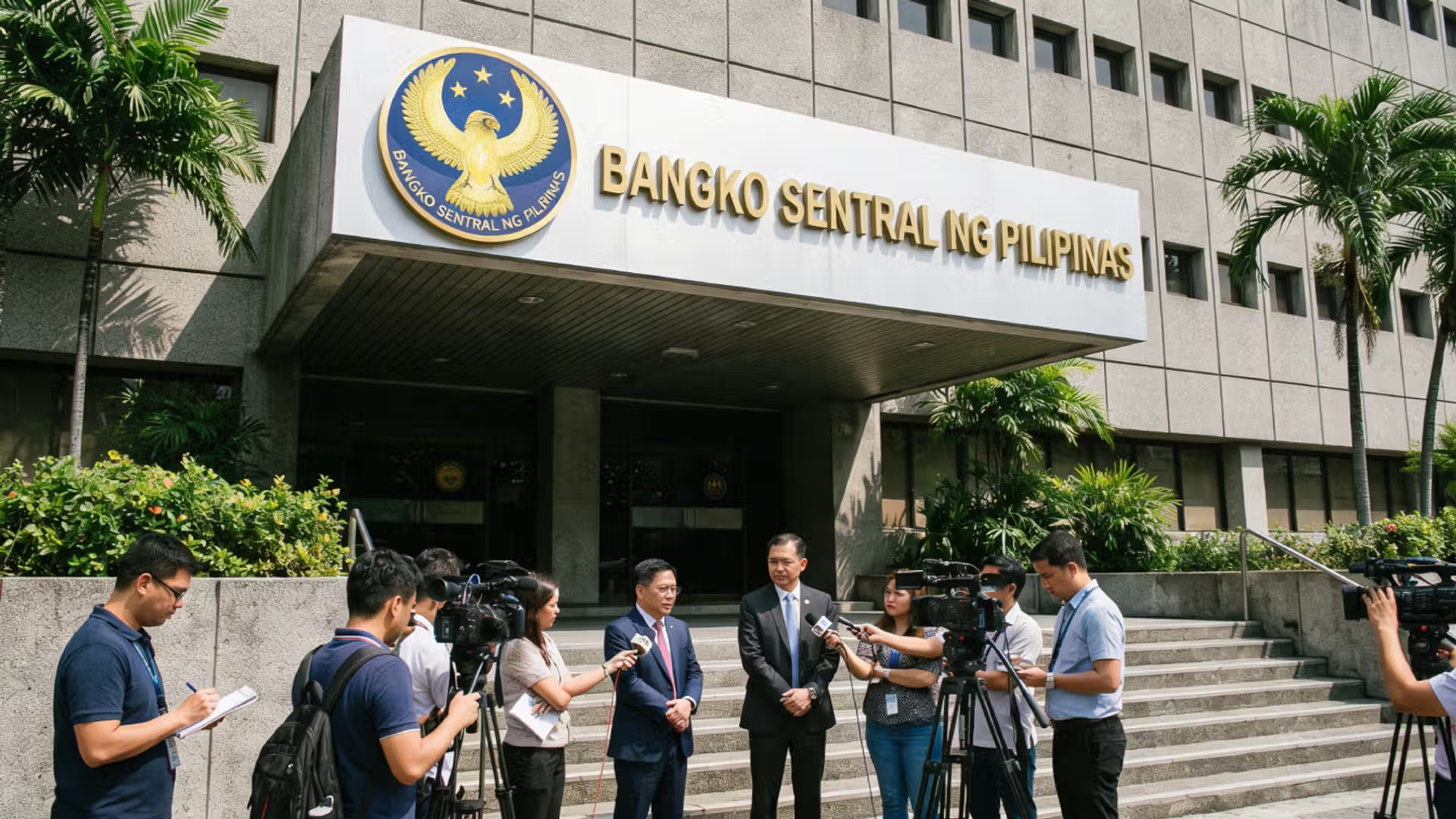
The Philippines has implemented a stringent administrative directive aimed at governing digital currency transactions and platforms operating within its jurisdiction. This comprehensive framework requires digital marketplace operators to carry out meticulous investigations before approving any cryptographic ledger entry or virtual representation of value for public distribution. By intensifying supervisory oversight, the regulatory body intends to insulate the domestic economic network from clandestine capital transfers and structured financial crimes. The strategic issuance clarifies supervisory expectations and ensures that all active participants maintain maximum operational integrity.
Table of Contents



Philippine crypto asset regulatory guidelines
Deploying robust screening procedures stands as a fundamental defense mechanism against illicit capital manipulation within the digital ecosystem. Under the newly clarified administrative directives, digital marketplace operators must execute exhaustive background investigations on every entity seeking to distribute or list a digital token on their platforms. This process requires an exhaustive analysis of corporate ownership structures, ensuring that the identity of every ultimate beneficial owner is fully uncovered and verified against international database records. Financial supervisors demand that the legal status, corporate registrations, and previous operational histories of token issuers be thoroughly verified to prevent shell companies and fraudulent organizations from exploiting the local financial architecture. Operators are obligated to look beyond surface-level registrations, scrutinizing the professional backgrounds, past business associations, and general integrity of directors, principal officers, and primary operators. Through these deep due diligence processes, the regulatory infrastructure aims to establish an unyielding layer of accountability, making it exceedingly difficult for bad actors to obscure their identities behind complex corporate structures or proxy arrangements.
Furthermore, the initial screening process requires an extensive assessment of the financial health and fiscal history of the token-issuing entity. This involves reviewing audited financial statements, income tax filings, and equivalent official documentation from the home country of the issuer if the entity is based overseas. Financial institutions must assess whether the proponents have a clean record or if they are linked to adverse media reports, regulatory sanctions, or ongoing criminal investigations anywhere globally. By compelling digital currency platforms to implement these extensive corporate verification measures, the oversight framework ensures that only legitimate, stable, and transparent entities can access the domestic market, thereby reducing the systemic risk of financial fraud and layered transaction activities.




Structural Framework and Risk Mitigation Pillars
The supervisory framework organizes its evaluation criteria into six distinct operational pillars designed to standardize risk assessments across the entire digital finance industry. These pillars cover the corporate background of the issuer, the historical maturity of the marketplace, specific use cases, tracking capabilities, liquidity reserves, and overall legal compliance. In analyzing marketplace maturity, platforms must evaluate total market capitalization, historical trading volumes, and the overall price stability of the asset under consideration. This prevents the introduction of highly volatile or easily manipulated tokens that could be utilized by criminal syndicates to rapidly move or distort the value of illegally obtained funds. The specific use cases of each asset must also be explicitly defined and understood, ensuring that the token serves a legitimate economic purpose rather than functioning merely as an obfuscated vehicle for speculative or deceptive transfers.
Technical transparency, traceability, and architectural security represent another critical pillar within this multi-layered framework. Regulated platforms must examine the underlying ledger technology, smart contract architectures, and source code of any prospective digital asset, verifying that independent third-party cybersecurity firms have audited the entire system. This technical scrutiny is vital for ensuring that the digital asset does not possess hidden functionalities, backdoors, or security vulnerabilities that could allow malicious entities to compromise customer funds or disrupt transaction tracking systems. The framework also dictates that platforms verify the mechanisms governing redemption processes, liquidity pools, and asset reserves, guaranteeing that stablecoins or asset-backed tokens possess verified, high-quality collateral to fulfill user redemptions at any given moment, thereby maintaining absolute institutional stability.


Prohibition of Anonymity and Tracking Systems
A pivotal element of this regulatory initiative is the absolute prohibition of anonymity-enhancing digital assets, commonly referred to as privacy tokens. These specific types of digital assets utilize advanced cryptographic methods to conceal transaction details, wallet balances, and the identities of senders and recipients, making traditional transaction monitoring completely impossible. The administrative directive explicitly bans the listing, trading, or support of these untraceable assets on any regulated platform within the country. By eliminating these dark web instruments from the formal financial system, the supervisory authority ensures that every transaction can be linked to a verifiable digital footprint, thereby preventing money launderers from utilizing privacy-focused technologies to obscure the origins of criminal proceeds.
In addition to banning privacy-focused digital assets, the framework mandates that platforms maintain comprehensive transaction tracking mechanisms that align with global compliance standards. Regulated entities must verify whether the digital assets they support can fully comply with the payment transparency standards established by international financial action groups, which require the immediate transmission of beneficiary and originator information during digital transfers. This ensures that the complete path of a digital transaction remains visible across different jurisdictions, allowing law enforcement agencies and financial intelligence units to trace suspicious asset movements across international borders. Continuous account monitoring must be enforced, using advanced alert systems configured to detect unusual transaction volumes, rapid velocity movements, or behavioral patterns that deviate from the established financial profile of a customer.
Strengthening Financial Infrastructure Against Transnational Crime
The ultimate goal of these intensified supervisory measures is to protect the broader national financial infrastructure from the expanding threats of transnational crime and subterranean banking networks. By establishing clear, uniform standards for the listing and delisting of digital assets, the central bank equips digital platforms with the necessary tools to identify and mitigate operational and compliance risks proactively. Platforms must establish clear, internal policies that define explicit thresholds for asset performance, security compliance, and regulatory adherence, which will automatically trigger the immediate delisting of an asset if those standards are breached. This dynamic monitoring ensures that compliance is not merely a one-time approval process but a permanent, evolving obligation that responds directly to changing threat landscapes.
Moreover, the integration of these digital asset guidelines with existing national anti-money laundering frameworks creates a unified defensive front against financial crime. Regulated digital entities are required to share relevant information and report suspicious transactions directly to national financial intelligence authorities, ensuring that any anomalies detected in the digital ecosystem are immediately investigated by legal authorities. This collaborative approach enhances the overall capability of the state to intercept illicit flows, freeze suspicious assets, and dismantle the financial networks supporting organized crime syndicates and international syndicates. As digital finance continues to evolve, these robust regulatory expectations ensure that technological innovation does not outpace the essential security mechanisms required to preserve financial transparency and economic stability.
Key Points
- The administrative directive enforces a rigorous six-pillar evaluation framework that all registered digital asset platforms must utilize prior to listing any digital token.
- Corporate background checks must uncover ultimate beneficial owners and verify the legal and financial histories of both domestic and foreign token issuers.
- The framework mandates an absolute prohibition on listing or supporting anonymity-enhancing or privacy-focused digital assets that conceal transaction details.
- Digital platforms must implement continuous transaction monitoring and ensure full compliance with international travel rules for payment transparency.
- Regulated entities must establish clear, predefined thresholds and internal policies to automatically trigger the delisting of assets that violate safety standards.
Related Links
- Bangko Sentral ng Pilipinas Main Regulatory Portal
- Anti-Money Laundering Council of the Philippines Official Page
- Financial Action Task Force Guidance for Virtual Assets
- Securities and Exchange Commission of the Philippines Issuances
Other FinCrime Central Articles About Stricter VASP Regulation
- Latest VARA AML CFT Guidance across UAE Virtual Asset Frameworks
- Nigeria’s Digital Asset Regulations: SEC Tightens Oversight on VASP Licensing
- India Fines Non-Compliant Crypto Platforms Amid Privacy Coin Ban
Source: Bangko Sentral NG Pilipinas
Some of FinCrime Central’s articles may have been enriched or edited with the help of AI tools. It may contain unintentional errors.
Want to promote your brand, or need some help selecting the right solution or the right advisory firm? Email us at info@fincrimecentral.com; we probably have the right contact for you.