An exclusive article by Fred Kahn
Geopolitical upheaval, expansive sanctions lists, and new expectations from regulators have made PEP controls more complex than ever. For compliance teams around the globe, especially those monitoring risks tied to Russia, Iran, and parts of the Middle East, the task of identifying, screening, and managing PEPs is no longer just about following best practice checklists. It is about adapting to an evolving threat landscape, understanding shifting regulatory definitions, and deploying robust controls under relentless scrutiny.
This article explores how the post-2022 sanctions wave is changing the PEP screening landscape. It delves into the core regulatory drivers, the operational pain points, and real-world case studies that are shaping compliance strategy across high-risk jurisdictions. The focus is on actionable insight for compliance professionals seeking to future-proof their PEP screening programs amid tightening sanctions, evolving definitions of PEPs, and increasing regulatory enforcement.
Table of Contents


PEP Screening in Sanctions-Driven Environments
Compliance teams face mounting challenges in PEP screening, primarily due to the convergence of sanctions compliance and AML obligations. Since 2022, sanctions have expanded in unprecedented ways, particularly in relation to Russian and Iranian entities and individuals, as well as some key Middle Eastern actors. Regulatory expectations now demand a nuanced understanding of the intersection between PEP status and sanctions exposure.
Key developments since 2022 have included:
- Broadening of PEP definitions in several regions, with some regulators now emphasizing links to sanctioned governments and state-owned entities.
- The use of consolidated sanctions lists, such as those from the US Treasury’s OFAC, the EU Council, and the UK Office of Financial Sanctions Implementation, which now include PEPs from Russia, Belarus, Iran, Syria, and elsewhere.
- Heightened due diligence requirements for business relationships involving state officials or close associates in jurisdictions facing international sanctions.
The European Union’s Sixth Anti-Money Laundering Directive (6AMLD) specifically extends the obligation to identify PEPs, including those at subnational levels, and requires enhanced scrutiny for any transactions or relationships involving high-risk third countries. Meanwhile, the United States’ Bank Secrecy Act and its associated rules under the Office of Foreign Assets Control require financial institutions to block assets and report on transactions involving designated individuals, many of whom are categorized as PEPs.
This convergence is not only legalistic. It creates significant operational complexity. Firms must now consider both the direct PEP status of individuals and the indirect risks that arise from family, associates, and beneficial owners, especially in cross-border structures where sanctioned interests may be obfuscated.


New Pressures from Russian, Iranian, and Middle Eastern Sanctions
The 2022 Russian invasion of Ukraine triggered an avalanche of new sanctions targeting hundreds of individuals and entities, many of whom qualify as PEPs under international guidance. The US, UK, and EU have repeatedly updated their lists, often adding regional governors, senior parliamentarians, security officials, and associates of sanctioned oligarchs.
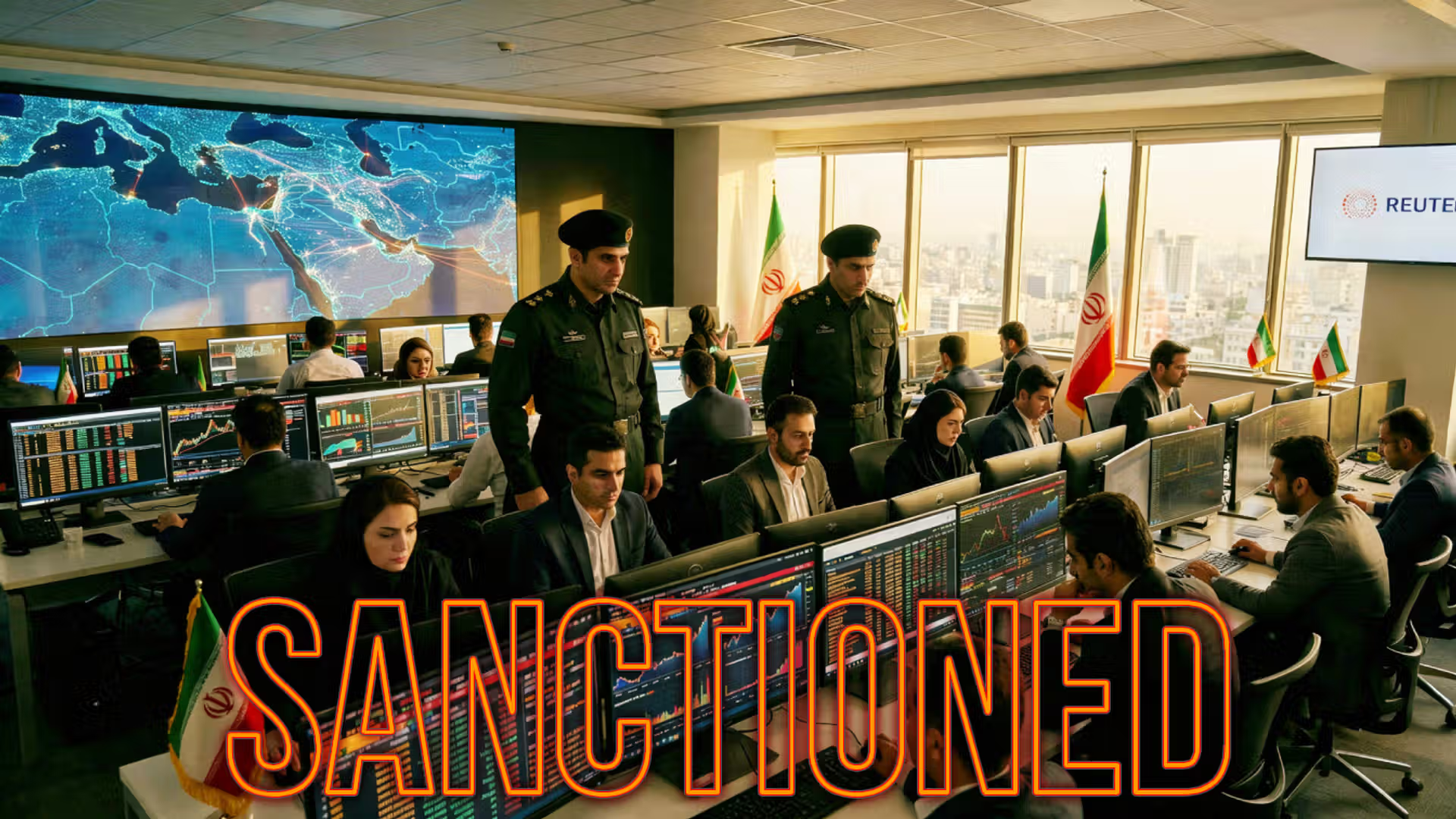
For Iran, the focus has shifted in recent years from nuclear program-linked designations to a much broader set of targets, including senior officials, military commanders, and businesspeople with close ties to the government or the Islamic Revolutionary Guard Corps. The Middle East has its own complexities, with sanctions regimes targeting Syrian officials, Lebanese politicians, and senior members of state-controlled enterprises.
Key operational pressures include:
- Constantly changing lists: Compliance teams must implement real-time updates from multiple regulatory bodies. Any lag in updates can expose institutions to enforcement.
- False positives: The overlap between PEP lists and sanctions lists increases the risk of false positives, especially where naming conventions or transliterations differ.
- Beneficial ownership opacity: In Russia and Iran, state influence and complex ownership chains mean that beneficial owners or controlling parties may not appear on sanctions lists but may still pose PEP-linked risk.
The US Financial Crimes Enforcement Network (FinCEN), the European Banking Authority (EBA), and the Financial Action Task Force (FATF) all stress the need for enhanced due diligence, ongoing monitoring, and detailed record-keeping. Fines for failure to identify or freeze assets belonging to sanctioned PEPs have increased sharply, as seen in several high-profile enforcement cases involving Russian and Iranian entities in Europe and the Middle East.
Evolving Best Practices for PEP Screening in High-Risk Regions
The intersection of sanctions and PEP screening calls for new approaches, particularly for institutions operating or dealing with Russia, Iran, and the Middle East. Best practices now require a blend of robust process design, sophisticated technology, and nuanced human judgment.
Key recommendations for strengthening PEP screening programs include:
- Integrated data sources: Use dynamic, multi-jurisdictional data sources that combine official PEP lists, sanctions lists, adverse media, and beneficial ownership data.
- Risk-based segmentation: Tailor screening protocols based on risk assessments tied to geography, business sector, transaction size, and exposure to high-risk jurisdictions.
- Continuous monitoring: Move beyond onboarding checks to ongoing transaction and relationship monitoring, with automated triggers for updates from regulatory lists.
- Advanced analytics: Deploy artificial intelligence and machine learning tools to detect hidden connections between individuals, entities, and sanctioned governments, reducing false positives while surfacing genuine risk.
- Robust escalation procedures: Establish clear processes for escalation, investigation, and reporting of potential PEP matches, ensuring prompt decision-making when sanctions exposure is identified.
For example, a European bank operating correspondent accounts for banks in Russia and Iran must conduct continuous screening of all counterparties, scrutinize beneficial owners of client entities, and rapidly update controls as new sanctions are issued. In the Middle East, banks dealing with politically connected clients must map out control structures and screen for indirect exposure, as family members and close associates often play key roles in circumventing sanctions.
Case Studies: Russia, Iran, and Middle Eastern Complexities
Russia:
The post-2022 wave of sanctions saw the addition of hundreds of new names to PEP and sanctions lists, from central bank officials to regional governors and their families. For instance, European and US banks have been fined for processing payments tied to sanctioned Russian officials through opaque offshore entities. The challenge of screening was compounded by attempts to obscure beneficial ownership using shell companies in Cyprus or the British Virgin Islands, making it essential to combine sanctions screening with deep-dive PEP investigations.
Iran:
Iran’s state structure and the prominent role of military and religious officials make PEP screening especially challenging. Designated individuals often hold overlapping public and private sector roles. Iranian sanctions evasion methods include using proxies and front companies. A Middle Eastern bank was penalized for failing to identify the indirect control of sanctioned Iranian officials over a trade finance facility routed through a Gulf-based company, highlighting the need for layered due diligence.
Middle East (Syria and Lebanon):
Sanctions on Syrian officials and certain Lebanese political figures have evolved over time, targeting both state actors and associates involved in corrupt activities or supporting sanctioned regimes. Screening is complicated by common names, lack of transparent registries, and widespread use of nominee structures. In one case, a European asset manager was found to have unwittingly invested in a fund ultimately controlled by a Syrian official under EU sanctions, underscoring the importance of looking through to ultimate beneficial owners and using multilingual screening tools.
Across these cases, regulators expect institutions to show not just initial screening, but robust ongoing monitoring and proactive updates as lists evolve.
The New Compliance Imperative for PEP Screening
Sanctions-driven changes since 2022 have fundamentally altered the PEP screening landscape. Compliance teams must operate with agility, using risk-based frameworks that integrate regulatory updates, technology, and investigative expertise. The stakes are high: enforcement actions now regularly involve not only financial penalties but also severe reputational damage and, in some cases, criminal liability for failing to screen or report sanctioned PEPs.
To remain compliant, institutions must:
- Continuously refine their definition of PEPs in line with changing guidance and sanctions designations.
- Invest in advanced screening solutions that provide transparency across ownership structures and networks of influence.
- Prioritize ongoing staff training, ensuring teams are alert to the shifting regulatory landscape.
- Engage in proactive dialogue with regulators, demonstrating a clear commitment to identifying and mitigating PEP and sanctions risk.
Future challenges are likely to include expanding sanctions lists targeting new geographies, further overlap between PEP and sanctions regimes, and increasing pressure for cross-border data sharing and transparency. Firms that treat PEP screening as a dynamic, evolving discipline—rather than a static compliance obligation—will be best placed to meet these challenges, safeguard their business, and uphold regulatory expectations in a rapidly changing world.
Related Links
- FATF Guidance on Politically Exposed Persons
- EU Council Consolidated Sanctions List
- US Treasury OFAC Sanctions Lists
- UK Office of Financial Sanctions Implementation (OFSI)
- European Banking Authority AML Guidelines
Other FinCrime Central Articles About PEPs Doing What PEPs Are Not Supposed To Do
- Money Laundering Allegations and Fatal Police Raid on Paraguayan Congressman Eulalio Gomes Batista
- Ex-Honduran Police Commissioner Cleared of Money Laundering in Shocking Ruling
- Former Peruvian President and Wife Both Sent to Jail for 15 years for Money Laundering
- HSBC Faces Allegations of Neglect in Massive Lebanese Money Laundering Scandal
- Ex-Mauritius PM Pravind Jugnauth Arrested: Shocking Money-Laundering Scandal
Some of FinCrime Central’s articles may have been enriched or edited with the help of AI tools. It may contain unintentional errors.
Want to promote your brand with us or need some help selecting the right solution or the right advisory firm? Email us at info@fincrimecentral.com; we probably have the right contact for you.