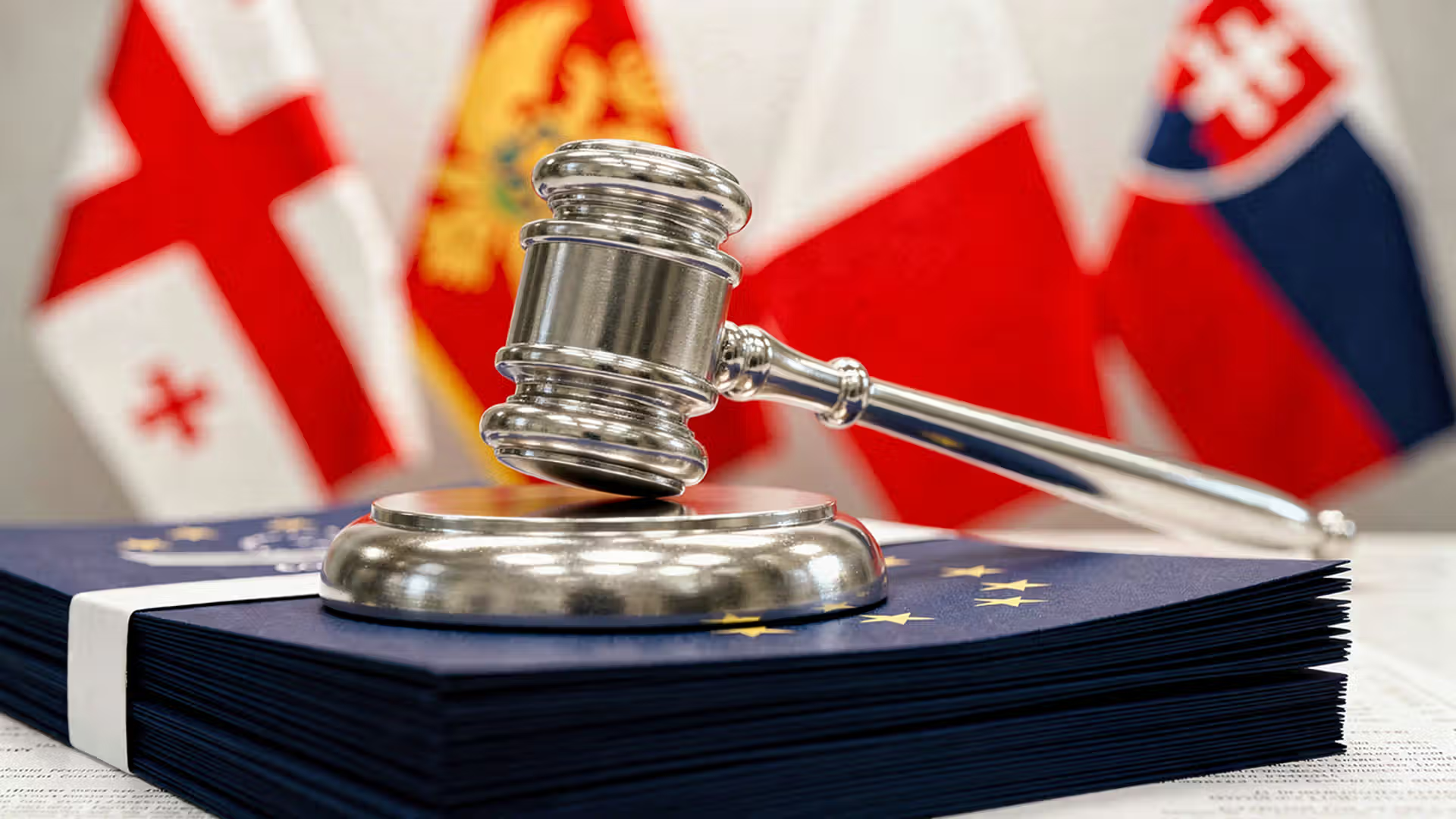
The Council of Europe body known as MONEYVAL recently released follow-up reports for Georgia, Montenegro, Poland, and Slovakia, highlighting varying levels of success in their anti-money laundering frameworks. While some nations demonstrated significant legislative improvements, others continue to face challenges regarding technical compliance with global financial standards. These assessments are critical for maintaining the integrity of the international financial system and ensuring that member states effectively mitigate risks associated with illicit financial flows. The findings emphasize the importance of continuous monitoring and the adoption of robust regulatory measures to address emerging threats.
Table of Contents


MONEYVAL Compliance Reports
The recent publication of follow-up reports by MONEYVAL provides a detailed look at how four European nations are managing their financial security obligations. This evaluation process is essential for ensuring that countries adhere to the 40 recommendations established by the Financial Action Task Force to prevent the misuse of the financial sector. Georgia has shown some effort in enhancing its measures, but still struggles with specific shortcomings that prevent a higher rating in certain areas. The report indicates that Georgia remains only partially compliant on eight recommendations, showing that while progress exists, it is not yet sufficient to meet all international expectations. This lack of full compliance can create vulnerabilities that might be exploited for illicit activities, making it imperative for the national authorities to intensify their reform efforts.
Progress in Montenegro and Slovakia
Montenegro has achieved notable success in improving its regulatory framework, with several ratings upgraded to largely compliant. These improvements cover essential areas such as customer due diligence, new technologies, and the supervision of financial institutions, reflecting a more rigorous approach to financial oversight. Similarly, the Slovak Republic has undergone a substantial legislative programme that addressed numerous technical issues previously identified by evaluators. Slovakia saw upgrades on eight recommendations, including those related to politically exposed persons and virtual asset service providers. These advancements demonstrate a strong commitment to closing loopholes that could be used for transferring or concealing funds of questionable origin. By strengthening their domestic laws, both Montenegro and Slovakia are positioning themselves as more secure environments for legitimate financial transactions.
Challenges and Reforms in Poland
Poland has also made strides in addressing technical deficiencies, particularly regarding the application of standards to non-profit organizations. The country has improved its compliance with recommendations on new technologies by implementing European Union regulations on crypto asset markets and the travel rule for crypto transfers. Despite these positive steps, Poland remains partially compliant on thirteen recommendations, indicating that more work is needed to fully align with global benchmarks. The focus on crypto assets is particularly relevant as digital currencies present new challenges for monitoring and tracing financial transactions. Ensuring that these technologies are subject to strict regulatory oversight is a key component of a modern strategy to prevent financial crimes and maintain the stability of the national economy.
Strengthening Regional Financial Integrity
The collective results of these reports highlight the dynamic nature of financial regulation and the need for constant vigilance. As countries implement new laws and update their supervisory practices, they contribute to a more resilient regional network against financial malfeasance. The ongoing evaluation process by MONEYVAL serves as a motivator for national governments to prioritize financial transparency and accountability. While some nations have made significant leaps, the persistence of partial compliance in others underscores the complexity of fully securing a modern financial system. Continued cooperation and the exchange of best practices will be vital for all member states as they strive to meet the highest international standards for financial integrity.
Key Points
- MONEYVAL released follow-up reports on Georgia, Montenegro, Poland, and Slovakia in January 2026.
- Slovakia and Montenegro achieved significant upgrades in their technical compliance ratings.
- Georgia continues to face difficulties with a non-compliant rating regarding non-profit organizations.
- Poland has improved its oversight of virtual assets by adopting new crypto regulations.
- The reports evaluate adherence to the 40 FATF recommendations for financial security.
Related Links
- MONEYVAL Follow-up Report on Georgia 2026
- MONEYVAL Follow-up Report on Montenegro 2026
- MONEYVAL Follow-up Report on Poland 2026
- MONEYVAL Follow-up Report on Slovakia 2026
Other FinCrime Central Articles About MONEYVAL Reports
- Progress and Pitfalls: A 2025 MONEYVAL Review of Money Laundering Controls in North Macedonia and Romania
- Global AML Fight Strengthened by FATF MONEYVAL Joint Decisions
- MONEYVAL Progress Reports Highlight Anti-Money Laundering Efforts in Estonia and Slovakia
Source: Council of Europe
Some of FinCrime Central’s articles may have been enriched or edited with the help of AI tools. It may contain unintentional errors.
Want to promote your brand, or need some help selecting the right solution or the right advisory firm? Email us at info@fincrimecentral.com; we probably have the right contact for you.