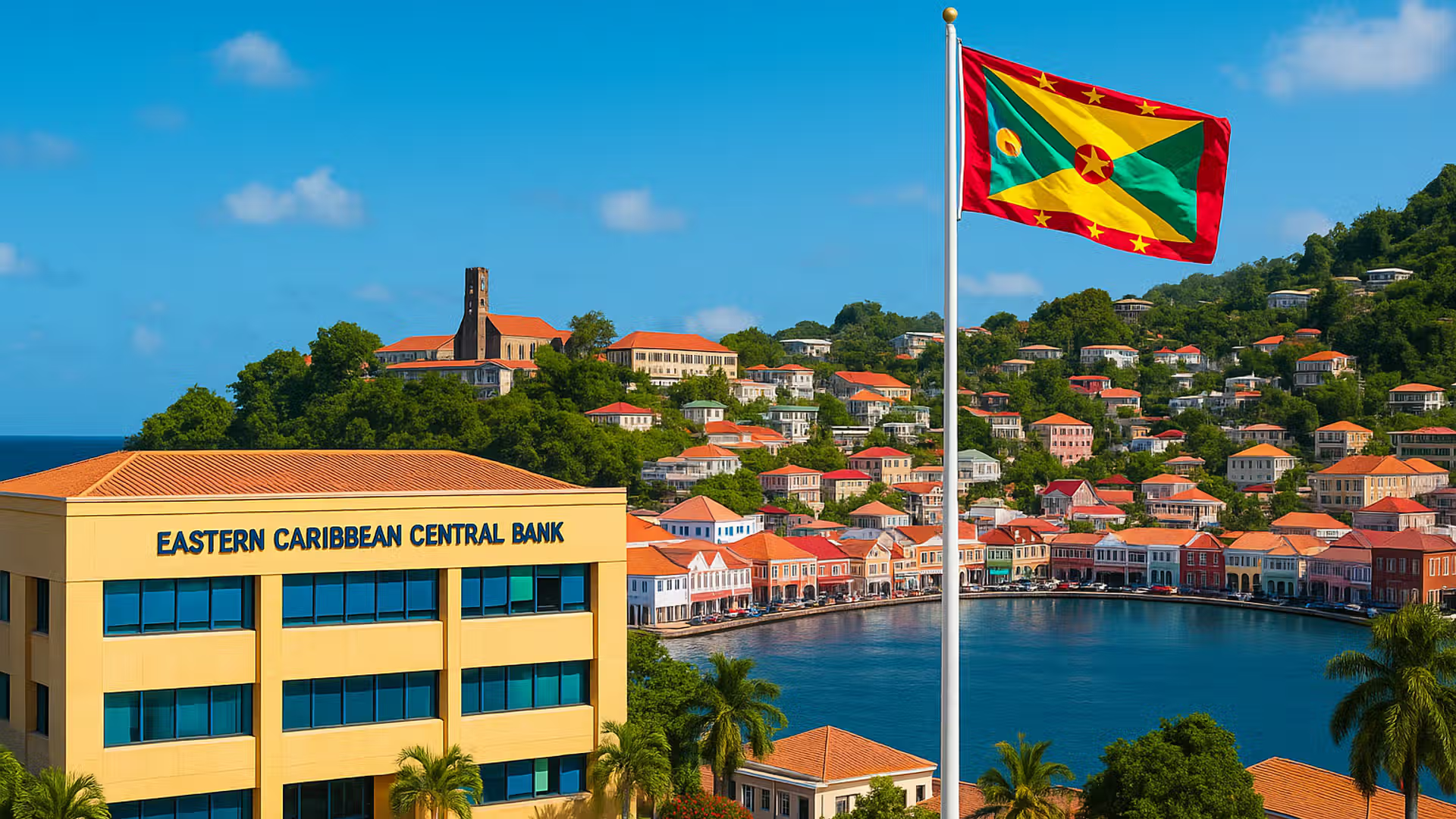
Grenada has long positioned itself as a premier destination for citizenship by investment, attracting high net worth individuals who are drawn to the benefits of visa-free access and favorable tax structures. However, citizenship by investment programmes also carry significant risks of abuse by criminals seeking to obscure the origins of illicit funds. The approval of a comprehensive anti-money laundering and counter-terrorism financing policy by Grenada’s Investment Migration Agency is not simply a bureaucratic adjustment, it represents a necessary tightening of defenses in a sector often flagged by regulators as vulnerable.
Table of Contents


Money laundering risks in Grenada’s citizenship programme
The financial crime risk in citizenship programmes arises from the potential for applicants to channel proceeds of corruption, fraud, or organized crime through real estate investments or national development funds in exchange for a new passport. Without rigorous due diligence, these pathways can be exploited to launder money and provide criminals with new identities and increased access to global markets. Grenada’s decision to implement stricter frameworks reflects both international pressure and a recognition of reputational risk.
The Caribbean region has previously faced scrutiny from multilateral bodies for insufficiently robust controls, which in some cases led to blacklisting or increased monitoring. By aligning with European Union standards and other global frameworks, Grenada demonstrates awareness that the credibility of its citizenship programme depends on the strength of its compliance systems. Enhanced monitoring, staff training, and policy integration are vital steps to address the risk of money laundering that has historically shadowed investment migration.
Strengthening compliance through international alignment
The adoption of this policy marks Grenada’s attempt to synchronize its systems with internationally accepted anti-money laundering measures. The EU framework, Financial Action Task Force methodology, and best practices from leading jurisdictions now serve as benchmarks for investment migration oversight. This is particularly important because international financial institutions and correspondent banks assess small economies like Grenada not only on their domestic enforcement, but also on their willingness to meet international standards.
Aligning with external frameworks increases Grenada’s ability to withstand scrutiny from external stakeholders. Banks processing citizenship-related transactions will expect detailed due diligence checks, verification of sources of funds, and independent monitoring structures. Failure to provide these would expose Grenada to reputational damage and reduced access to cross-border financial services. The new AML policy directly addresses these concerns by mandating transparent processes and ongoing reviews.
Staff training is equally critical in this context. Policies without proper application have little impact. By embedding awareness of suspicious transaction indicators, red-flag behavior, and the obligations under reporting regimes, Grenada ensures that its staff are not only equipped to comply but also capable of recognizing emerging risks. This level of preparedness is essential given the fast-evolving typologies in investment-related money laundering.
Safeguarding reputation and investor confidence
Reputation is the most valuable asset of any citizenship by investment programme. Once associated with corruption or facilitation of illicit activity, the credibility of the programme collapses rapidly. Investors with legitimate interests seek stability, transparency, and assurance that their second citizenship is not tainted by scandal. Grenada’s approval of a comprehensive AML and CFT policy therefore acts as a safeguard for its economic development model, which depends on the continuous inflow of investment.
The new measures are not merely defensive. They also enhance Grenada’s attractiveness to credible investors by signaling a clear separation from the type of programmes that attract unwanted attention from international watchdogs. Protecting the programme’s reputation contributes to broader economic resilience by ensuring that investment inflows are sustainable and not jeopardized by sanctions or external pressure.
Moreover, Grenada’s alignment with international frameworks reinforces its position as a cooperative jurisdiction in the fight against financial crime. This helps to mitigate the risk of de-risking, where major international banks sever ties with smaller states perceived as high-risk. For Grenada, maintaining strong relationships with international financial networks is indispensable to economic growth.
Long-term implications for investment migration and AML oversight
The immediate adoption of this AML framework sets a precedent within the Caribbean investment migration sector. Other states in the region offering similar programmes face equivalent risks, and Grenada’s proactive step may influence them to update their compliance standards to avoid being perceived as weak links. Harmonization of AML standards across the region is likely to emerge as a theme in coming years, reducing opportunities for criminals to exploit differences between jurisdictions.
The commitment to annual reviews of the policy suggests that Grenada is not treating compliance as a one-time exercise. Regular updates allow the framework to adapt to evolving typologies such as the use of complex corporate vehicles, layering through crypto assets, or cross-border real estate schemes. This future-focused approach provides Grenada with a competitive advantage, as jurisdictions unable to modernize risk exclusion from legitimate financial channels.
From an AML perspective, the long-term value lies in institutionalizing compliance culture. As staff undergo repeated training and systems improve in monitoring, Grenada strengthens resilience against sophisticated laundering techniques. This sustained vigilance is vital, as financial crime is adaptive, and criminals quickly identify weaknesses in oversight. By embedding compliance deeply into its investment migration programme, Grenada reduces its exposure while reinforcing its reputation internationally.
Related Links
- Financial Action Task Force
- Caribbean Financial Action Task Force
- Grenada Investment Migration Agency
- European Commission Anti-Money Laundering
- Eastern Caribbean Central Bank
Other FinCrime Central News From the Caribbeans
- Uniting the Caribbean to Combat Money Laundering and Terrorism Financing
- EU Delisting Signals Stronger Future for Jamaica’s Financial System
- Cayman Islands Bolsters Virtual Asset Laws to Secure Top FATF Standing
Source: St. Vincent Times
Some of FinCrime Central’s articles may have been enriched or edited with the help of AI tools. It may contain unintentional errors.
Want to promote your brand with us or need some help selecting the right solution or the right advisory firm? Email us at info@fincrimecentral.com; we probably have the right contact for you.