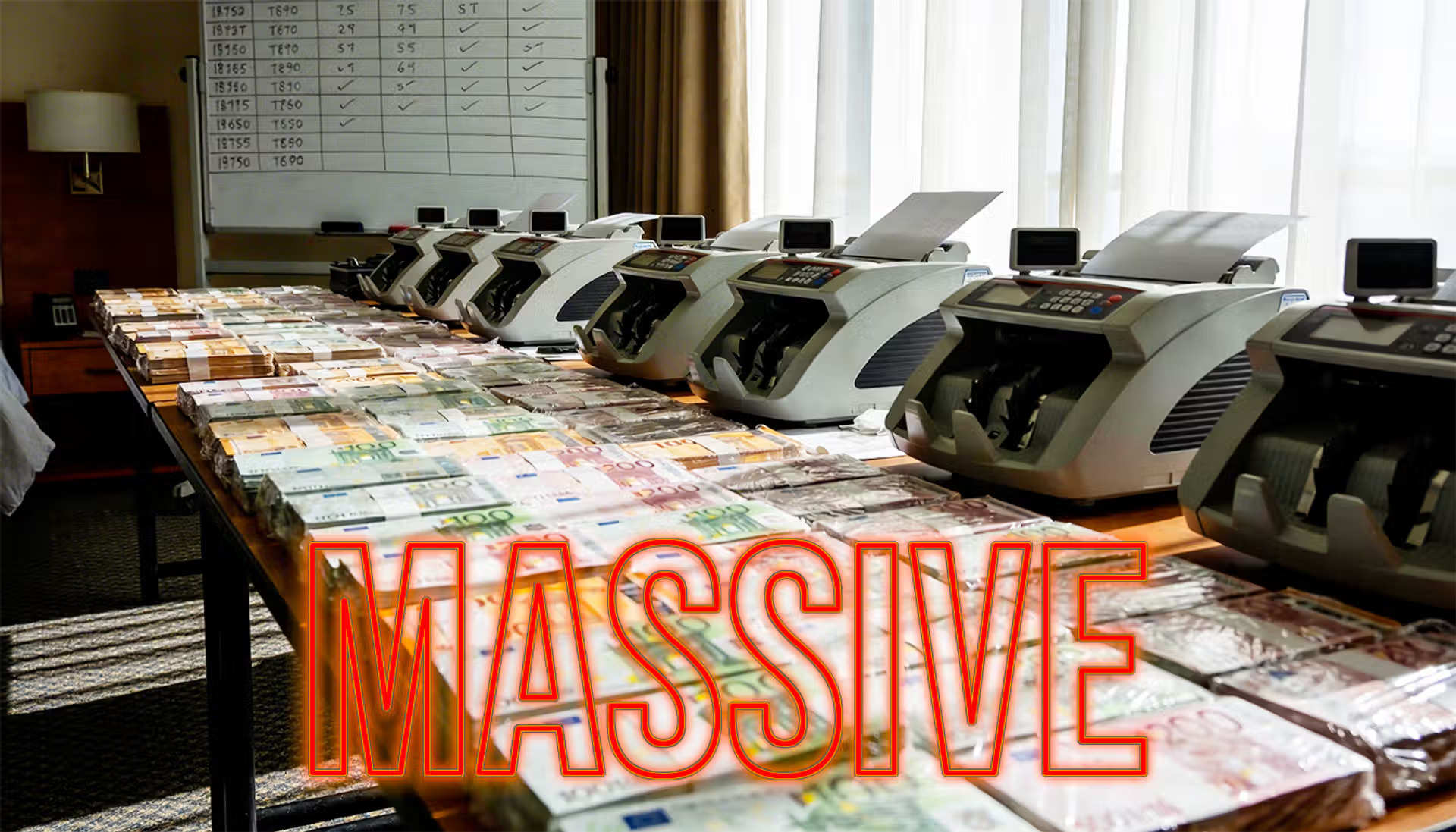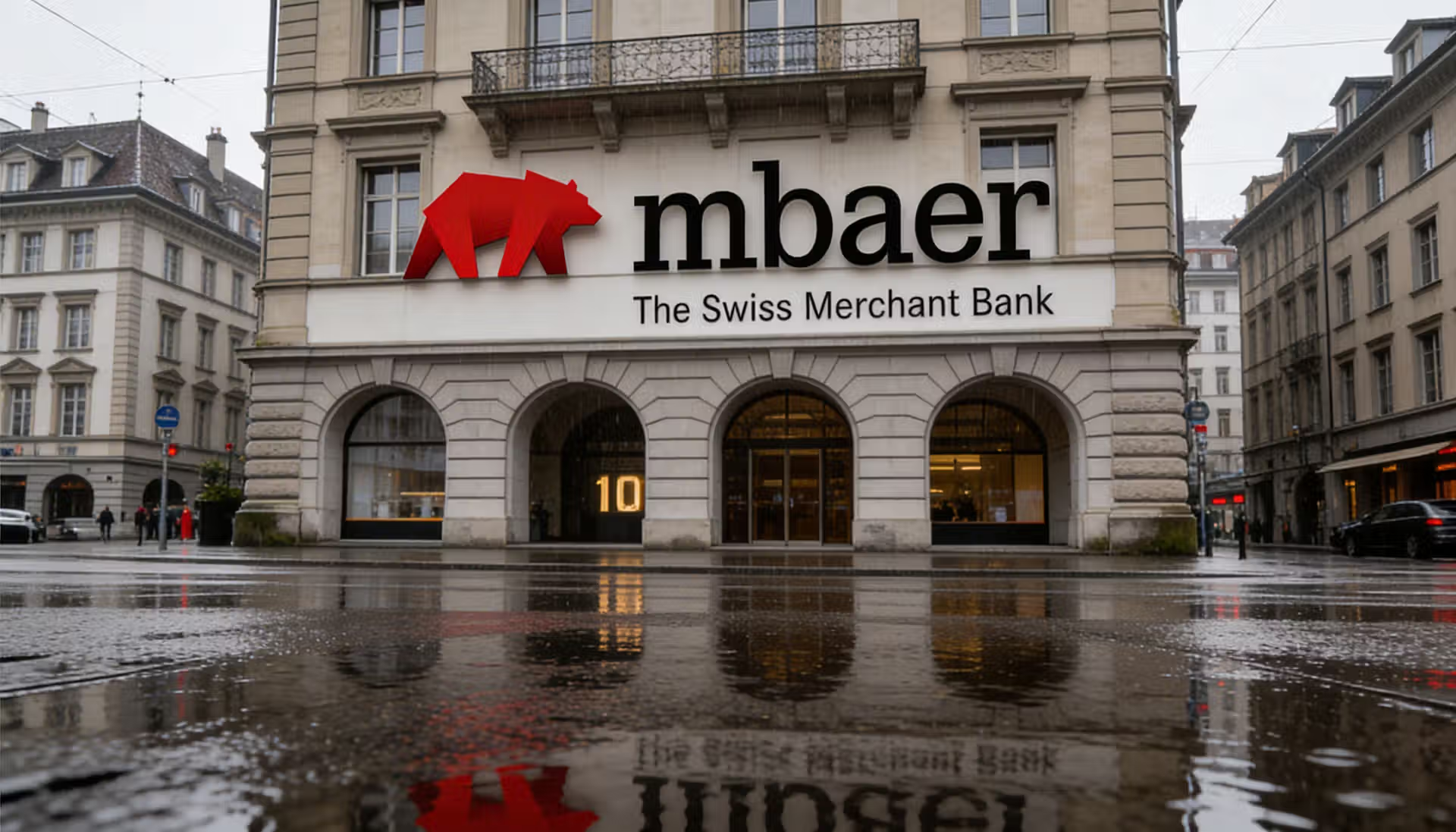
The United States Department of the Treasury, acting through the Financial Crimes Enforcement Network (FinCEN), recently moved to sever MBaer Merchant Bank AG from the domestic financial system after identifying the Swiss entity as a primary money laundering concern. This regulatory action follows findings that the institution facilitated the movement of over one hundred million dollars for illicit actors connected to Russia and Iran. Secretary of the Treasury Scott Bessent emphasized that the federal government will aggressively protect the integrity of the national financial infrastructure using all available legal authorities. The proposed rule specifically invokes Section 311 of the USA PATRIOT Act to prohibit covered financial institutions from maintaining correspondent accounts for the bank. This enforcement highlights a significant escalation in efforts to neutralize foreign nodes that provide critical access to the United States dollar for sanctioned regimes and terrorist organizations.
Table of Contents


MBaer Merchant Bank AG AML Risks
The recent findings by the Financial Crimes Enforcement Network regarding MBaer Merchant Bank AG have sent shockwaves through the Swiss financial sector, specifically highlighting systemic MBaer Merchant Bank AG AML Risks that went unaddressed for years. By invoking Section 311 of the USA PATRIOT Act, the United States government is effectively labeling the bank as a pariah within the global financial community. The core of the regulatory concern is the bank’s role as a primary access node for the Islamic Revolutionary Guard Corps and its Quds Force, entities synonymous with international terrorism and regional instability. Treasury officials allege that the bank and its employees intentionally enabled money laundering and illicit finance activities since the day the bank opened its doors. This suggests a foundational failure in the institution’s compliance culture, where profit was consistently prioritized over the legal obligations to vet clients and monitor suspicious transactions.
The determination that a bank is of primary money laundering concern is not made lightly and reflects a belief that the entity is fundamentally compromised. In the case of MBaer, the illicit flow of funds reportedly exceeded one hundred million dollars, a figure that points toward a deliberate circumvention of international banking standards. These funds, linked to Russian corruption and Iranian state-sponsored activities, were funneled through the American financial system, potentially tainting the integrity of the dollar. The proposed fifth special measure is the most severe tool in the FinCEN arsenal, as it cuts off the oxygen of international trade by removing the ability to clear dollar transactions. This action serves as an unambiguous warning to other foreign financial institutions that providing a sanctuary for illicit capital will result in total exclusion from the world’s most critical financial markets.
The scrutiny on MBaer also brings to light the role of high-level bank employees in facilitating these schemes. When internal staff members are implicated in bypassing AML controls, the institution’s entire risk management framework is rendered obsolete. The Treasury’s report indicates that the bank provided a sophisticated environment for the integration of illicit proceeds, using layers of opacity to shield the true beneficiaries of the funds. By proposing this rule, FinCEN is moving to close a dangerous loophole that allowed sanctioned actors to touch the United States economy. This proactive stance is part of a broader strategy to increase the cost of doing business for those who seek to undermine global security, forcing them into more transparent and less efficient financial channels.



Questioning the Delayed Response of Swiss Regulators
The aggressive stance taken by the United States Treasury highlights a growing tension regarding the perceived passivity of the Swiss Financial Market Supervisory Authority, known as FINMA. While FinCEN moved decisively to label MBaer a primary money laundering concern, the Swiss regulator only recently confirmed that it had closed its own enforcement procedure against the bank just three weeks prior. This timeline raises significant questions about why the Swiss authorities were unable to curb the bank’s illicit activities before they reached a scale that required international intervention from Washington. Critics argue that the Swiss regulatory framework may be too easily hampered by legal maneuvers, allowing institutions to continue problematic operations while cases are tied up in the court system.
According to official statements, the FINMA decision regarding MBaer’s breaches of anti-money laundering and sanctions risks is not yet legally binding because the bank has filed an appeal with the Federal Administrative Court. This legal stalemate meant that FINMA was technically unable to implement its own corrective measures at the bank until very recently. The fact that a bank accused of facilitating over one hundred million dollars for terrorist organizations and corrupt Russian actors could use the Swiss legal system to delay regulatory oversight is a point of major contention. It suggests a systemic vulnerability where the speed of illicit finance far outpaces the speed of Swiss administrative law, requiring the United States to step in as the global enforcer of last resort.
The late appointment of a FINMA audit led to act as a monitor at MBaer, further underscoring the reactive nature of the domestic response. This measure was only publicized after the United States had already signaled its intent to sever the bank’s correspondent ties. The disconnect between the findings of the Treasury and the ongoing judicial process in Switzerland suggests a lack of alignment on the urgency of the threat posed by the bank. For an international financial hub like Switzerland, the reliance on American authorities to identify and neutralize primary money laundering concerns within its own borders is a reputational risk that may lead to calls for more robust and immediate intervention powers for domestic regulators.
Systematic Facilitation of Illicit Russian and Iranian Finance
The investigative findings detail a consistent pattern where MBaer Merchant Bank AG allegedly served as a preferred partner for entities looking to bypass international oversight and Western sanctions. The facilitation of transactions for Iran-aligned foreign terrorist organizations is particularly egregious, as these groups rely on the global banking system to fund operations that directly threaten international peace. These organizations use complex laundering techniques, including shell companies and obscured beneficial ownership, to move money across borders. The Treasury asserts that MBaer provided the necessary infrastructure for these actors to operate with a degree of anonymity that should be impossible in a modern, regulated banking environment.
Furthermore, the bank’s involvement with Russian money laundering activities highlights the ongoing challenge of policing capital flight from sanctioned regimes. The movement of wealth by corrupt officials often involves sophisticated schemes designed to hide the source of the funds before they are integrated into the legitimate economy. When a bank in a jurisdiction historically known for financial privacy fails to conduct rigorous due diligence, it creates a massive gap in the global AML framework. The United States has made it clear that it will no longer tolerate these gaps, especially when they are used to fund activities that destabilize regional security. The sheer scale of the funds funneled through MBaer underscores the necessity of the proposed regulatory intervention to protect the dollar from being weaponized by adversarial states.
The role of correspondent banking in these schemes cannot be overstated, as it provides the bridge between foreign entities and the United States financial system. By exploiting these relationships, MBaer was able to offer its illicit clients a level of global reach that they otherwise would not have possessed. The proposed rule is intended to break this bridge entirely, ensuring that the bank can no longer act as a conduit for dirty money. This move is a clear signal that the United States will prioritize national security and the integrity of its currency over the commercial interests of non-compliant foreign banks, regardless of their location or status.
Impact on Global Compliance and Enforcement Standards
The invocation of Section 311 against a Swiss institution has profound implications for the global financial landscape and how international banks manage their risk profiles. Every domestic bank must now conduct an immediate review of its exposure to MBaer to ensure that no indirect processing of transactions occurs through nested accounts. This creates a powerful ripple effect, as other international banks are likely to sever ties with the Swiss entity to avoid the risk of secondary sanctions or regulatory scrutiny. The reputational damage from being labeled a primary money laundering concern is often enough to end an institution’s ability to function in the international market, demonstrating the immense power of the Treasury Department.
For the broader banking industry, this case serves as a critical reminder of the importance of an active and transparent compliance culture. It is not sufficient to simply maintain a list of policies; those policies must be supported by a willingness to refuse suspicious business and report illicit activity to the authorities. The failure of MBaer to detect and stop over one hundred million dollars in suspicious transactions suggests a level of negligence that regulators can no longer ignore. As the United States continues to refine its use of financial statecraft, banks worldwide must remain vigilant against the evolving tactics used by money launderers and sanctioned regimes.
The move against MBaer also highlights the growing importance of whistleblower programs in the fight against financial crime. FinCEN’s active promotion of its incentive program suggests that internal tips may have played a role in uncovering the scale of the bank’s misconduct. This adds a new layer of risk for banks that choose to engage in illicit finance, as they must now fear that their own employees may cooperate with foreign regulators for financial awards. Ultimately, the MBaer case demonstrates that the era of traditional banking secrecy is ending, replaced by a global standard of transparency and accountability where no institution is beyond the reach of international enforcement.
Key Points
- FinCEN designated MBaer Merchant Bank AG as a primary money laundering concern for facilitating over one hundred million dollars in illicit funds.
- The bank is accused of providing financial support to Russian corrupt actors and Iranian foreign terrorist organizations like the IRGC.
- The proposed fifth special measure would ban U.S. financial institutions from opening or maintaining correspondent accounts for MBaer.
- FINMA’s response has faced scrutiny for being delayed by Swiss judicial appeals while the bank continued its problematic operations.
Related Links
- Section 311 | U.S. Department of the Treasury
- U.S. Department of the Treasury Press Release on MBaer Sanctions
- FINMA Official Statement on MBaer Merchant Bank SA Enforcement
- FATF Recommendations on High Risk Jurisdictions and Correspondent Banking
Other FinCrime Central Articles About FINMA’s (Lack of) Actions
- Strong Claims, Small Numbers, Are FINMA AML Penalties Enough?
- Leonteq, three regulators, and an AML audit trail full of inconsistencies
Source: US Treasury
Some of FinCrime Central’s articles may have been enriched or edited with the help of AI tools. It may contain unintentional errors.
Want to promote your brand, or need some help selecting the right solution or the right advisory firm? Email us at info@fincrimecentral.com; we probably have the right contact for you.