FinCEN’s 2024 financial trend analysis exposed approximately $9 billion in Iranian shadow banking transactions that infiltrated the U.S. financial system through correspondent accounts and global front companies. This revelation unveiled one of the most complex and geographically dispersed money laundering operations currently active. Iranian exchange houses, offshore shells, and front companies used layers of legitimate-looking corporate structures to disguise transactions linked to oil exports, technology procurement, and sanctions-evasion programs.
These activities were not isolated to Iran’s borders. They extended across the United Arab Emirates, Hong Kong, Singapore, and multiple intermediary jurisdictions, reflecting a sophisticated layering of funds. At the heart of the network were entities transacting billions of dollars under the guise of commodity sales or investment flows. The United States’ identification of these operations marked a crucial escalation in efforts to disrupt Tehran’s financing ecosystem.
The scheme demonstrates how geopolitical pressure and sanctions trigger innovation in illicit finance. Iranian actors re-engineered traditional laundering channels into a shadow financial ecosystem, exploiting trade finance, weak beneficial ownership regimes, and opaque offshore jurisdictions. These networks relied on companies that existed only on paper yet handled billions in cross-border payments. For AML professionals, the case offers a blueprint of how sanctioned states can use non-transparent jurisdictions to rebuild financial reach despite extensive global restrictions.
Table of Contents


Mechanisms of the laundering system and typologies exposed
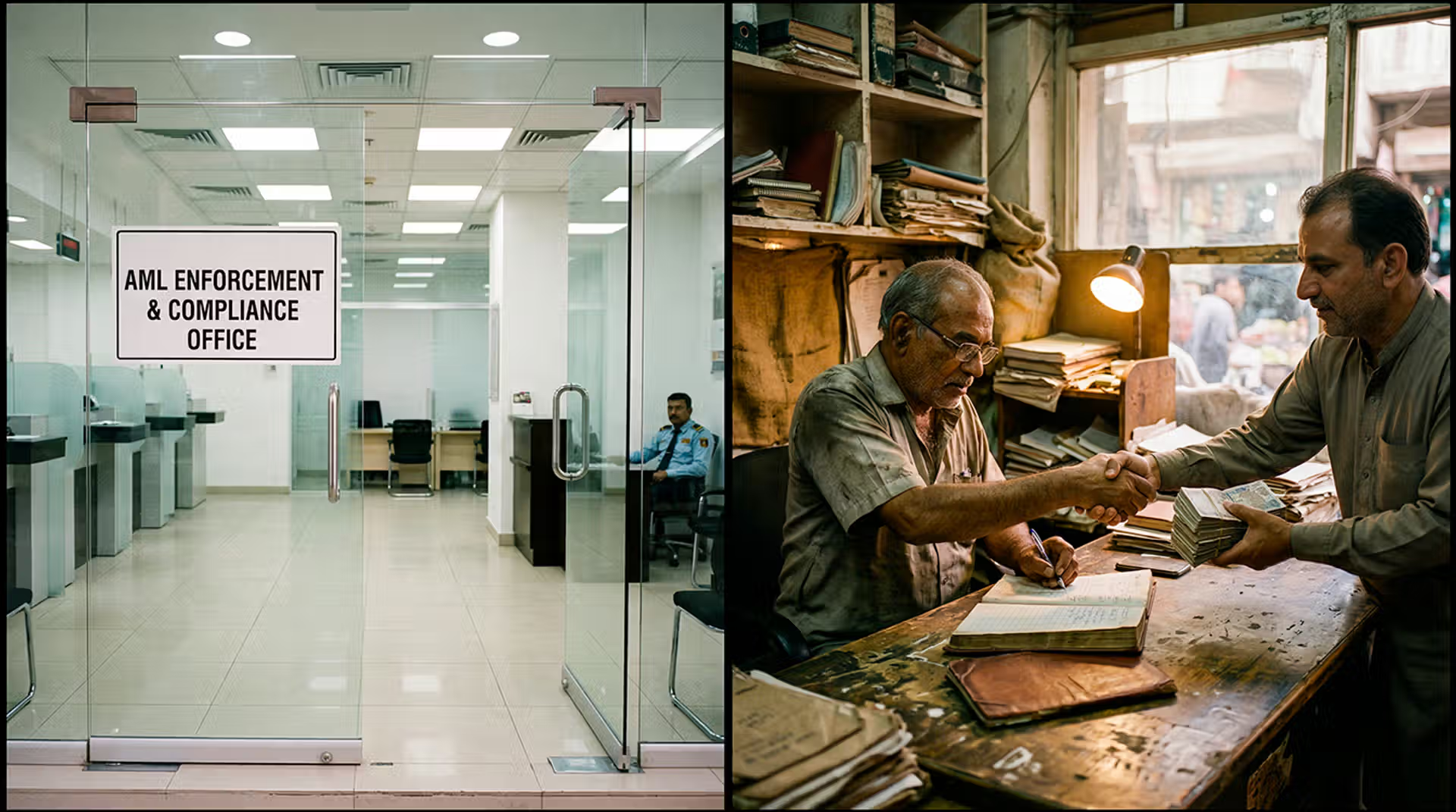
Iran’s shadow banking model operates as a substitute financial infrastructure built to avoid the international banking system’s restrictions. It relies heavily on exchange houses, front companies, and offshore shell structures to conduct high-value transactions that would otherwise be blocked under sanctions. These entities conduct trade in oil, petrochemicals, and technology, then transfer proceeds through complex correspondent banking chains that touch U.S. accounts indirectly.
The FinCEN analysis showed that shell companies without operational substance were responsible for approximately $5 billion in 2024 transactions. These companies, often registered in free zones, used nominee directors and false documentation to present as legitimate traders. Oil-linked front firms added another $4 billion in flows, channelled through shipping companies and intermediaries. Technology procurement fronts received about $413 million to purchase dual-use components that could support weapons and military programs.
The laundering mechanisms follow a predictable structure: Iranian exporters generate proceeds abroad, often through oil or commodity transactions concealed behind intermediaries. The funds then move through layers of foreign shells that hold accounts in regional hubs such as Dubai or Hong Kong. These shells interact with legitimate companies, sometimes unknowingly, to add legitimacy to transactions. The final layers involve transfers through correspondent accounts in the U.S., completing the integration phase of laundering.
The typologies derived from this pattern highlight several vulnerabilities. Free zones offer limited transparency, and company formation is simple and fast. Correspondent banking relationships allow indirect access to U.S. financial infrastructure. Trade-based laundering disguises illicit flows behind real-world shipments. Each layer distances Iran from the illicit origin of funds, complicating traceability.
Financial institutions that deal with counterparties in these jurisdictions face exposure, even if they do not directly handle sanctioned entities. The typology analysis underscores how non-resident account structures and oil-related front companies can serve as conduits for shadow financial systems on behalf of a sanctioned regime.
Global compliance implications and systemic vulnerabilities
The $9 billion Iranian network exposes persistent structural weaknesses in global AML supervision. Correspondent banking remains one of the most exploited gateways for cross-border laundering. Despite decades of reform, many institutions still rely on nested correspondent relationships, where smaller regional banks access larger institutions’ accounts. This creates indirect exposure to prohibited jurisdictions and limits visibility into the true origin of funds.
The Iranian case reinforces the need for financial institutions to apply risk-based due diligence to correspondent partners, especially when they serve clients in high-risk jurisdictions. The use of nested structures means that one institution’s compliance gaps can become another’s regulatory exposure. In this context, institutions should reassess correspondent relationships, ensuring transparency on ownership structures and transaction patterns.
Another weakness lies in beneficial ownership transparency. The shadow banking network thrived in environments where company registers either lack public access or permit nominee shareholders. Jurisdictions like the UAE, Hong Kong, and Singapore have advanced compliance regimes, but their free-zone structures still allow opacity. Without full ownership visibility, risk-rating models and transaction monitoring fail to detect connections to Iranian entities.
Trade-based money laundering also plays a central role. Oil shipments, commodity trading, and logistics contracts are ideal cover for large-value transactions. By mis-invoicing exports and using intermediaries, Iran converts oil sales into foreign currency without triggering sanctions filters. Financial institutions providing trade-finance or letters of credit must recognise that patterns such as inconsistent documentation, circular shipments, or inflated pricing can mask illicit oil proceeds.
For compliance teams, this case underscores three key imperatives:
- Continuous monitoring of correspondent networks for indirect exposure to sanctioned jurisdictions.
- Verification of beneficial ownership and business substance in free-zone and offshore entities.
- Integration of sanctions and AML screening so that evasion typologies are captured holistically rather than through isolated systems.
The exposure of Iran’s $9 billion pipeline also demonstrates that national sanctions policy and private-sector compliance are interdependent. Regulators can only disrupt such schemes if institutions systematically report anomalies and share intelligence. FinCEN’s publication of the trend analysis exemplifies this coordination, bridging regulatory insight with private-sector vigilance.
Lessons for anti-money laundering strategy and enforcement
The shadow banking case provides clear guidance for AML professionals and policymakers seeking to close systemic gaps. It illustrates how illicit actors combine geopolitical motivation with commercial fronting to engineer durable laundering structures.
First, sanctions evasion is a primary laundering driver. Financial institutions cannot separate sanctions risk from AML frameworks. Screening systems must evaluate counterparties not just by name but by network proximity, transaction type, and jurisdictional exposure. Sanctions-linked laundering often hides behind legitimate commerce, requiring continuous data-driven detection of patterns rather than reactive case management.
Second, correspondent banking oversight must evolve. Banks should assess their entire network of intermediaries, including secondary relationships. Institutions that provide access to the U.S. dollar system bear indirect responsibility for the compliance standards of their partners. Regular audits and independent reviews of nested correspondent accounts are essential to limit exposure to shadow networks.
Third, beneficial ownership and legal entity transparency remain fundamental. The prevalence of shell companies in the Iranian network demonstrates how anonymity enables large-scale laundering. Countries adopting beneficial ownership registries and cross-border information-sharing mechanisms can reduce opacity. Regulators should incentivize public-access databases that allow banks to verify directors, shareholders, and control chains.
Fourth, intelligence sharing between regulators and financial institutions must improve. The FinCEN analysis represents a model of how aggregated suspicious activity reports can reveal macro-level patterns. Such analyses must be continuous, data-driven, and global. Institutions should participate in public-private partnerships, sharing red flags and typologies without disclosing customer details.
Finally, enforcement consistency is vital. Targeting only direct Iranian entities leaves intermediary structures intact. Enforcement must focus equally on front companies, exchange houses, shipping intermediaries, and trade facilitators that knowingly or unknowingly sustain the network. Coordinated designations and compliance actions across jurisdictions can gradually dismantle the infrastructure that sustains shadow banking operations.
For global AML practitioners, the Iranian case is a reminder that money laundering on this scale is not spontaneous—it reflects persistent regulatory gaps. Addressing these weaknesses requires integrating policy, technology, and enforcement under a shared international strategy.
Related Links
- U.S. Treasury: OFAC Sanctions on Iranian Shadow Banking Network
- FinCEN Advisory on Iranian Oil Smuggling and Weapons Procurement
- U.S. Bank Secrecy Act Resource Center
Other FinCrime Articles About Iran’s Multiple Ways to Avoid Sanctions
- How Shadow Fleet Laundering Fuels Iran’s Hidden Billions
- How a $700 Million Tether Freeze Exposed Iran Sanctions Gaps on Tron
- High-Stakes Crackdown on Iranian Electronics Smuggling Uncovers Millions in Sanctions Evasion
Source: FinCEN
Some of FinCrime Central’s articles may have been enriched or edited with the help of AI tools. It may contain unintentional errors.
Want to promote your brand, or need some help selecting the right solution or the right advisory firm? Email us at info@fincrimecentral.com; we probably have the right contact for you.