A wave of concern has spread through the compliance and financial crime communities as the Financial Action Task Force (FATF) releases its latest analysis on terrorist financing risks. The report signals a period of escalating threat, as criminal networks and terrorist organizations continue to innovate in their methods of fundraising, fund movement, and resource deployment. The findings point to billions of dollars at risk annually due to gaps in detection and enforcement, demanding that both the public and private sectors reassess their frameworks for countering the financing of terrorism (CFT).
Terrorist financing is not a static threat. As new technologies, alternative finance models, and geopolitical crises emerge, the tactics and typologies used by terrorist groups have become increasingly complex. The FATF’s report is a call to action, urging states, financial institutions, and designated non-financial businesses and professions (DNFBPs) to update risk assessments and invest in targeted, proportionate controls.
According to the report, more than two-thirds of assessed jurisdictions exhibit significant deficiencies in their ability to detect, investigate, and prosecute terrorist financing cases. The ramifications of these deficiencies extend beyond regulatory compliance and threaten global security, humanitarian assistance, and the integrity of international financial markets.
Table of Contents
Key Trends in Terrorist Financing
The financial architecture of terrorism has undergone a profound transformation in recent years. Several trends are emerging, each posing new challenges for anti-money laundering (AML) and CFT professionals worldwide.
Diversification of Financial Channels
Terrorist groups now employ a diverse blend of financial channels. These include formal banking, hawala networks, remittance companies, crowdfunding platforms, virtual asset service providers (VASPs), and even online gaming environments. FATF’s report notes that the integration of digital technologies into classic money transfer methods has produced a hybrid threat that is difficult to track and disrupt.
Cryptocurrencies and other virtual assets have become a notable concern, as their pseudo-anonymous and cross-border features are attractive to those wishing to bypass the regulated sector. Bitcoin, Ethereum, Monero, and even lesser-known altcoins have been observed in suspicious transaction flows linked to groups sanctioned under United Nations Security Council Resolutions (UNSCRs) 1267 and 1373.
Decentralized and Micro-Financed Structures
A marked shift toward decentralization means many terrorist cells operate independently or in loosely affiliated networks. These actors rely on micro-financing: small, seemingly innocuous donations collected through social media, peer-to-peer payments, or community events. The FATF has observed that lone actors and small groups often fund their operations using proceeds from petty crimes or legitimate income, complicating the task of detection for authorities and compliance officers.
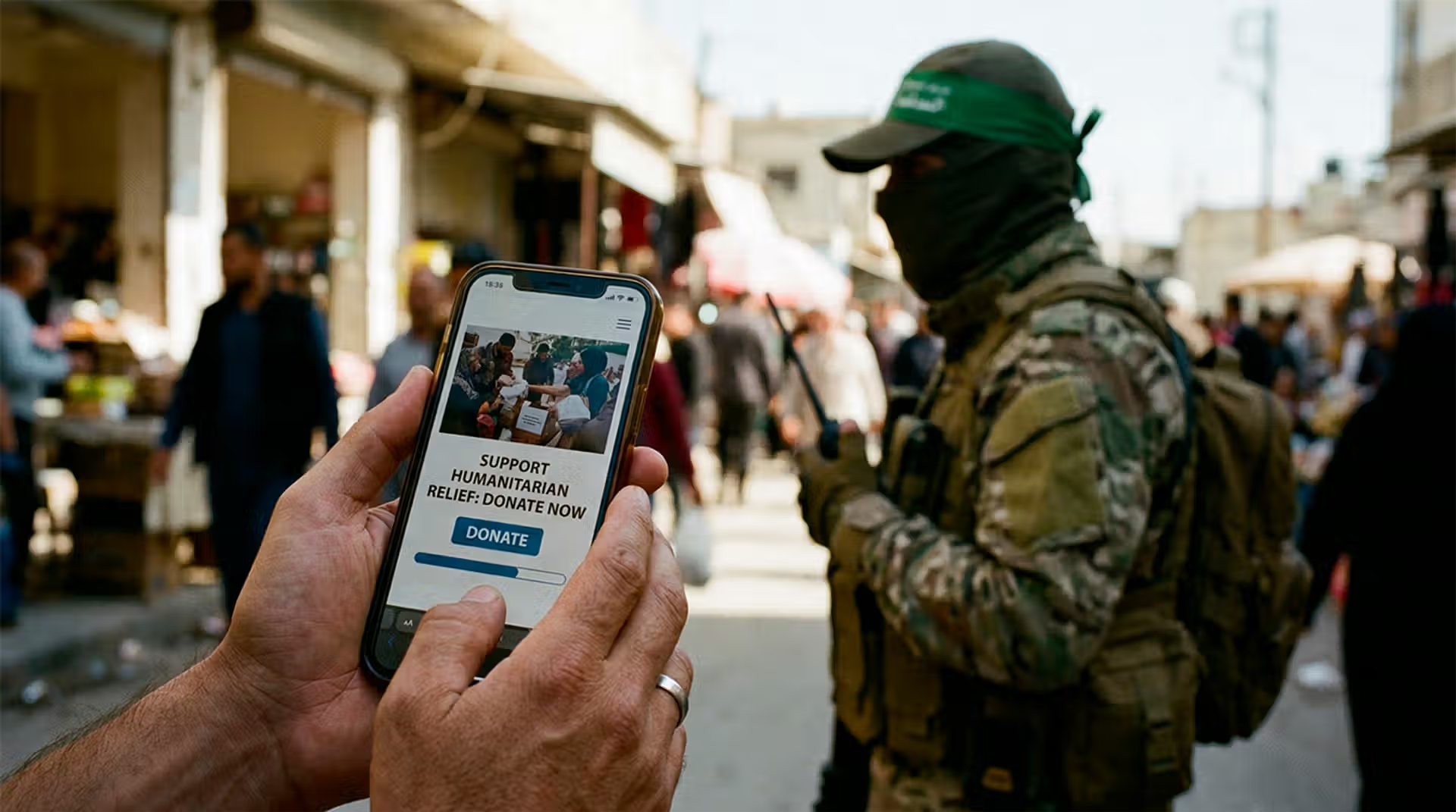
Self-financing cells frequently use legal entities—particularly non-profit organizations (NPOs) and front companies—to raise and channel funds. The risk of abuse within the charitable sector remains high, particularly in conflict zones where regulatory oversight is limited and humanitarian assistance is in urgent demand.
The Intersection of Organized Crime and Terrorism
There is increasing evidence of convergence between terrorist financing and organized crime. Terrorist organizations are leveraging smuggling, drug trafficking, human trafficking, and counterfeit goods to generate income, which is then integrated into the global financial system. This convergence creates multi-layered financial flows that can confound traditional AML/CFT controls.
For example, proceeds from narcotics trafficking may be moved through cash couriers, remittance systems, and trade-based money laundering schemes before being repurposed for terrorist activities. FATF case studies indicate that terrorist organizations exploit vulnerabilities in customs and border management to move value undetected, especially in high-risk jurisdictions.
Digital Transformation and Regulatory Blind Spots
Digitalization has transformed both legitimate and illicit finance, and terrorist financiers have kept pace. The FATF’s latest report highlights how virtual assets, crowdfunding, and fintech platforms have outpaced regulatory frameworks in many jurisdictions.
Virtual Assets and Decentralized Finance
The rise of virtual asset service providers presents a new class of risk. Despite the FATF’s Recommendation 15 and the “Travel Rule” requirements, regulatory gaps remain in many countries. VASPs are often lightly supervised, and beneficial ownership transparency is lacking. This has enabled terrorist financiers to use mixers, privacy coins, and decentralized exchanges to obscure the origin and destination of funds.
UNSCR 2462 and 1988 provide the international legal basis for targeting the misuse of virtual assets for terrorism, requiring states to criminalize the willful provision or collection of funds for terrorist acts. However, enforcement and technical capacity vary widely.
Online Platforms and Crowdfunding
Crowdfunding platforms, peer-to-peer payment systems, and social media fundraising tools are increasingly being exploited. Terrorist groups use these channels for both open-source fundraising and covert operations, often targeting vulnerable diaspora communities or sympathizers. These methods are particularly hard to track, as small transactions may fly under the radar of traditional transaction monitoring systems.
Gaming platforms and e-sports have also emerged as vehicles for fundraising and money movement. In-game assets, currency, and microtransactions can be converted and laundered through complex webs, presenting a growing compliance challenge.
Gaps in Risk Assessment and Information Sharing
The FATF report underscores that 69% of jurisdictions show major or structural weaknesses in their ability to investigate and prosecute terrorist financing. Many countries have yet to implement robust national risk assessments (NRAs), while information sharing between public and private sectors is hampered by legal, technical, or resource constraints.
Deficiencies in cross-border cooperation remain a barrier to effective disruption of terrorist financing networks. Although the FATF and United Nations Security Council Resolutions 1373 and 2462 mandate robust international cooperation, in practice, mutual legal assistance and intelligence sharing are inconsistent.
Humanitarian Sector and Non-Profit Organizations: Between Risk and Protection
Humanitarian assistance is often the lifeline for millions caught in conflict, but the same channels used to deliver aid can be manipulated for terrorist purposes. FATF guidance stresses the need for risk-based approaches that enable NPOs to operate safely, while minimizing opportunities for abuse.
Managing Risks in the Humanitarian Space
Conflict-affected areas present unique challenges. Humanitarian actors must balance compliance obligations under laws like the EU Regulation 2016/1686 (restrictive measures against ISIL and Al-Qaeda), US Executive Order 13224 (blocking property of persons who commit, threaten to commit, or support terrorism), and the UK Terrorism Act 2000 with the imperative to deliver life-saving assistance.
Terrorist organizations sometimes infiltrate local implementing partners, redirecting aid or siphoning off resources through false invoices, inflated procurement, or payroll fraud. Jurisdictions are advised to deploy enhanced due diligence (EDD) and ongoing monitoring, especially where cash-based assistance or local procurement is prevalent.
Proportionate Controls and Preserving Access
The FATF and United Nations recognize the risk of “de-risking”—where financial institutions avoid NPO clients entirely due to perceived regulatory exposure. Such practices can deprive legitimate humanitarian actors of access to banking and payment services, exacerbating crises and potentially driving flows underground.
Recent FATF guidance, including the Best Practices Paper for Combating the Abuse of NPOs, emphasizes proportionate, risk-based controls, public-private partnerships, and regular engagement with the sector to address evolving typologies.
Practical Recommendations for Combating Terrorist Financing
The FATF report outlines a series of practical recommendations and risk indicators to help jurisdictions, financial institutions, and other stakeholders adapt to the evolving threat landscape.
Enhancing National Frameworks
Countries are urged to:
- Conduct comprehensive national risk assessments, updating them regularly to reflect new threats.
- Fully implement FATF Recommendations 5, 6, and 8, criminalizing terrorist financing, applying targeted financial sanctions, and protecting the NPO sector.
- Ensure supervisory authorities have the resources and powers to oversee both traditional and emerging sectors, including VASPs and crowdfunding platforms.
- Invest in advanced analytics, typology sharing, and public-private information exchange forums.
Strengthening International Cooperation
Effective counter-terrorist financing depends on timely and actionable intelligence sharing. Countries should:
- Strengthen mechanisms for mutual legal assistance and the rapid exchange of financial intelligence.
- Use the Egmont Secure Web for FIU-to-FIU cooperation.
- Participate in FATF-style regional bodies (FSRBs) and joint task forces for cross-border cases.
Building Private Sector Partnerships
Financial institutions and DNFBPs play a frontline role in identifying and reporting suspicious activity. Key steps include:
- Updating transaction monitoring systems to capture new typologies, such as micro-financing, peer-to-peer transfers, and virtual asset flows.
- Engaging in public-private partnership models to share indicators and red flags.
- Providing staff with regular, up-to-date training on terrorist financing risks and typologies.
Monitoring and Reporting Red Flags
FATF typology reports and the United Nations’ Thematic Summary Assessments provide practical red flags for detection. These include:
- Rapid movement of small-value funds to high-risk jurisdictions.
- Use of multiple intermediaries or shell companies.
- Frequent cash deposits followed by electronic transfers.
- Donations to NPOs in conflict zones with no clear operational track record.
- Unusual account activity from individuals with no plausible business or personal explanation.
Conclusion: Reinforcing Global Resilience Against Terrorist Financing
FATF’s latest report is a reminder that the fight against terrorist financing is not static. As actors adapt and innovate, so must the frameworks, technologies, and partnerships built to combat their operations. Global security, humanitarian assistance, and the integrity of financial markets depend on the ability of both public and private sectors to recognize risks, close regulatory gaps, and take coordinated action.
With terrorist financing methods becoming increasingly decentralized, technology-driven, and intertwined with organized crime, there is a collective responsibility to act. Updating laws, investing in training and technology, and building robust partnerships across borders and sectors are essential to protecting the international financial system from abuse.
The months ahead will likely see further guidance from the FATF, the United Nations, and regional bodies. Jurisdictions should seize the momentum to address identified weaknesses and to ensure that financial institutions, humanitarian actors, and the broader economy can continue to operate securely and efficiently, even in a changing threat environment.
Related Links
- United Nations Security Council Resolutions on Counter-Terrorism
- EU Sanctions Map: Restrictive Measures against ISIL and Al-Qaeda
- FATF Guidance: Best Practices for Combating Abuse of NPOs
- Egmont Group: Financial Intelligence Units
Other FinCrime Central Articles About Fighting Terrorism Financing
- How Online Fundraising Empowers Terrorism Financing Networks
- The Growing Danger of Crowdfunding Abuse for Terrorism Financing: What You Need to Know
- USAID Fraud Scandal: How Millions Were Diverted to Terrorism
Source: FATF
Some of FinCrime Central’s articles may have been enriched or edited with the help of AI tools. It may contain unintentional errors.
Want to promote your brand with us or need some help selecting the right solution or the right advisory firm? Email us at info@fincrimecentral.com; we probably have the right contact for you.