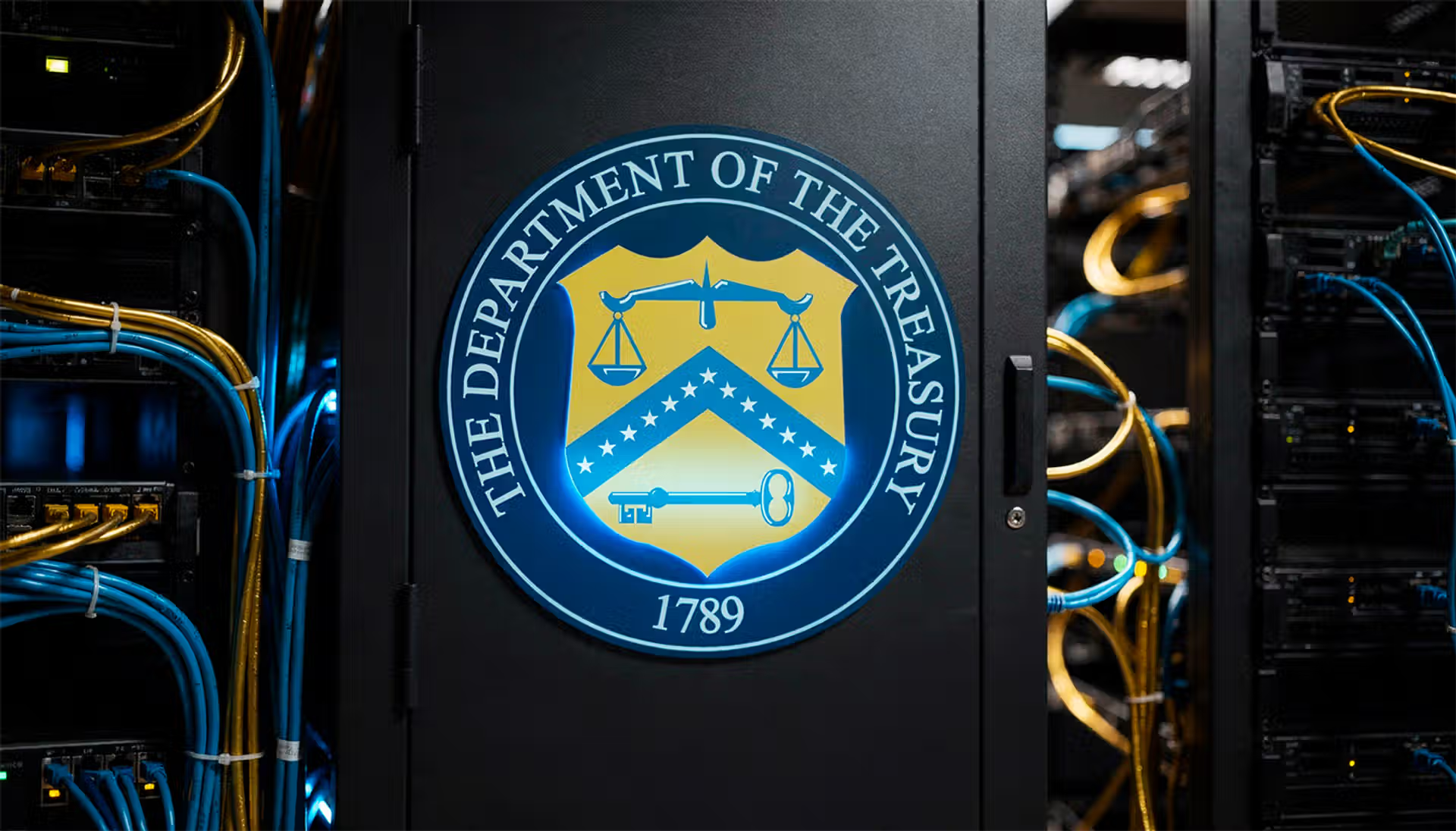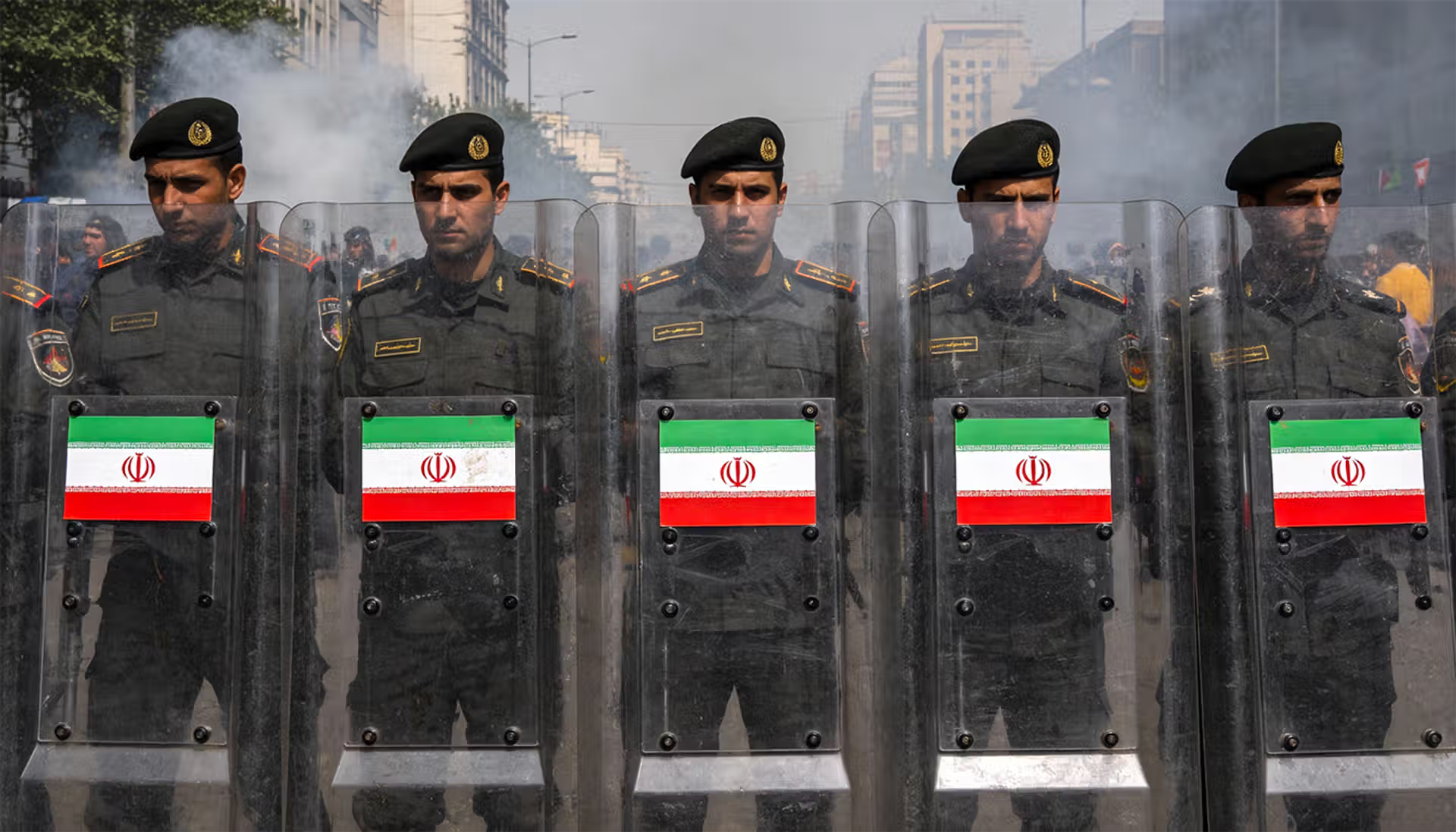
EU foreign ministers reached a historic agreement on January 29, 2026, to designate the Islamic Revolutionary Guard Corps (IRGC) as a terrorist organization while imposing immediate sanctions on 21 individuals and entities. This decisive action includes the freezing of all assets held within the 27 member states by the Iranian Minister of the Interior, the Prosecutor General, and the Chief of Police. European officials stated that the measures serve as a direct response to the violent suppression of domestic protests and ensure there is no impunity for crimes committed. The designation marks a fundamental shift in the legal framework governing financial interactions with Iranian state institutions, effectively treating the military branch as a transnational criminal network.
Table of Contents


Counter-Terrorism Financing
The formal listing of the Islamic Revolutionary Guard Corps as a terrorist entity dramatically alters the compliance landscape for financial institutions operating within the European Union. By moving beyond standard diplomatic sanctions into the realm of counter-terrorism financing, the bloc has triggered mandatory protocols that require banks and asset managers to identify and halt all transactions linked to the organization. This legal pivot is designed to dismantle the complex financial architecture used by the group to sustain its operations both domestically and abroad. Under this new classification, any person or entity found providing financial or material support to the organization faces severe criminal penalties under the anti-money laundering and counter-terrorism laws of individual member states.
The financial sector must now navigate a high-risk environment where the Revolutionary Guard holds significant stakes in various sectors of the Iranian economy, including energy, construction, and telecommunications. This deep integration means that traditional due diligence is no longer sufficient, as the risk of indirect financing through front companies and shell entities has escalated. Compliance officers are required to apply enhanced scrutiny to any transaction that could potentially benefit the designated group, effectively creating a financial blockade. The move is intended to strip the regime of the resources it uses to fund internal repression and external activities, signaling that European markets are closed to those involved in systematic human rights violations and state-sponsored violence.



Asset Freeze Enforcement
The immediate enforcement of asset freezes against 21 specific targets, including the Minister of the Interior and the Prosecutor General, necessitates a rapid response from European regulatory bodies and private financial actors. These measures prohibit the listed individuals from accessing any funds, properties, or economic resources located on European soil. The sanctions also extend to the Chief of Police and several high-ranking leaders within the military apparatus, ensuring that those responsible for the command of repressive forces are personally hit with financial restrictions. Competent national authorities are tasked with monitoring the implementation of these freezes to prevent the flight of capital or the clandestine transfer of wealth into jurisdictions with more lenient oversight.
This targeted approach aims to isolate the leadership of the Iranian security state from the international financial system. By freezing the personal assets of the judiciary and police leadership, the European Union is attempting to disrupt the personal wealth networks that often facilitate corrupt practices and the maintenance of political power through illicit means. The legal obligation to report any identified assets belonging to these individuals falls upon all operators within the Union, including non-financial businesses such as real estate agents and luxury goods dealers. This comprehensive web of restrictions is designed to ensure that the proceeds of state-driven repression cannot be laundered or hidden within the European economy.
International Compliance Standards
The decision by the European Union aligns with a growing international consensus on the necessity of holding Iranian state actors accountable through rigorous financial measures. By adopting these sanctions, the bloc harmonizes its position with other global jurisdictions that have long flagged the Iranian military and political leadership as high-risk for money laundering and terrorism financing. This alignment simplifies the process for multinational corporations and global banks to maintain a unified compliance standard, reducing the risk of regulatory arbitrage. The move reinforces the principles established by global financial watchdogs regarding the transparency of beneficial ownership and the necessity of preventing state-controlled entities from abusing the global banking infrastructure.
Financial transparency remains the central pillar of this new sanctions regime. The European Commission has emphasized that the designation of a state-affiliated military group as a terrorist entity is an extraordinary measure, justified by the scale of the domestic crisis in Iran. It requires a significant increase in the reporting of suspicious activities and a more proactive stance on the part of national financial intelligence units. As these units coordinate across borders, the ability of sanctioned individuals to bypass restrictions through third-country intermediaries is significantly diminished. The ultimate goal is to establish a permanent barrier between the Iranian repressive apparatus and the legitimate global economy, ensuring that no European entity unwittingly participates in the financing of state-sponsored terror.
Financial Isolation Strategy
The long-term impact of these measures is expected to result in the total financial isolation of the Iranian leadership involved in the recent crackdown. By cutting off access to European capital markets and prohibiting all forms of economic cooperation with the Revolutionary Guard, the European Union is applying maximum pressure on the regime’s primary source of power. This strategy recognizes that political change and the cessation of violence are often preceded by the collapse of the financial systems that fund them. The conclusion of this diplomatic and legal effort is a clear message that the international community will use every available financial tool to protect human rights and uphold the rule of law.
As the implementation of these sanctions progresses, the European Union will continue to review the list of designated individuals and entities to adapt to evolving threats. The dynamic nature of the sanctions list ensures that as new actors emerge within the Iranian hierarchy of repression, they can be swiftly neutralized financially. The success of this strategy depends on the continued vigilance of the private sector and the robust enforcement by national governments. By maintaining a united front, the European Union aims to provide a sustainable and effective response to the crisis, proving that economic consequences are an unavoidable result of state-led violence and the subversion of international norms.
Key Points
- EU foreign ministers designated the Islamic Revolutionary Guard Corps as a terrorist organization following a meeting in Brussels.
- Asset freezes were immediately applied to 21 Iranian individuals and entities, including the Minister of the Interior and the Prosecutor General.
- The legal measures are a direct response to the violent suppression of protests and the killing of thousands of citizens.
- Financial institutions are now legally required to block all transactions and resources associated with the designated Iranian leaders.
Related Links
- European Council: Restrictive measures against Iran for human rights violations
- Official Journal of the European Union: Council Regulation on Iranian Sanctions
- FATF: High-risk and other monitored jurisdictions – Iran compliance status
- French Ministry for Europe and Foreign Affairs: Statements on Iran Sanctions
- EU Sanctions Map: Detailed view of restrictive measures against Iran
Other FinCrime Central Articles About Iran’s Sanctions Evasion Measures
- Iran’s Financial Maze Exposed After FinCEN Traces $9 Billion Flow
- How Shadow Fleet Laundering Fuels Iran’s Hidden Billions
- How a $700 Million Tether Freeze Exposed Iran Sanctions Gaps on Tron
Source: Le Monde
Some of FinCrime Central’s articles may have been enriched or edited with the help of AI tools. It may contain unintentional errors.
Want to promote your brand, or need some help selecting the right solution or the right advisory firm? Email us at info@fincrimecentral.com; we probably have the right contact for you.