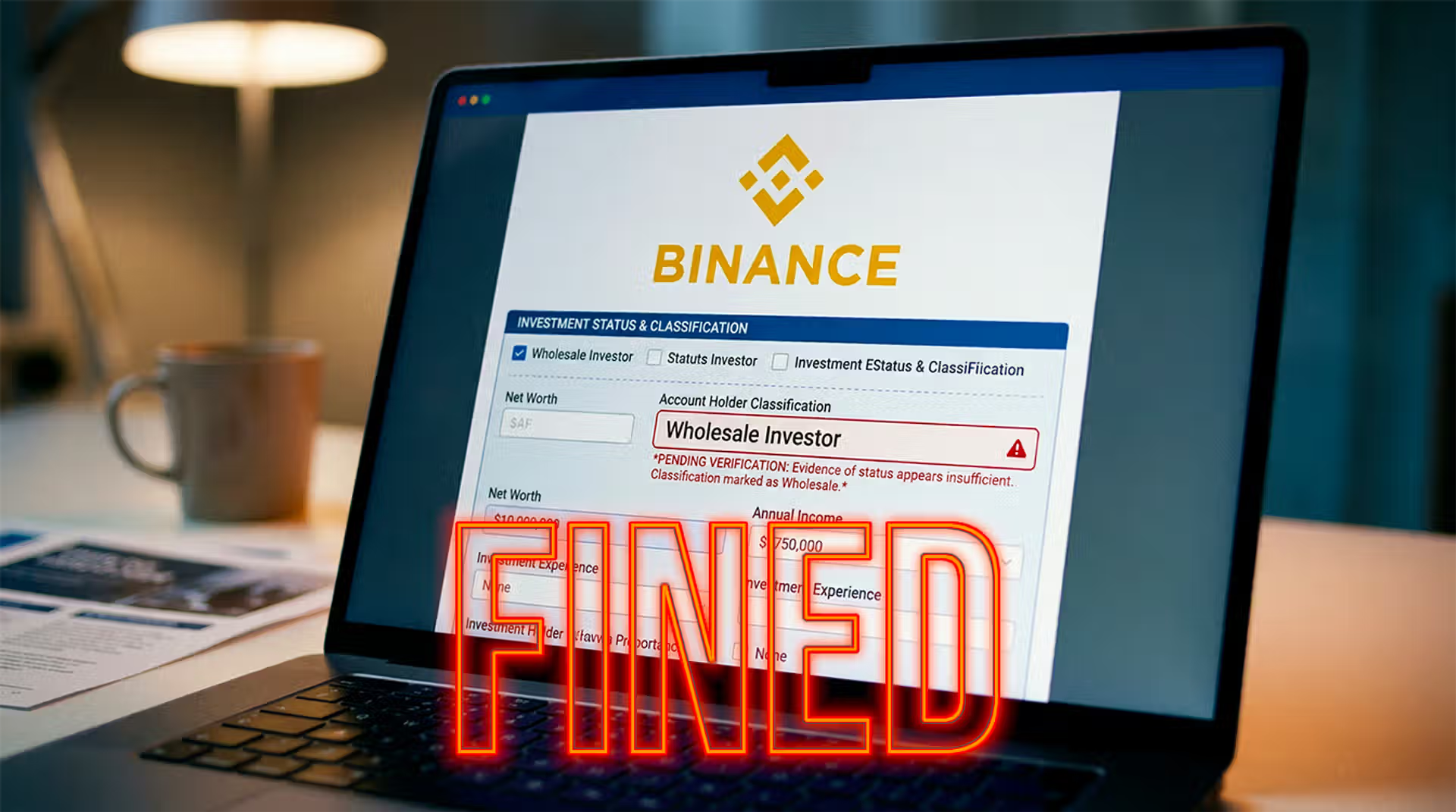
The regulatory framework governing digital assets in Dubai has officially transitioned into a phase of rigorous enforcement, as those rules are in effect today. This comprehensive legal structure is overseen by the Virtual Assets Regulatory Authority, which holds the exclusive mandate to license and supervise all service providers within the emirate. Organizations operating in the sector must now immediately align their internal protocols with the latest mandates regarding board composition, risk management, and public transparency. Failure to comply with these standards results in strict regulatory action and significant financial penalties as defined by the current rulebook. By prioritizing accountability and structural resilience, the regulator ensures that all participants operate under a unified set of high-quality standards designed to protect market integrity. This balanced approach fosters long-term growth while mitigating the inherent risks associated with the global virtual asset industry.
Table of Contents


Virtual Asset Governance and Operational Integrity
The cornerstone of the current regulatory approach in Dubai is the establishment of robust internal governance structures for every licensed virtual asset service provider. A primary requirement is the formation of a board of directors that possesses a diverse range of expertise and maintains a clear distinction between executive management and oversight functions. Every board must include at least one independent director who is tasked with providing an unbiased perspective on the firm’s strategic direction and risk appetite. To qualify as independent, an individual must not have had any material financial or professional relationship with the provider or its parent group for a period of at least two years. This restriction extends to immediate family members of the director, ensuring that the oversight function remains completely insulated from potential conflicts of interest. If a director or their close associates are found to have financial ties or contracts that exceed the legal thresholds for independence, the firm is considered to be in breach of its licensing conditions.
Beyond the individual requirements for directors, providers are mandated to establish specific board committees to handle critical aspects of corporate governance. These include an audit committee, a nomination committee, and a remuneration committee. The audit committee is responsible for overseeing financial reporting and internal control systems, ensuring that all data provided to the regulator and the public is accurate and verifiable. The nomination committee focuses on the continuous assessment of board effectiveness and the selection of new members who meet the high standards of integrity and skill required by the authority. Meanwhile, the remuneration committee ensures that the compensation packages for senior executives do not encourage excessive risk-taking that could jeopardize the stability of the firm or the interests of its clients. These committees must operate with a high degree of transparency and maintain detailed records of their deliberations for a period of no less than eight years.




Market Surveillance and Participant Conduct
Maintaining a fair and orderly trading environment is essential for the long term viability of the virtual asset market. Service providers are legally required to implement comprehensive market surveillance systems capable of detecting and preventing abusive practices such as insider trading, market manipulation, and wash trading. These systems must be backed by written policies and procedures that are clearly communicated to all employees and participants of the trading venue. When a provider identifies suspicious activity, they are under a strict legal obligation to notify the regulator immediately and take appropriate internal action, which may include suspending the accounts involved or referring the matter for criminal investigation. The regulator also requires providers to establish a code of conduct for all participants, which sets out the expected standards of behavior and the consequences for non-compliance.
In addition to monitoring for external abuse, service providers must ensure that their own internal operations do not contribute to market instability. This involves the implementation of rigorous conflict of interest policies that prevent employees from using nonpublic information for personal gain. The authority demands that providers maintain a high level of transparency regarding their fee structures, order execution policies, and the criteria they use for listing or delisting specific virtual assets. By providing this information to the public, the regulator ensures that investors are well informed about the risks and costs associated with their trading activities. Furthermore, any changes to these policies must be filed with the authority and published on the provider’s website well in advance of their implementation, allowing market participants sufficient time to adjust their strategies.
Technical Resilience and Trading System Continuity
The technical infrastructure of a virtual asset exchange must be capable of withstanding significant stress and ensuring the continuous availability of services to its clients. Regulators have set out detailed requirements for trading system resilience, which include the capacity to handle high volumes of messages and transactions without experiencing delays or failures. Providers must conduct regular stress tests on their systems and prove to the authority that they have the technical safeguards in place to reject orders that fall outside of normal parameters. This is particularly important for preventing flash crashes or other technical glitches that can lead to sudden and artificial price movements. All systems must also have comprehensive disaster recovery plans, with backup facilities located in geographically separate areas to ensure that operations can be restored quickly in the event of a primary system failure.
Settlement processes are another area of intense regulatory focus. To minimize counterparty risk, the authority requires that all transactions executed on a licensed trading venue reach final settlement within a twenty-four-hour window. This rapid turnaround time is designed to prevent the accumulation of unsettled obligations that could create a domino effect of defaults if a major participant were to fail. For platforms that facilitate the exchange of virtual assets for fiat currency or other digital assets, the settlement mechanism must be clearly defined and audited by independent third parties. Providers are also prohibited from using their own capital to facilitate settlements unless they have received specific authorization to do so, ensuring that the firm’s operational funds are kept separate from client assets and settlement pools.
Risk Management for Leveraged and Derivative Services
The provision of leveraged trading services, such as margin and derivative products, carries heightened risks for both the service provider and the individual investor. Consequently, these activities are subject to an additional layer of regulatory oversight. A provider may only offer these products if they have obtained a specific endorsement on their license and have demonstrated to the authority that they have the necessary risk management systems in place. This includes the ability to set and enforce initial and maintenance margin requirements that are appropriate for the volatility of the underlying assets. The authority retains the power to intervene and adjust these requirements at any time if it believes that market conditions pose a threat to financial stability.
Before a client can access leveraged products, the service provider must conduct a thorough suitability assessment. This process involves evaluating the client’s financial resources, their understanding of the risks involved, and their previous experience with complex financial instruments. Providers are required to provide clear and prominent risk disclosures that explain the potential for losses to exceed initial investments. Moreover, margin accounts must be monitored in real time, and providers must have automated systems in place to issue margin calls and liquidate positions when a client’s equity falls below the maintenance threshold. These liquidation procedures must be conducted in an orderly fashion to avoid exacerbating market volatility, and the provider is prohibited from using the assets of other clients to cover the losses of a defaulting participant.
Transparency and Long-Term Record Keeping
The final component of the regulatory framework is a strict emphasis on transparency and the preservation of data. Service providers must make a wide array of information available to both the regulator and the general public. This includes the identities and professional backgrounds of their board members and senior management, as well as any history of regulatory or criminal sanctions. On the product side, providers must publish detailed descriptions of every virtual asset they support, including information about the underlying technology, the total supply, and any known security vulnerabilities. This transparency is crucial for building a culture of trust and ensuring that the market is not distorted by asymmetric information.
To support ongoing oversight and future investigations, all records related to governance, trading, and compliance must be maintained for a minimum of eight years. This includes minutes of board and committee meetings, logs of all trades and orders, and records of all client communications. The regulator has the authority to conduct onsite inspections and request any relevant documentation at any time. By mandating this level of record keeping, the authority ensures that it has the evidence needed to hold firms accountable for past actions and to analyze market trends over time. This comprehensive approach to regulation demonstrates the emirate’s commitment to maintaining a world-class financial ecosystem that balances the benefits of innovation with the necessity of rigorous oversight and investor protection.
Key Points
- Entities must maintain a board with at least one independent director and no conflicting interests.
- Trading platforms must have the technical capacity to handle surges and reject erroneous orders.
- Transactions must be settled within twenty-four hours to reduce systemic counterparty risk.
- Margin and derivative services require special licensing and mandatory client suitability checks.
- Records of all corporate and trading activities must be stored for a minimum of eight years.
Related Links
- Dubai Virtual Assets Regulatory Authority Official Website
- Financial Action Task Force Virtual Assets Guidance
- United Arab Emirates Ministry of Finance Regulatory Updates
- Dubai International Financial Centre Regulatory Authority
- VARA Compliance and Risk Management Rulebook
Other FinCrime Central Articles About AML Regulations in the UAE
- UAE Strengthens Financial Security with Dubai Anti-Money Laundering MoUs
- UAE celebrates EU AML removal as compliance efforts boost global trust
- UAE Aims At Strengthening Regional Defenses During 2026 MENAFATF Presidency
Source: VARA
Some of FinCrime Central’s articles may have been enriched or edited with the help of AI tools. It may contain unintentional errors.
Want to promote your brand, or need some help selecting the right solution or the right advisory firm? Email us at info@fincrimecentral.com; we probably have the right contact for you.