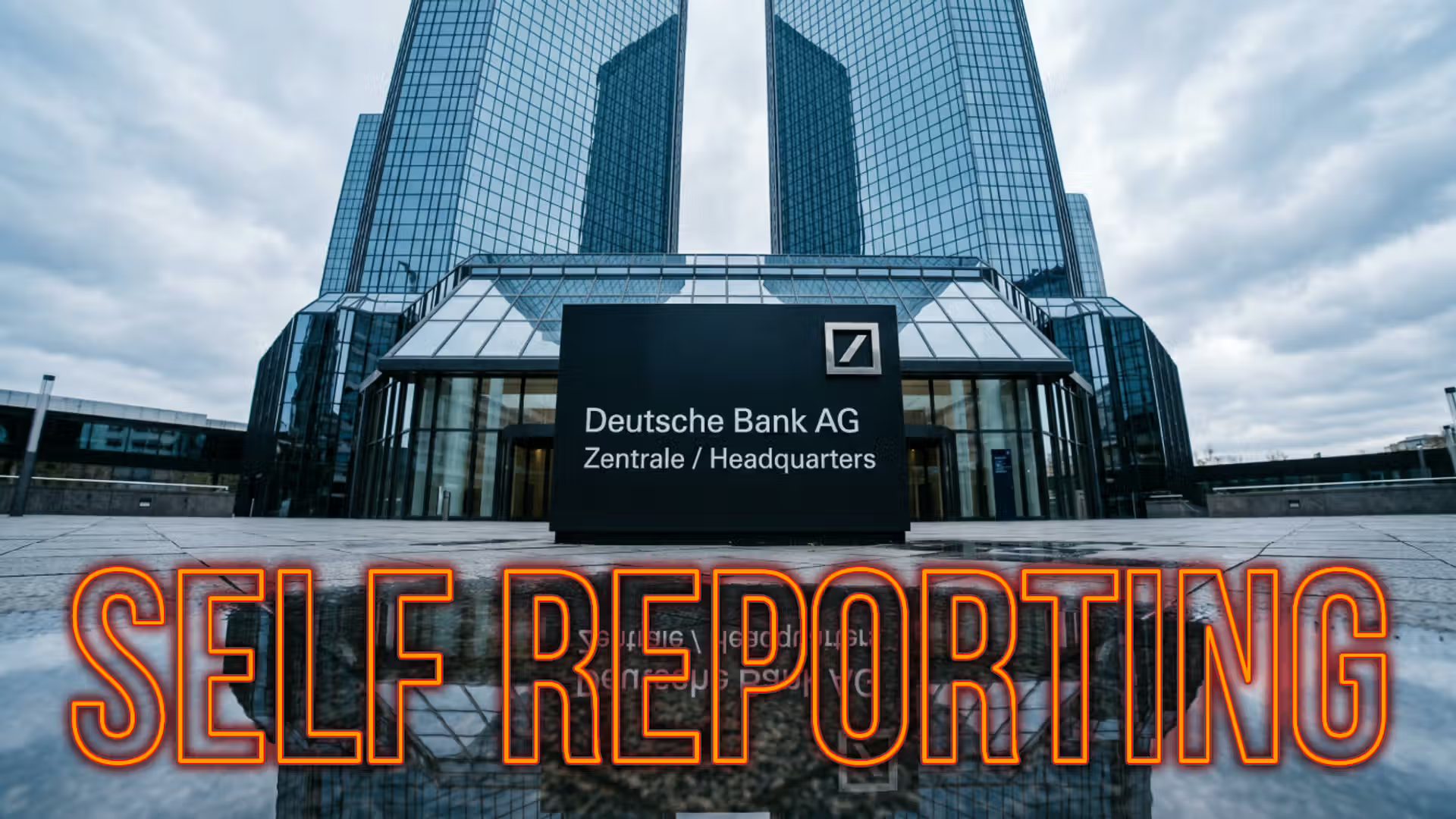
Deutsche Bank has reported itself to financial regulators after identifying potential breaches of European Union sanctions involving deposits exceeding 100,000 euros from Russian clients. The German lender initiated an internal review that uncovered these lapses within its retail banking division shortly after a tightening of national enforcement protocols. This self-disclosure follows a period of intense scrutiny for the institution, including recent law enforcement raids at its headquarters related to separate money laundering investigations. The bank has emphasized its commitment to improving internal controls while proactively informing supervisory authorities about these specific compliance weaknesses.
Table of Contents



Deutsche Bank Sanctions Compliance Deficiencies
The recent discovery of financial irregularities at Deutsche Bank highlights significant challenges in the implementation of restrictive measures against Russian capital. European Union regulations strictly prohibit financial institutions from accepting deposits that exceed 100,000 euros from Russian nationals, residents, or legal entities established within the Russian Federation. This specific threshold is designed to limit the flow of wealth from sanctioned jurisdictions into the European financial system, yet Deutsche Bank identified several instances where these limits were not effectively enforced. The failures occurred within the retail banking unit, suggesting that the automated systems or manual oversight mechanisms intended to flag high-value deposits from specific nationalities may have lacked the necessary rigor. The bank established a specialized task force to conduct a comprehensive audit of its existing controls, which ultimately led to the identification of these prohibited transactions. This proactive internal investigation was spurred by a significant shift in the German legal landscape, specifically the tightening of sanctions enforcement regimes that occurred in February. These legislative changes were driven by a broader European Union directive aimed at harmonizing criminal penalties and accelerating the enforcement process across member states. By removing previous grace periods and introducing stricter liability for financial institutions, the updated laws forced major lenders like Deutsche Bank to reevaluate their risk management frameworks. The bank has acknowledged that it must continuously adapt and improve its systems to keep pace with evolving geopolitical risks and regulatory expectations. While the institution has not specified the exact number of accounts involved or the total volume of funds accepted in violation of the rules, the act of self-reporting suggests a recognition of the potential for severe legal consequences.




Systemic Risks and Money Laundering Investigations
The sanctions lapses at Deutsche Bank do not exist in a vacuum but are part of a broader pattern of regulatory challenges involving Russian wealth and potential money laundering. In January, German prosecutors conducted raids on the bank’s Frankfurt headquarters as part of a long-running investigation into suspicious transactions linked to high-profile individuals. This specific probe centers on activities that took place between 2013 and 2018, examining whether the bank failed to file suspicious activity reports in a timely manner. The investigation has drawn attention to the bank’s historical relationships with companies associated with Russian oligarchs, highlighting the enduring nature of money laundering risks in the global banking sector. These historical failures to report suspicious movements of capital create a backdrop of skepticism regarding the bank’s current ability to police its accounts. The intersection of money laundering and sanctions evasion is a critical area of focus for European regulators, as the same channels used to hide the origins of illicit funds are often utilized to bypass international restrictions. For Deutsche Bank, the pressure to demonstrate a robust compliance culture is immense, especially given its history of fines and legal settlements related to financial crime. The bank’s leadership has stated that the institution is working closely with authorities to resolve these matters, yet the recurring nature of these probes suggests that systemic weaknesses may still persist within its global operations. The challenge for large, complex financial organizations is ensuring that compliance standards are applied consistently across all business lines, from investment banking to local retail branches. The failure to block a simple deposit over a specific monetary threshold indicates that even basic procedural controls can falter under the weight of high-volume transaction processing.

Regulatory Evolution and Enforcement Pressures
The tightening of Germany’s sanctions enforcement regime reflects a wider trend toward aggressive financial oversight across the European continent. Regulators are no longer content with passive monitoring and are increasingly demanding that banks take an active role in identifying and freezing assets belonging to sanctioned parties. This shift requires significant investment in technology and human capital, as banks must be able to screen millions of transactions against complex and frequently changing sanctions lists. The recent directive from the European Union has eliminated many of the bureaucratic hurdles that previously slowed down enforcement actions, making it easier for prosecutors to pursue criminal charges against banks that fail to comply. For Deutsche Bank, the discovery of these deposit breaches serves as a stark reminder that the margin for error has narrowed significantly. The Bundesbank and other supervisory bodies are now empowered to conduct more frequent and more intrusive audits of bank records to ensure that sanctions are being upheld. This environment of heightened scrutiny means that any detected weakness must be addressed immediately to avoid escalating penalties. The bank’s decision to proactively disclose its findings to the Bundesbank is likely a strategic move to mitigate potential fines by demonstrating transparency and a willingness to cooperate. However, the reputational damage associated with repeated compliance failures remains a significant concern for the bank’s shareholders and global partners. As the conflict in Eastern Europe continues to drive geopolitical instability, the financial sector remains on the front lines of the economic response, bearing the responsibility of cutting off the financial lifelines of sanctioned entities.
Enhanced Due Diligence and Future Oversight
Moving forward, Deutsche Bank and its peers must implement more sophisticated due diligence processes to prevent further violations of international law. This involves not only screening the immediate account holders but also conducting deep dives into the ultimate beneficial ownership of funds to ensure that sanctioned individuals are not using intermediaries to bypass deposit limits. The complexity of modern financial structures often allows for the concealment of identity, making it difficult for banks to verify the true source and destination of capital. Enhanced due diligence requires a shift toward behavioral monitoring, where banks look for patterns of activity that might suggest an attempt to restructure deposits into smaller amounts to stay below regulatory thresholds. The integration of artificial intelligence and machine learning into compliance systems is becoming a necessity to process the vast amounts of data required for effective oversight. Furthermore, the bank must foster a culture of internal accountability where employees are encouraged to report potential issues without fear of retribution. The success of the specialized task force in identifying the recent lapses suggests that internal audits can be effective if given the proper resources and authority. However, the true test will be whether these findings lead to permanent structural changes within the bank’s risk management division. Regulators will be watching closely to see if Deutsche Bank can finally move past its legacy of compliance issues and establish itself as a leader in financial integrity. The ongoing investigations into money laundering and the newly disclosed sanctions breaches will likely lead to further reforms in how German banks are monitored, potentially resulting in even more stringent reporting requirements for all institutions operating within the country.
Key Points
- The bank identified deposits from Russian clients exceeding the 100,000 euro legal limit.
- A specialized task force discovered the lapses following new German enforcement laws.
- Law enforcement recently searched the headquarters regarding separate money laundering probes.
- The institution proactively notified the Bundesbank and other regulators of the potential breaches.
- New European Union directives have significantly increased criminal liability for sanctions failures.
Related Links
- Bundesanstalt für Finanzdienstleistungsaufsicht Sanctions Guidelines
- European Banking Authority Anti-Money Laundering Standards
- Financial Action Task Force Recommendations on Russian Sanctions
- Deutsche Bundesbank Financial Sanctions Enforcement Information
- Council of the European Union Restrictive Measures Overview
Other FinCrime Central Articles About Deutsche Bank
- Deutsche Bank Searched and Investigated for AML Lapses and Potential Sanctions Breaches
- Deutsche Bank Securities Faces $4 Million Fine for SARs Delays
- Deutsche Bank’s Monitor Removed by German Regulator
Source: Financial Times, by Florian Müller
Some of FinCrime Central’s articles may have been enriched or edited with the help of AI tools. It may contain unintentional errors.
Want to promote your brand, or need some help selecting the right solution or the right advisory firm? Email us at info@fincrimecentral.com; we probably have the right contact for you.