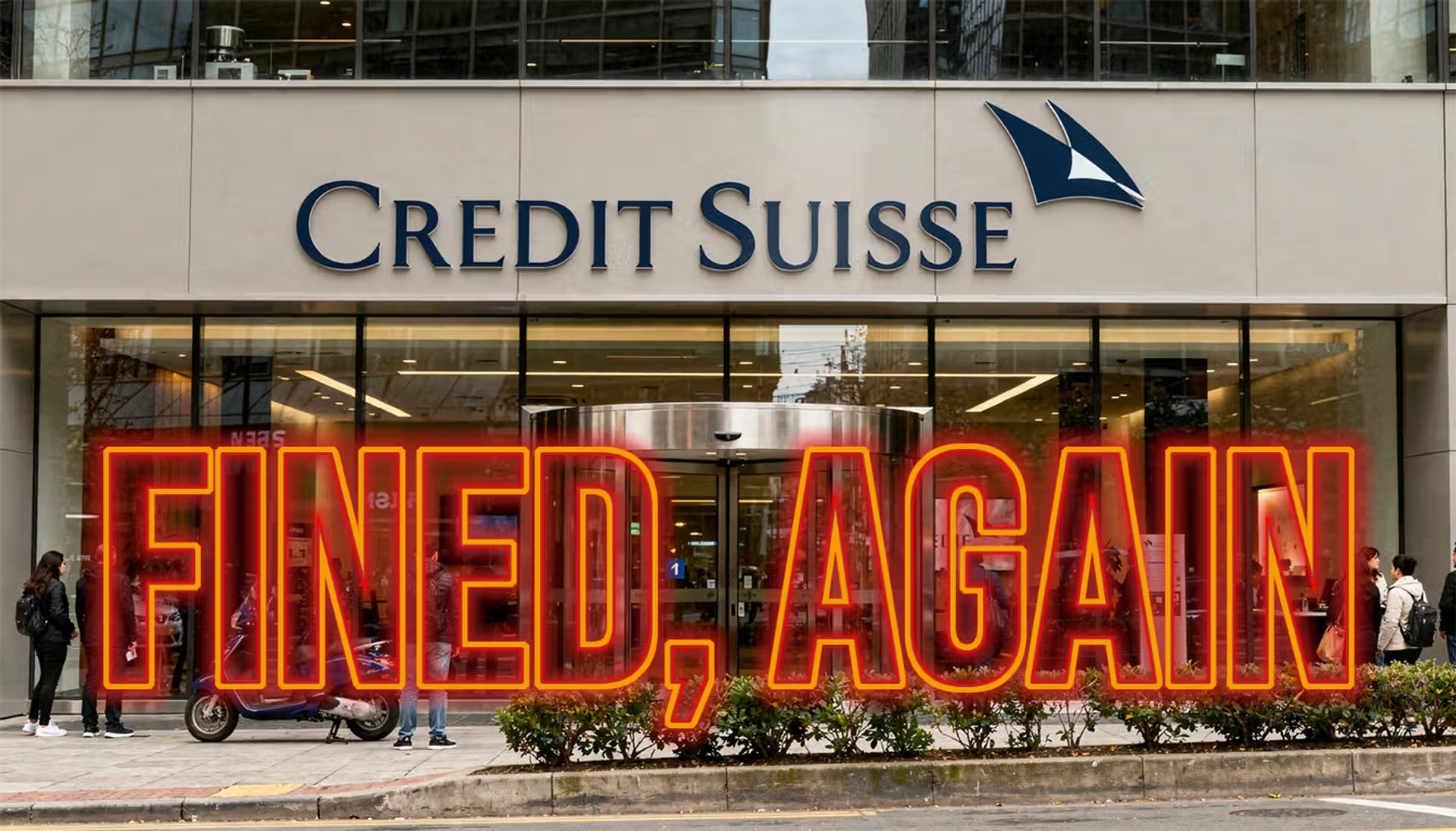
Credit Suisse has been ordered to pay a 7,125,000 dollar fine following major deficiencies in its transaction monitoring protocols. The Financial Industry Regulatory Authority issued the penalty after discovering the firm had failed to oversee hundreds of millions of trades over nearly a decade. This oversight gap persisted for eight years and prevented the identification of potentially illegal market activities such as insider trading. The institution received a formal censure for failing to maintain the rigorous standards required of a global broker-dealer.
Table of Contents


Credit Suisse Compliance Lapses
The necessity for robust internal controls within a financial institution cannot be overstated, as these systems serve as the primary defense against illicit activities and market manipulation. Between the years of 2012 and 2020, the oversight mechanisms at this prominent investment firm were found to be significantly lacking, resulting in a staggering volume of unmonitored transactional data. This period of negligence allowed approximately 900 million records to bypass the scrutiny of the internal compliance department, creating a massive void in the risk management framework of the organization. The investigation revealed that the institution violated several key industry rules, specifically those requiring the establishment and maintenance of a supervisory system reasonably designed to achieve compliance with applicable securities laws. By failing to ensure that all trade and order data were being accurately captured and analyzed, the firm essentially abdicated its responsibility to protect the integrity of the financial markets. The fine of seven million, one hundred twenty-five thousand dollars serves as a stark reminder of the consequences that follow when a major player in the financial sector fails to invest in and maintain its protective infrastructure. These shortcomings were not merely technical glitches but represented a deep-seated failure to implement the written procedures that are mandatory for any entity conducting a general securities business. The resulting regulatory action underscores the importance of continuous vigilance and the requirement for firms to have a complete and accurate view of their market participation at all times. Without such oversight, the potential for undetected financial crimes increases exponentially, putting the entire financial system at risk and eroding the trust that is essential for stable market operations. The scale of this failure is particularly concerning, given the length of time it persisted, spanning eight years during which the firm was unable to satisfy its core obligations to regulators and the public.
The Technical Breakdown of Data Feeds
The root causes of these significant oversight failures can be traced back to specific technical breakdowns within the proprietary systems used by the firm. One of the most critical issues began in August 2012 following a software update to an order management platform known as Agora. This update inadvertently caused a secondary application, which was responsible for extracting trade execution data, to stop functioning as intended. For nearly three years, this single technical error led to the exclusion of approximately 440 million equity trades from the automated reports of the firm. The lack of thorough testing and verification both before and after the software deployment meant that this critical error went undetected for an extended duration. This situation highlights a fundamental flaw in the approach of the firm to technology management, where technical changes were allowed to compromise the integrity of the oversight process. Without access to a complete and accurate data set, the various internal units were operating with a distorted view of the actual market activities of the firm. This lack of visibility meant that any suspicious patterns or potentially manipulative trades occurring through the Agora platform were never flagged for review by the relevant personnel. It is a mandatory requirement that firms verify the performance of their automated tools to ensure they are meeting all legal and regulatory standards. The failure of the organization to monitor the effectiveness of its data extraction tool meant that it remained blind to its own internal weaknesses. This technical negligence provided a pathway for vast amounts of market activity to bypass the primary filters that are designed to detect and prevent harmful behaviors, such as wash trading or price manipulation. The inability of the firm to identify these gaps for over thirty months demonstrates a concerning lack of attention to the details of its digital infrastructure.
The Hidden Risks of the Orphan File
Another major systemic failure involved a primary database used for legal and compliance purposes, which was meant to supply data to over sixty different surveillance reports. Starting in early 2015, this system began failing to process an estimated 480 million records, including detailed information on trades, orders, and positions. Instead of being transmitted to the appropriate oversight teams, this vital information was diverted into an electronic repository known internally as the Orphan File. On average, approximately 550,000 pieces of data were sent to this file every single day, where they remained entirely unreviewed and unmonitored. The firm did not have any established protocols for checking the contents of this repository, and it was not until June 2018 that any compliance personnel actually accessed the file for surveillance purposes. This massive oversight meant that millions of records were effectively hidden within the digital environment of the firm, away from the eyes of those tasked with preventing market abuse. The subsequent investigation found that if the firm had properly reviewed this data, it likely would have discovered numerous indicators of problematic behavior. For instance, the missing data contained tens of thousands of end-of-day orders that were never checked for potential attempts to manipulate closing prices. Additionally, millions of canceled orders that could have signaled strategies like layering or spoofing were never subjected to the necessary analysis. Most concerningly, the firm missed clear instances of potential insider trading, including a case where a client generated a profit of one point six million dollars by purchasing shares just before a major corporate merger announcement. Another example involved a customer whose trading activity accounted for nearly 95 percent of the daily volume in a specific exchange-traded fund, a red flag that went completely unnoticed due to the data omissions. These examples illustrate the tangible risks that arise when financial institutions allow large segments of their data to remain in unmonitored silos.
Accountability and the Future of Supervision
The resolution of this case emphasizes the critical need for financial institutions to respond effectively to internal warnings and the findings of their own audits. Between 2013 and 2016, at least four separate internal audits conducted by the firm identified that the central database used for compliance was unreliable and was failing to capture all necessary data. These audit reports were explicit in their warnings, stating that the system lacked sufficient controls and posed a high degree of risk to the ability of the organization to satisfy its regulatory requirements. Furthermore, an external consultant who was brought in during 2015 specifically recommended that the database be replaced immediately due to these systemic risks. Despite receiving these clear and consistent warnings from multiple sources, the firm did not make significant progress in upgrading its systems for several years. The process of replacing the flawed database was not finally completed until September 2020, representing a five-year delay after the initial recommendation for replacement. This failure to take timely action demonstrates a troubling lack of priority given to the mitigation of financial crime risks and the maintenance of a culture of compliance. The resulting settlement, which includes payments to several different self-regulatory organizations and stock exchanges, reflects the broad impact that these failures had on the integrity of the wider financial market. The case serves as a definitive lesson for the industry that having a policy on paper is insufficient if the technical tools used to enforce that policy are broken or ignored. Firms must ensure that their technical infrastructure is as robust as their legal departments, and they must be prepared to act quickly when deficiencies are identified. The consequences of failing to do so include not only massive financial penalties but also significant damage to the reputation of the firm and the potential for increased scrutiny from regulators around the world.
Key Points
- The organization failed to monitor over 900 million records over an eight year period because of technical errors and database flaws.
- Multiple internal audits warned of these systemic failures as early as 2013 but the firm did not complete necessary upgrades until 2020.
- Unmonitored data prevented the detection of suspicious activities including potential insider trading and significant market manipulation by clients.
- A total fine of 7,125,000 dollars was levied by regulators to address these long term deficiencies in the internal oversight systems of the firm.
Related Links
- FINRA Rule 3110 (Supervision) and Successor to NASD Rule 3010
- FINRA Rule 2010: Standards of Commercial Honor and Just and Equitable Principles of Trade
- FINRA BrokerCheck: Regulatory History and Information for Credit Suisse Securities (USA) LLC (CRD No. 816)
Other FinCrime Central Articles About the Latest FINRA Actions
- FINRA Fines Mundial Financial Group $100,000 for AML Program Failures
- Intesa Sanpaolo faces 125k FINRA fine for critical TRACE errors
- FINRA Fines BMO Capital Markets $300k Over Late Reporting Failures
Source: FINRA (PDF)
Some of FinCrime Central’s articles may have been enriched or edited with the help of AI tools. It may contain unintentional errors.
Want to promote your brand, or need some help selecting the right solution or the right advisory firm? Email us at info@fincrimecentral.com; we probably have the right contact for you.