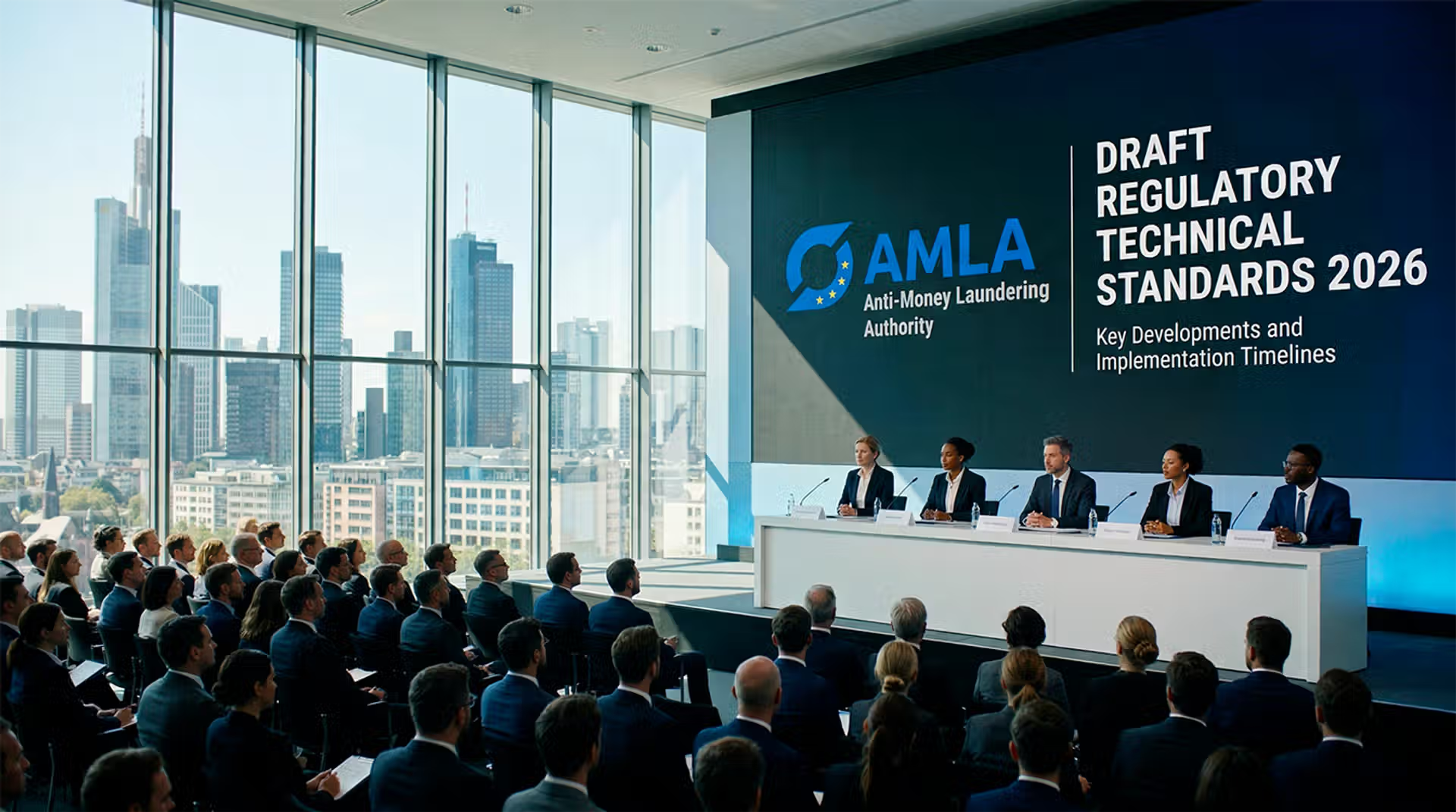
AMLA, the European Anti-Money Laundering Authority recently held its first public hearing to discuss critical draft regulatory technical standards that will shape the future of financial oversight. This landmark event gathered over sixteen hundred stakeholders from diverse professional backgrounds to examine the proposed rules for customer due diligence and the identification of business relationships. The primary goal of these discussions is to create a unified and robust framework that prevents the movement of illicit funds across the borders of member states. By establishing clear and practical guidelines, the authority intends to strengthen the integrity of the internal market and ensure that all obliged entities can effectively mitigate financial crime risks. These new standards represent a significant step toward a more harmonized approach to combating money laundering and terrorist financing throughout the region.
Table of Contents


Customer Due Diligence
The newly proposed framework for customer due diligence aims to provide a high level of harmonization across the entire European Union to prevent regulatory arbitrage. Under the draft standards, the authority has outlined specific requirements for the collection of information and documents that obliged entities must obtain when verifying the identity of their clients. This process is not a one-size-fits-all approach, as it distinguishes between standard, simplified, and enhanced due diligence based on the specific risk profile of the individual or legal entity. By creating these distinct categories, the regulator ensures that resources are allocated toward the highest risk areas while allowing for more streamlined processes when the risk of money laundering is demonstrably low. The standards also address the use of modern technological solutions, such as electronic identification and remote verification tools, ensuring that compliance measures remain effective in an increasingly digital economy.
A central theme of the due diligence standards is the requirement for entities to look beyond the surface level of legal arrangements to identify the actual beneficial owners. This is particularly relevant when dealing with complex corporate structures or shell companies that could be used to obscure the origins of criminal proceeds. The draft rules encourage a proactive approach to understanding the ownership and control structure of a customer, requiring a thorough analysis of the voting rights and management influence within an organization. Furthermore, the standards emphasize the need for ongoing monitoring of the business relationship to ensure that transactions remain consistent with the known profile and risk level of the customer. This continuous oversight is vital for detecting sudden changes in behavior that may indicate suspicious activity or a shift in the nature of the client’s financial interests.



Business Relationship Criteria
Establishing the exact parameters for what constitutes a business relationship is another vital component of the proposed technical standards. The authority has drafted specific criteria to help obliged entities differentiate between ongoing professional engagements and occasional transactions that do not require the same level of long-term monitoring. For many sectors, the distinction is based on the expectation of duration and the existence of a formal contract or registration process. For instance, the act of creating a user account or a digital profile for a service is often seen as the beginning of a formal relationship, as it implies a continued interaction between the service provider and the customer. These definitions are essential for ensuring that the appropriate level of scrutiny is applied consistently across different industries and jurisdictions.
The draft standards provide detailed guidance for specific sectors that are frequently targeted by money launderers, such as land-based gambling and the trade of high-value goods. For example, in the context of gambling, the rules propose that certain thresholds of activity or the frequency of visits should trigger the establishment of a formal relationship. Similarly, the standards address the unique risks associated with professional football clubs and agents, suggesting that player transfers and high-value contracts should be subject to rigorous oversight. By providing these concrete examples and sector-specific triggers, the regulator aims to remove the ambiguity that has previously allowed some entities to avoid their compliance obligations. This clarity helps businesses to build more predictable and effective internal control systems that can withstand the scrutiny of national supervisors.
Linked Transactions and Thresholds
One of the most significant challenges in modern financial oversight is the prevention of structuring, where large sums of money are broken down into smaller payments to avoid triggering reporting requirements. The proposed technical standards address this issue directly by defining the criteria for identifying linked transactions. These are a series of operations that, while appearing separate, are actually connected by a common purpose, origin, or destination within a specific timeframe. The authority suggests that transactions occurring within a ninety-day window should be closely scrutinized for potential links, particularly when they involve the same parties or similar amounts. By establishing a clear timeframe and specific indicators of linkage, the regulator provides a powerful tool for compliance officers to detect and report attempts to circumvent the law.
The draft rules also explore the introduction of lower thresholds for certain high-risk activities to ensure that even small-scale laundering attempts are captured. This is particularly relevant for cash-intensive businesses and the growing sector of crypto asset service providers, where the speed and anonymity of transactions can be exploited by criminals. The authority is currently assessing whether these lower thresholds would be proportionate to the risk or if they would place an undue administrative burden on smaller businesses. The feedback from the public consultation will play a crucial role in determining the final figures and the specific scenarios where these stricter rules will apply. The goal is to strike a balance between effective crime prevention and the preservation of a functional and accessible financial system for legitimate users.
Strategic Implementation and Review
As the regulatory environment continues to evolve, the authority has emphasized that these technical standards are not static and will be subject to regular review and adjustment. The implementation process will involve a transition period during which obliged entities will be expected to bring their existing customer files into alignment with the new rules. This task will require a risk-based approach, prioritizing the review of high-risk clients and those with incomplete documentation. The regulator has also expressed a commitment to reducing the administrative burden by encouraging the reuse of verified information where possible, provided that the data remains accurate and up to date. This pragmatic approach is designed to facilitate a smooth transition while maintaining the integrity of the overall anti-money laundering framework.
The final versions of these regulatory technical standards are expected to be submitted to the European Commission for approval in the third quarter of 2026. Once adopted, they will become directly applicable across all member states, creating a truly unified rulebook for the first time. This centralization of rulemaking is intended to eliminate the inconsistencies and loopholes that have historically undermined the effectiveness of national oversight efforts. By having a single set of rules drafted and coordinated by a central authority, the region is better positioned to respond to the global nature of financial crime. The ongoing dialogue between the regulator and the private sector will remain essential for ensuring that these standards stay relevant and effective in the face of emerging threats and technological changes.
Key Points
- AMLA hosted its first public hearing on March 24 2026 to refine the draft standards for customer due diligence and transaction tracking.
- The proposed rules establish clear triggers for identifying formal business relationships versus occasional transactions across various industries.
- New criteria for linked transactions aim to prevent the practice of structuring payments to avoid mandatory reporting thresholds.
- The authority is considering specific lower thresholds for high-risk sectors like gambling and professional sports to enhance oversight.
- The final technical standards are set for commission submission in late 2026, with a full application date of July 2027.
Related Links
- Anti-Money Laundering Authority Public Consultations Page
- European Commission Financial Crime Prevention Framework
- Financial Action Task Force Guidance on Risk-Based Approach
- Council of the European Union Anti-Money Laundering Package
- European Parliament Briefing on the Single Rulebook
Other FinCrime Central Articles About AMLA
- AMLA Launches EU Data Exercise to Test Financial Crime Risk Models
- AMLA Conducts Public Hearing on Two Draft Regulatory Technical Standards
- Historic handover as AMLA replaces EBA in fight against money laundering
Source: AMLA
Some of FinCrime Central’s articles may have been enriched or edited with the help of AI tools. It may contain unintentional errors.
Want to promote your brand, or need some help selecting the right solution or the right advisory firm? Email us at info@fincrimecentral.com; we probably have the right contact for you.